









Nestled on a scenic bend of Route 213 in Stone Ridge, Marbletown Meadows is 100 acres of fields and woodland farmed by the Osterhoudt family since 1778. The land offers sweeping views of the Shawangunk Ridge, Ashokan High Point, and contains a hidden African American burial ground. It is rich in both beauty and history. The municipality has designated this formerly private land for recreation through a community preservation fund, making it accessible to all and supporting a broader movement to safeguard vital ecosystems for future generations.
Community preservation funds (CPFs) originated in Massachusetts in the early 2000s to support local initiatives for preserving farms, forests, historic buildings, open spaces, and other ecologically important areas, funded by a one-time fee on home sales. Local community preservation committees (CPCs), typically consisting of five to nine members, oversee these programs and make recommendations on Community Preservation Act (CPA) projects to the local legislative body. Municipalities must receive authorization from the New York State Legislature and a majority community vote through a ballot referendum to establish a CPF. Within the Hudson Valley, Westchester, Putnam, and Ulster Counties, as well as the Towns of Fishkill and Northeast in Dutchess County, are authorized to establish CPFs.
Six Hudson Valley communities have established CPFs. The Towns of Red Hook and Warwick led the way as early adopters in 2007. The Town of New Paltz passed the measure in 2020 with over 70 percent voter support. The Towns of Gardiner and Marbletown followed in 2022, and the Town of Chatham approved the measure in 2023.

The Town of Red Hook has raised over $6 million since the launch of its CPF 17 years ago, which has been leveraged with matching funds from land trusts and county, state, and federal governments on a three-to-one basis, says Town Supervisor Robert McKeon. “We’ve protected over 4,000 acres and 45 farms,” he says. “It has not only enabled us to maintain our quality of life, but also supported tourism and other businesses in town.”
Michael Sweeton, the former town supervisor of Warwick and now member of the Orange County Land Trust, says Warwick’s CPF has generated $17 million, which has been leveraged to almost double that amount. The funds have been used to purchase land along Greenwood Lake for public access and a former camp on 85 acres that is now a community park with pools, pickleball courts, a theater, and cabins. “Even the people who have to pay say, ‘You made me pay for this and I see why,’” Sweeton says. “It’s a critical tool to building quality in the community, and all our residents view it favorably.”
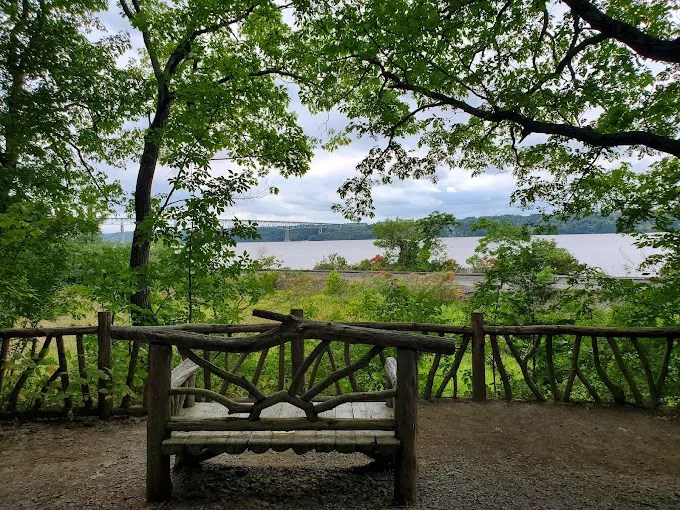
Rich Parete, the town supervisor of Marbletown, says in its first year, their CPF raised $300,000 and qualified the town for a $500,000 matching state grant. This allowed the town to acquire the 100-acre farm formerly known as Osterhoudt Flats, renamed Marbletown Meadows, in May 2024. The site has been transformed into a public park and preserve with a driveway, parking area, and walking paths. Future plans include footpaths through the fields and 40 acres of forest, a sleigh riding hill, ice skating pond, picnic area, bird watching area, and an open-air pavilion. Parete says without the CPF, the town wouldn’t have been able to get the state grant or protect this area.
Purchases like these are rare opportunities for small municipalities like Marbletown, which often lack the budgets to match large grants without significantly raising taxes. CPFs enable smaller communities to match grants using accumulated funds. Establishing similar funds in other Hudson Valley municipalities could help them qualify for additional matching grants, significantly increasing the resources available for land preservation.
“People want to live in communities that value open space,” Parete says. “I have had several towns reach out with questions about the fund. I tell them about all the positive feedback I get from residents and visitors of Marbletown Meadows and that they won’t regret enacting a CPF.”
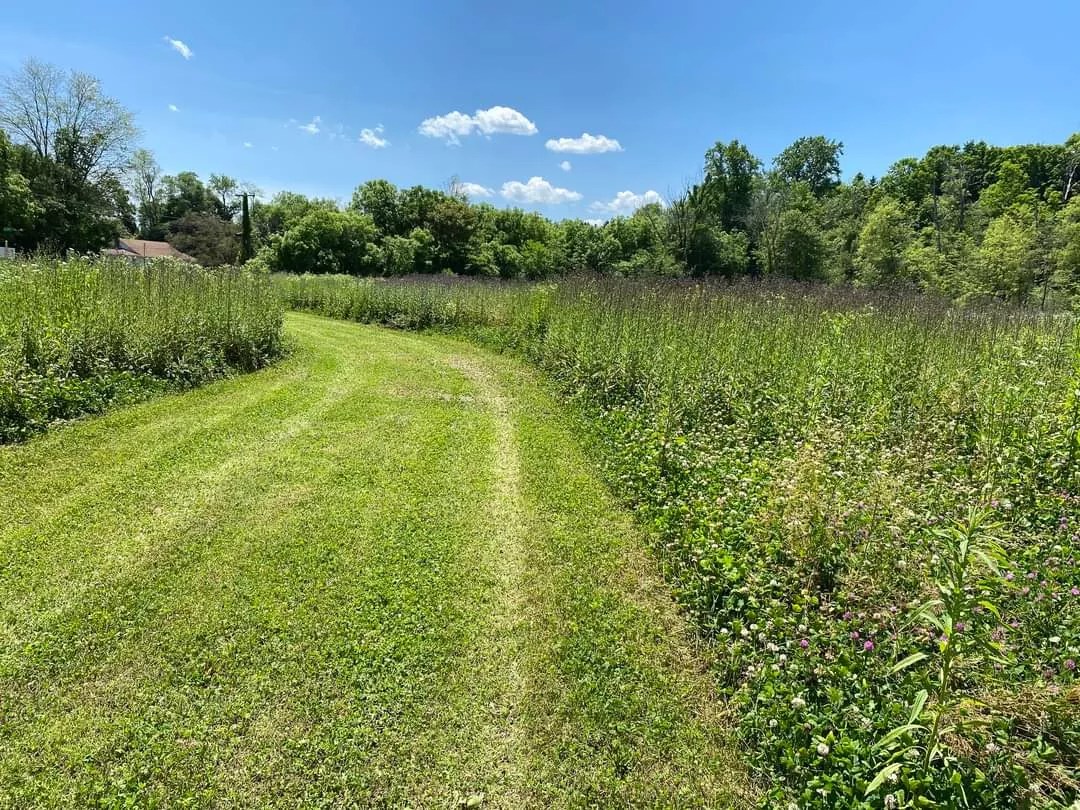
Now, the City of Kingston is working to establish its own CPF. As other towns in the Hudson Valley have done, the Kingston CPF will enable the protection of local waterways, historic sites, urban agriculture, and the creation of new parks, preserves, trails, and open spaces. Residents overwhelmingly voted for Local Law 10 on the November 5 ballot.
“This fund is important to every citizen of Kingston,” says Michael Drillinger, the board chair of the Kingston Land Trust and president of the Campaign for Kingston Community Preservation Fund. “It will positively impact the lives of residents and visitors because it provides a mechanism to better preserve the natural and historical heritage of the City of Kingston.”
The Kingston CPF will be funded by a one-time real-estate tax of 1.25% that only applies to properties selling above the Ulster County median sales price, which is currently $376,500. Buyers of such properties will only pay the tax on that portion of the sales prices greater than the median sales price. That means if a buyer pays $500,000 for a property, they would be taxed 1.25% on the amount of $123,500, which is $1,543.75.
The city’s Natural Resources Inventory identifies two primary areas richest in natural resources: one in the northeast part of the city, consisting of the forests and shoreline along the Hudson, and the other in the southwest, consisting of the uplands of the Rondout Creek. The plan also proposes protecting and providing public access to the Esopus Creek, creation of a park in Midtown, and protection of the Tannery, Main Street, and Twaalfskill Brooks.

After all precincts reported, the proposition to approve Local Law 10 of 2024 passed with 6,100 votes in favor and 3,684 votes against. The law establishes the clean water, urban agriculture, historic resources, recreation, and natural areas preservation fund, funded through a 1.25% tax on the transfer of real property interests.
“Preserving these scenic areas will protect vulnerable wildlife, combat climate change through absorption of carbon, and provide recreational opportunities for everyone in the city in harmony with nature,” Drillinger says. “Kingston will have a valuable tool to preserve its resources and way of life as a counterbalance to the development of much-needed housing and the city’s growth.”

The River is an independent news outlet that produces in-depth, quality journalism and analysis about the Hudson Valley and Catskills regions. Learn more about our mission and ethics.


