










The day was February 13th, the time was roughly 9:30am, and I, along with 74 other middle-high school students, had just walked out of the cabin-like performance hall at the Ashokan Center in Olivebridge. We were all there for the same reason—we were worried about the impact that climate change has on the Earth. YESS, the Youth Empowerment and Sustainability Summit, was the opportunity to not only gain more information on our planet’s climate crisis, but for us to help slow its effect, and we were already on our second day. Ten minutes later, we were back, eager for more information, and ready to formulate the action plans we wanted to bring to our communities. A day had already passed, and we didn’t have all the time in the world.
The YESS summit is a conference for teens who are concerned about our planet. It is run by the Ashokan Center staff and has many guest speakers. At the end of the summit, we bring action plans home to our schools and implement what we learned in our communities. The staff at the summit help us by giving us the information and resources that we need to push through with our action plans.
Only the day before, we had all arrived in a forest full of greetings. I showed up at the Ashokan Center a few minutes after one of my best friends and Saugerties teammates, Ella Maxwell. We took a few minutes to put our stuff down in the longhouse cabin where we were staying, and then wandered down the main path to the dining hall to meet up with the rest of our team. Apparently they all had the same idea, and were already waiting at the wooden tables that took up most of the room. The opening presentations were from Samrat Pathania, a teacher from Wallkill, and Thea Millenson, a student who attended YESS in 2020. They wasted no time in getting into the subject, and while all of the presenters on the first day educated us on the climate crisis and how dire it is, they also gave us many different ways to look at it, and perspectives from a few different professions.One of the more interesting ones was from Ulster County Executive Jen Metzger. She showed us what the climate crisis looked like from the side of big business and oil companies. My first day at the Ashokan Center was full of information and hope, and I went to bed exhausted, yet ready for the next.
There were main themes we focused on at YESS: food, energy, and fast fashion. Each theme presents its own problems, and its own causes of climate change. One hundred and nineteen billion pounds of usable food is thrown out every year in the US, piled into massive landfills. We learned more about energy usage, and how there are more sustainable options out there, and how much cheaper and healthier they were. Solar energy costs less to produce and install than fossil fuels in the long run, and it’s a lot better for the environment. Fast fashion has also put a dent in the Earth’s health, and in the US, 16 million tons of clothing are thrown out every year. That’s why thrifting clothes is not only cheaper, but also a more sustainable way to get clothing.
Our team’s main focus was on fast fashion, and we spent the morning learning of the many ways the fast fashion industry is harming the Earth. It takes huge amounts of water to make one piece of clothing, and some materials are also made from harmful plastics. Some brands in the industry also launch small lines of “sustainable” clothing meant to trick the customer into thinking it’s all environmentally friendly. By the end of the meeting, I was definitely questioning the Target brand leggings and t-shirt that I was wearing.
Taking it to the Streets
We had breakout sessions for the rest of the day. My first was Plastics 101. I had Plastics 101 first, one of my favorite breakout sessions. The atmosphere was comfortable, and the presentation was informational, but not too depressing. What was depressing was the way the charts for plastic use had skyrocketed since it had been widely introduced after WWll. There are now microplastics in and on everything, from the things we touch and eat to the atmosphere and the air that surrounds the Earth. We still don’t know how it affects our health, but it’s concerning either way. One of the pictures shown at this presentation was a close up of a small bug, covered in tiny, colorful dots. You could barely see the actual body of the bug due to the microplastics.
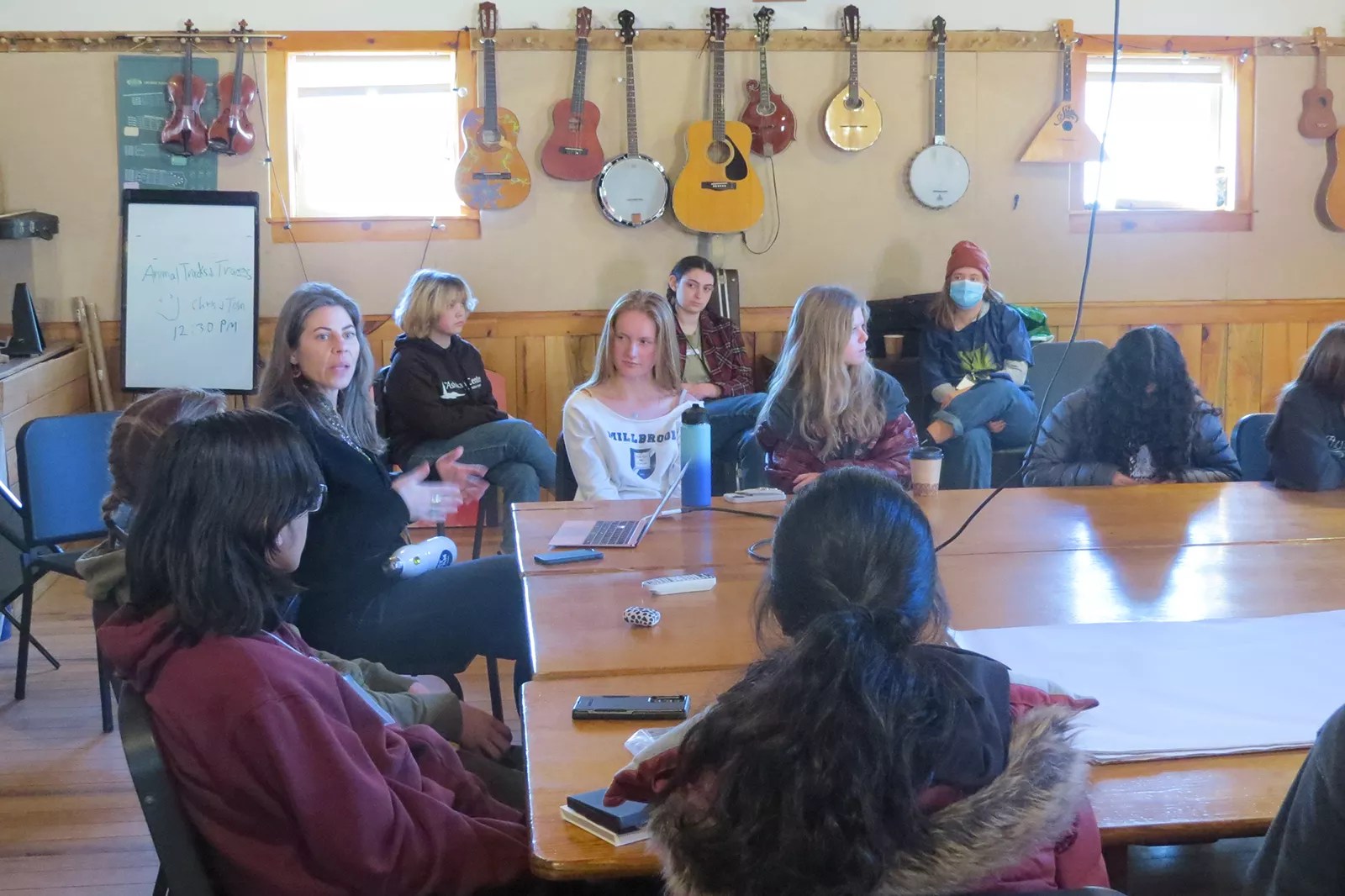
The second breakout session, Taking it to the Streets: Working with Local Government on Tactical Urbanism, didn’t disappoint either. The presenter was Vanessa Bertozzi, a Village Trustee from Rhinebeck who works closely with the school, and used an example from her school community to explain some steps to take with tactical urbanism, which is the act of creating a short-term change to a community to spark a long-term change or project. Their school’s project created a temporary crosswalk for pedestrians to use on a busy street. It detailed some good ways to communicate with the local government, as well as some starting materials and connections you may need to make the change.
Lunch was a busy halfway point. The massive wooden tables that filled the room were the perfect amount of space for the students and teachers to sit. I sat with the rest of the Saugerties team, and we spent our lunch reviewing what had happened since we got here. We were starting to have more ideas of what we wanted to bring back to our school.
Bringing it All Back Home
My third and fourth breakout sessions were both fashion focused, and they each had very different ways of tackling clothing waste. The third presenter opened the possibility of establishing a thrift store, and the importance and impact of thrifting clothing. I love thrift stores, and the information on how much better they were than typical fast fashion just reassured that. The fourth breakout session was on upcycling, and had multiple interactive workshops including braided dog toys and embroidery.
At the end of the second day, after dinner and art, we gathered in the performance hall for dancing. I had mixed feelings, as I am not a dancer, but it was incredibly fun, and a bit awkward. Before it even started, I was standing around with my group, and managed to do a bit of the unthinkable—socializing. I had a wonderful conversation with another student from a school in Brooklyn, and we made sure we could keep in contact later. The dancing itself was a trip to the past, as we learned some old and more traditional dances from all over the world. We learned one dance that originated from Africa, and was seen as a sign of greeting. By the time it was over, we were all very tired, and went to bed. The third and final day was upon us, and it was dedicated to action planning. We were joined by Dr. Alison Thompson, a global humanitarian who has helped refugees in Ukraine, and I got some insight on other perspectives, as well as insight from someone with a bit more experience. That conversation was one of my favorite parts of the summit.
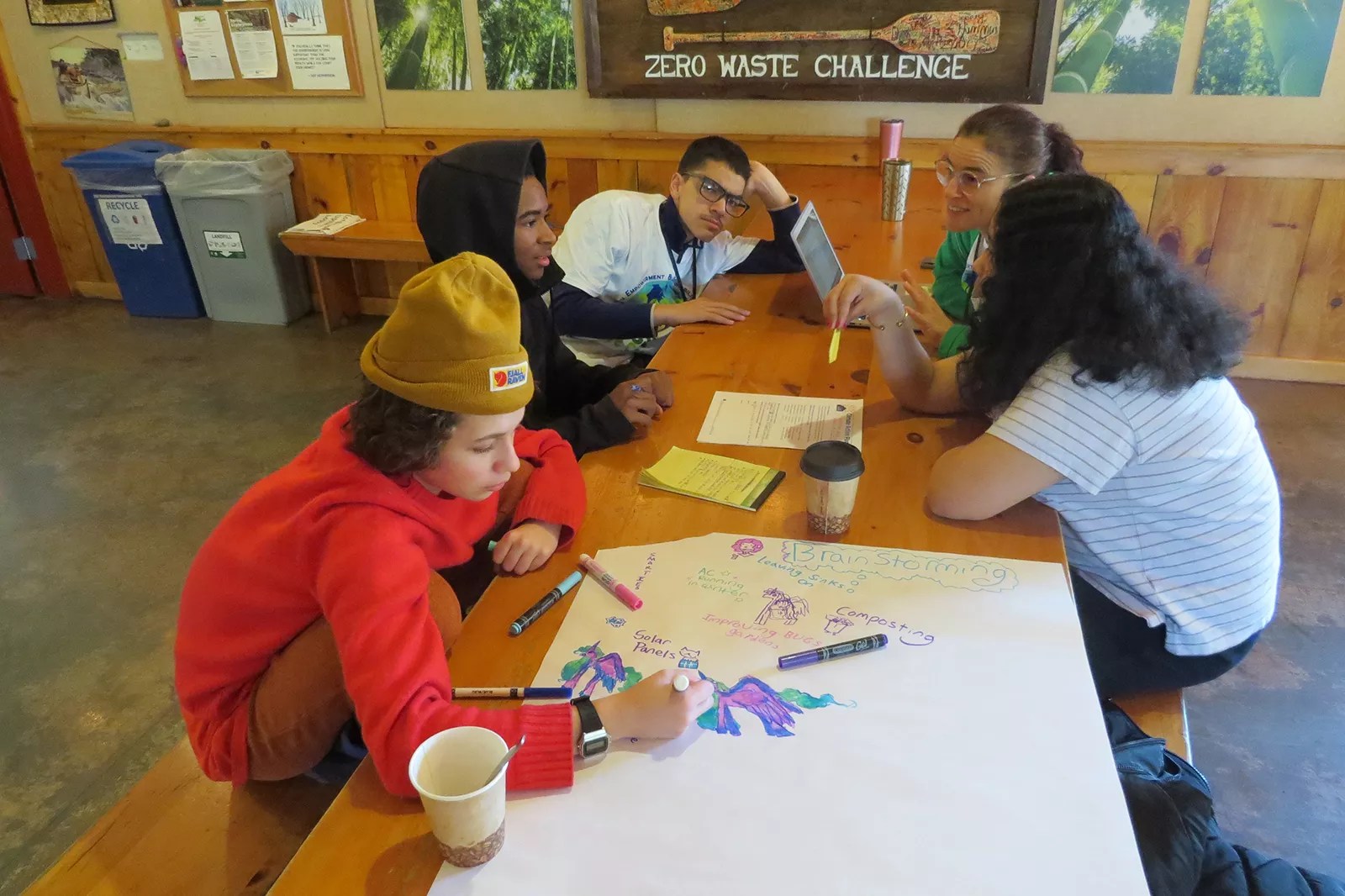
We first got some local teachers, including my school’s chaperone, to speak on how to effectively communicate with multiple people in our lives, and the best way to get plans in action. We then had an hour to make our own plan to bring back to school, and my team used it all. Our plan has multiple layers to it, and our plans were huge! So we created CATS, which stands for the Climate Action Team of Saugerties, and focused on a few startup plans for the future, which includes installing solar panels on the roof of our school and painting a climate change awareness-raising mural at our skate park. We wasted no time, and when we presented our plan after lunch, we knew it was the right choice. Some of the other schools also did composting plans, and made plans to set up thrift stores.
The YESS summit as a whole was truly amazing. I got to meet a lot of great people, and I got to learn more about our climate crisis through so many different perspectives. My generation has to work to slow climate change, or it will be too late to do anything, and this summit was an amazing way to start. Informing people and creating action plans are the first steps to a brighter and more climate smart future, and I believe that no matter how small of a community you come from, you can make a difference.
This article appears in March 2023.


