









September in the Hudson Valley doesn’t ease you gently into fall—it drops you into the thick of it. Galleries from Poughkeepsie to New Paltz to Hudson are opening doors to exhibitions that remind us just how capacious the word “art” can be. In one corner, Christian Marclay is cutting and splicing the detritus of pop music into museum-ready collage; in another, Jean Shin is weaving obsolete technologies into textile meditations on knowledge and waste. The mood is maximal, the reach ambitious.
But it’s not just the marquee names. Local and regional artists are showing up with equal verve. Steven M. Strauss’s attempt to paint every bird on earth feels quixotic in the best sense—a naturalist’s Divine Comedy in spray paint and oil. Elisabeth Ladwig’s dream-collages, one of which graced Chronogram’s December 2024 cover, return us to the woods, where origami stars and turkey-tail fungi flicker with mythic resonance. Myron Polenberg pares it all down to black and white, painting out the noise until only light remains.
Taken together, these shows sketch a map of contemporary life as seen through the Hudson Valley: high meeting low, the everyday transfigured, memory and history speaking in chorus. They remind us that art, whether born from trash heaps, bird feathers, or comic strips, is always a reckoning with what matters.
Myron Polenberg’s “Everything’s Personal” at Time and Space Limited
September 6-October 5

At once austere and intimate, Myron Polenberg’s “Everything’s Personal” at Time and Space Limited enters the lineage of painters like Ad Reinhardt and Robert Rauschenberg, artists who worked in black to test the limits of meaning. Polenberg strips painting to its barest elements—black, white, and the faint glow that passes between them. By denying himself color, he finds another register: light breaking through the dark, silence after noise. Born during World War II, Polenberg recalls progress marked by figures like Jackie Robinson, JFK, MLK, and Obama, even as the present feels tenuous. These canvases are touchstones, meditations on quiet, endurance, and resilience—what remains when distraction is painted out. Minimal in palette, maximal in feeling: everything here is personal, everything illuminated by what pushes through.
Ashley Garrett’s “Psyche” at September
Through October 12

For her third solo outing with September, Ashley Garrett goes big—literally. “Psyche” features the artist’s largest canvases to date, built from two years of immersion in the local landscape and the inner weather systems of the psyche. Garrett’s brushwork swirls, skips, and careens across the surface in passages of incandescent yellows and greens, searing pinks, and earth-anchored tones lit with dashes of blue, orange, and purple. The canvases never resolve into form so much as hover in perpetual becoming, charged with movement and alive with sensation. The paintings seem to breathe—expansive, porous, impossible to contain. Boundaries dissolve, edges blur, and what remains is a field of pure aliveness, a visual echo of nature’s endless churn. Garrett doesn’t paint objects so much as states of being, suspended between emergence and disappearance.
H. James Hoff’s “Drawn to Life” at WAAM
Through September 28

In WAAM’s solo gallery, H. James Hoff’s “Drawn to Life” offers a quiet reckoning with the human condition—those fleeting instants of joy, ache, and tenderness that often pass unnoticed. Hoff pares things down to their essentials: latex, acrylic, and vinyl paints, graffiti markers pulling spare, decisive lines across the page. Figures emerge not as portraits but as vessels of feeling, conjured from memory, imagination, and the half-faded images of old photographs. The work is minimalist, but the effect is expansive—an emotional register that hovers between the intimate and the universal. Each drawing seems to breathe its own moment of being, fragile and resonant, as if reminding us that the shape of life is always provisional, always dissolving into what comes next.
Jean Shin’s “Bodies of Knowledge” at the Dorsky Museum
September 6-December 7

At the Dorsky, Jean Shin’s “Bodies of Knowledge” makes the invisible weight of our information economy startlingly present. In sculptures, videos, and installations built from discarded or donated materials, Shin links the flow of data to the flow of textiles—both woven, both carriers of meaning, both stubbornly physical despite our fantasy of the digital as immaterial. A mass of obsolete cables becomes a kind of shroud; a fabric archive mutates into an architecture of memory. The exhibition insists that communication is never frictionless—it requires bodies, labor, and resources, and it generates staggering waste. Shin’s gift is to transform this debris into a meditation on sustainability, connection, and loss, reminding us that knowledge is always embodied, and matter, however fleeting, leaves its trace.
“Christian Marclay” at Hudson Hall
Through October 5

Christian Marclay shows us what happens when the record collection becomes both archive and art supply at Hudson Hall. A pioneer of sound art who snagged the Golden Lion at the 2011 Venice Biennale, Marclay riffs on the readymade tradition—think Duchamp by way of CBGB—transforming LP sleeves, vinyl records, and musical scores into collages that blur the line between music history and mass-market detritus. His works splice together fragments of pop culture with the kind of conceptual rigor that has earned him wall space at MoMA and Tate Modern. Organized from the holdings of Second Ward Foundation, this exhibition tracks how sound, once ephemeral, gets trapped in objects—and how those objects, reassembled, can sing again in unexpected registers.
Elisabeth Ladwig’s “Threshold” at Wired Gallery
Through September 14

At the heart of this exhibition at Wired Gallery, Elisabeth Ladwig offers scenes that feel both whispered and incandescent—a meeting of digital craft and woodland mythos. The New Paltz-based photographer-collagist constructs her dream‑realist images from origami stars, forest fungi, vintage ladders, and other humble scraps of the everyday, digitally stitched into uncanny landscapes that open like secrets. Her subjects—a faceless woman draped in turkey‑tail fungus, say—invite you to step into a story you’re writing as much as she is. We ran one of Ladwig’s Starpolish on the cover of the December 2024 issue of Chronogram. This show feels like stepping into a folk-tale refracted: mystical, uncanny, rooted in nature and the most personal kind of magic.
“Exploring Calvin and Hobbes” at the Fenimore Art Museum
September 13-December 31
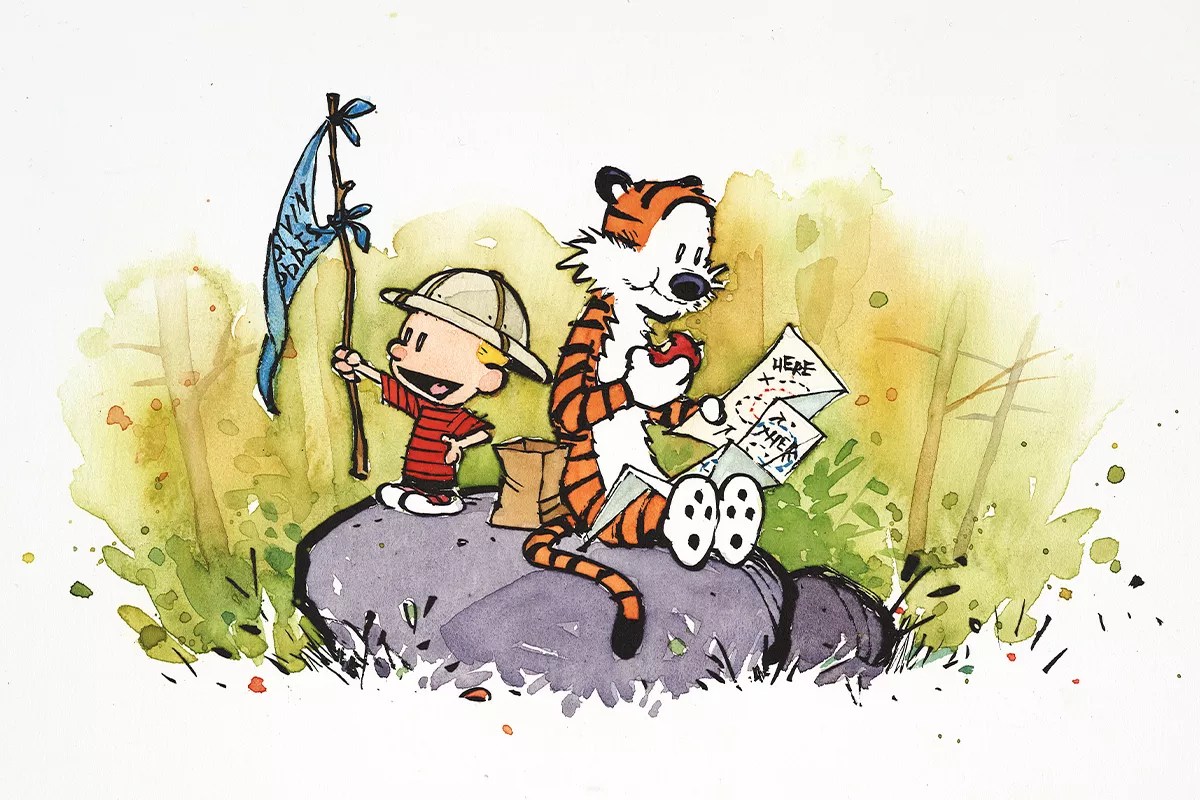
At the Fenimore Art Museum in Cooperstown, “Exploring Calvin and Hobbes” stages a rare collision between Sunday morning nostalgia and curatorial rigor. The show presents original daily and Sunday strips, plus specialty pieces from Bill Watterson’s archive of over 3,000 works held at Ohio State’s Billy Ireland Cartoon Library & Museum. It’s not just kid stuff—Watterson’s comic alchemy, equal parts existential inquiry and playground mischief, gains gravity when placed on museum walls. Here, Calvin’s snowmen wars and Hobbes’s philosophical asides stand shoulder to shoulder with institutional context, inviting us to consider the comic strip as both fine art and mass cultural artifact. The show reminds us that even our funniest childhood memories depend on discipline, line work, and the stubborn insistence that wonder can fit inside a frame.
Steven M. Strauss’s “Flock” at Grit Gallery
Through September 20
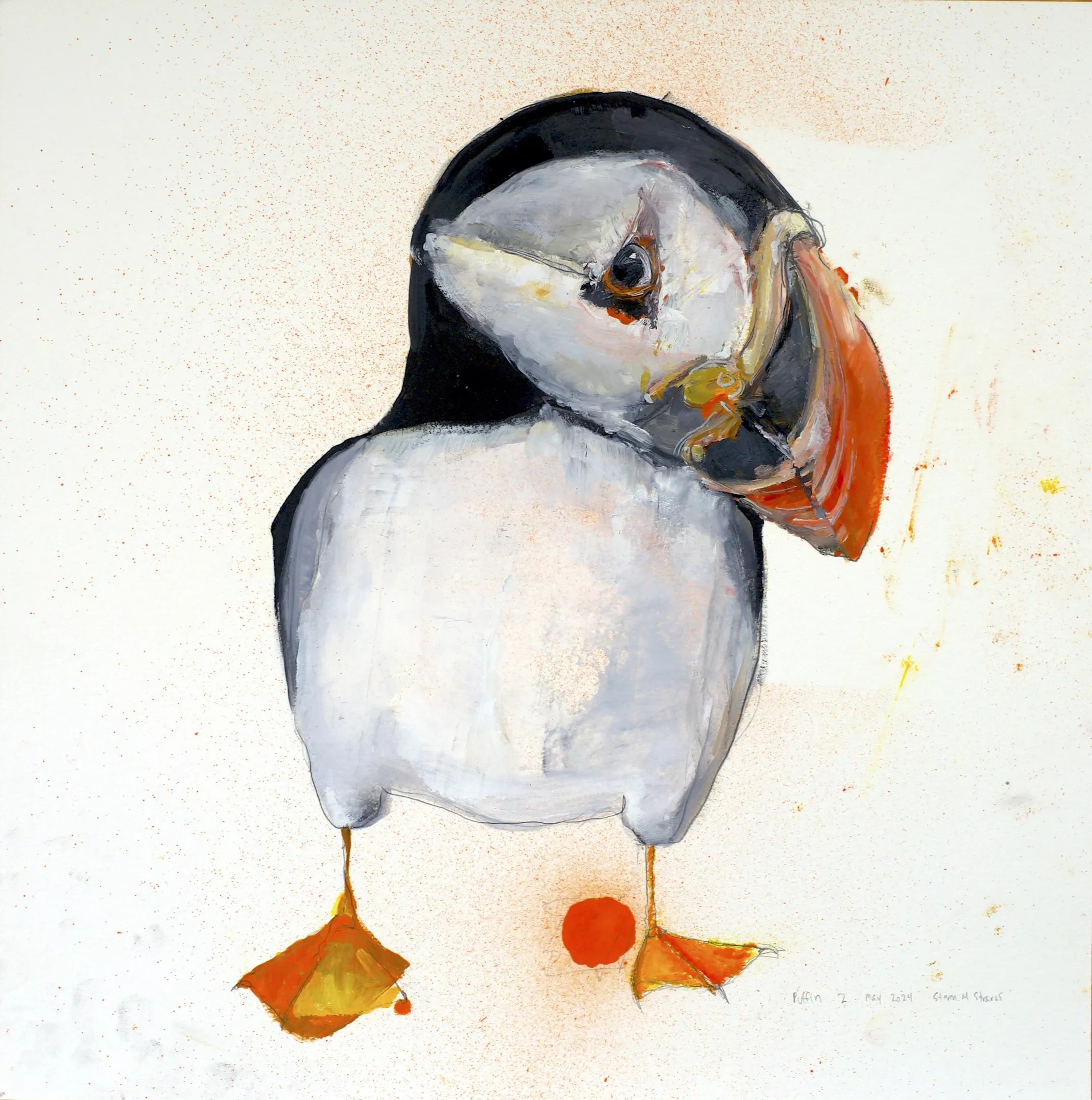
At Grit Gallery, Steven M. Strauss takes on the sky. “Flock” is his audacious attempt to paint every bird species—a project that began as a casual study and has since ballooned into nearly 300 portraits on canvas and paper. The range is striking: quick spray-paint sketches that catch the jittery pulse of a sparrow, lush oil paintings that lend an owl the gravitas of a Dutch master. Strauss, who trained at Pratt before detouring into film and hairstyling, treats birds not as field-guide specimens but as avatars of grace, motion, and resilience. The exhibition tracks his process in real time, showing how a private act of observation became a public archive of flight, fragility, and persistence—an art project still very much airborne.
“Echoes in Two Tongues” at Convey/er/or Gallery
May 3-June 8

At Convey/er/or Gallery, “Echoes in Two Tongues” amplifies the voices of five Latin American women artists—Luz Castaneda, Esperanza Cortes, Penny Dell, Marielena Ferrer, and Elisa Pritzker—whose practices braid ancestral inheritance with contemporary expression. The exhibition moves fluidly between mediums and geographies, shifting from Castaneda’s science-steeped nature studies to Cortes’s internationally exhibited, politically charged installations; from Dell’s printmaking lineage rooted in Aztec and Indian traditions to Ferrer’s award-winning social practice at Unison Arts; from Pritzker’s multi-dimensional installations to her role as a tireless curator of Latin art. Together, their works create a bilingual dialogue—English and Spanish, past and present—where art becomes both cultural preservation and connective tissue. The result is less a group show than a chorus: five distinct registers, harmonizing across borders, insisting on the power and persistence of women’s vision.
“Salvage Stories: Seven Sculptors” at Kleinert/James Art Center
Through September 14

“Salvage Stories” at the Kleinert/James makes poetry from the junk heap. Curated by Carol Diamond and Alice Zinnes, the exhibition gathers seven artists who transform society’s castoffs into sculpture that is by turns playful, mournful, and slyly political. Eric Banks conjures hope from lint and rusty pipes; Ken Butler builds instruments from trash and then plays them, animating waste into music; Diamond herself binds the street’s discarded glass and mesh into visions of repair; Bonny Leibowitz disguises plastic as organic; Shari Mendelson fashions plastic bottles into vessels that echo ancient ritual; Mark Van Wagner’s cardboard-and-concrete forms suggest ruins both comic and tragic; Shivani Patel reworks scavenged metals into delicate structures that honor her Hindu-Indian heritage. Together, the artists reframe refuse as cultural memory—salvage as survival, trash as testimony.
Faraday Cage at 1049 Samsonville Road in Kerhonkson
Through November 30
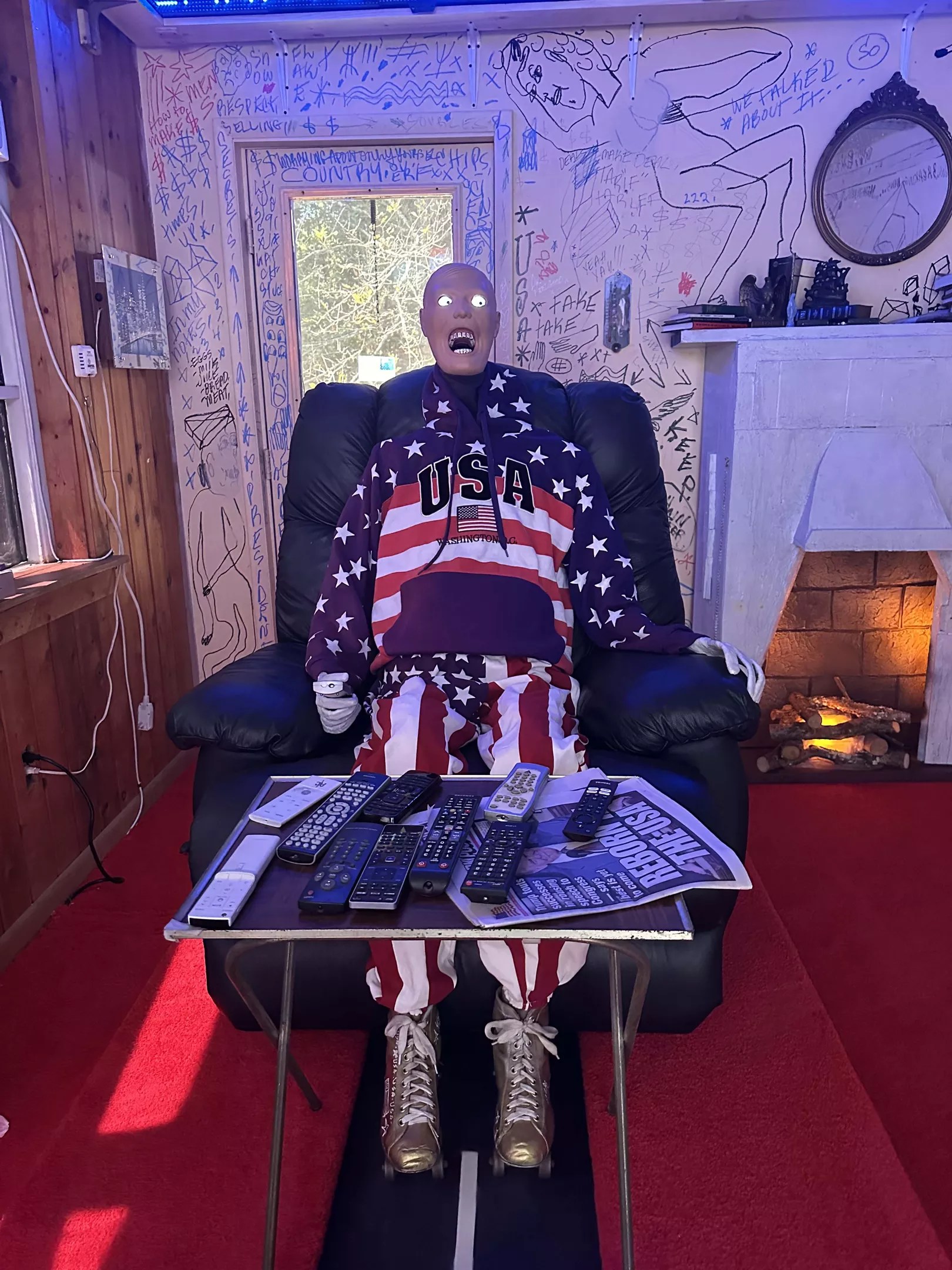
Street artist RAE BK abandons the gallery in favor of a doomed 1,200‑sq‑ft ranch house in Kerhonkson for Faraday Cage, a seven‑room immersive meditation on isolation, ideology, and survival. Over a year and a half in the making—nine months on‑site, scavenging Craigslist materials, soldering circuit boards by remote with a Pakistani technician, animating scenes with ersatz family figures—RAE transforms ordinary domestic spaces into tableau vivant. Think a La‑Z‑Boy “Eggman” fixated on a wall of TVs streaming “Breaking News” that slides into “Broken News,” a greenhouse growing food in a repurposed shower, even a firearms display leavened by a garish Super Soaker. The shimmering silver exterior makes the house itself a literal Faraday cage—an ideological bunker inviting passersby to step inside before demolition drags it down.
This article appears in September 2025 and August 2025.


