









Journalists are always looking for a story. It’s something I did everyday as a daily newspaper reporter. I thought I’d found what I was looking for some 25 years ago. A group of carpenters were spending their day off renovating the homes of disabled people.
But I never called those good-hearted people. Not after I met a beneficiary of their generosity. Once I met Thor Rodriguez-Badendyck and his family, I knew I had a story like no other. A story about a man like no other.
I met Rodriguez-Badendyck in 2000, a few weeks after he’d been paralyzed from the shoulders down in a horrendous car accident at the age of 26. He would never again have use of his hands.
Until that moment, Rodriguez-Badendyck had been a young man on the verge of hard-fought success. He was an accomplished comic book artist. He knew and everyone who knew his work could see he was destined to join the elite company of super-hero creators from the Marvel and DC universes. It was just a matter of time.
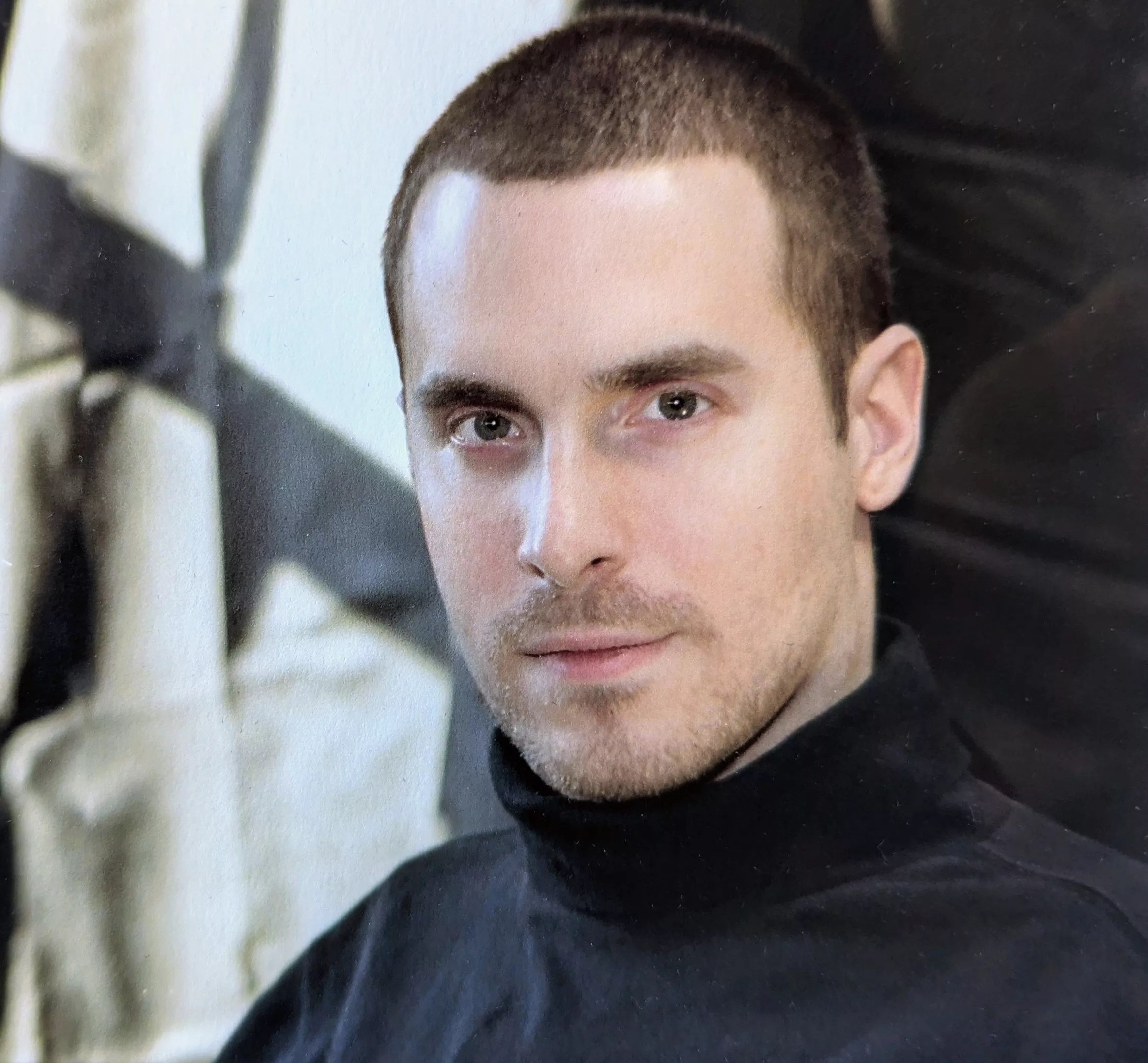
Now, that dream was dead. He had suffered unimaginable physical and psychological damage and pain. He couldn’t hold a pen or turn a page. His fate, his very survival, was in other hands and hearts.
Those hands and hearts belonged to his mother, Cynthia Rodriguez, his father, Lawrence Badendyck and the love of his life, Jen Gentile. Over a period of years, I had the honor of knowing these extraordinary people.
Cynthia Rodriguez is a fierce protector of her son’s work. And being disabled has little to do with what she knows of him and his work. Rodriguez-Badendyck was an illustrator for over 25 years, contributing work to Marvel, DC, Image, Dark Horse, WarCraft, Sideshow and many other comics as well as illustrating T-shirts, posters, book covers, trading cards, and advertisements.
Rodriguez-Badendyck was not extraordinary because of what he overcame, she says. He was extraordinary before and after the accident: “Nobody listens to Beethoven’s Ninth because the composer was deaf! Nobody lovingly frames copies of Van Gogh’s paintings because he cut his ear off! People treasure those works because they’re brilliant. And I want that to be absolutely and incontestably clear: Thor’s work is subtle and powerful and singular and beautiful and damned brilliant. He never asked art directors for sympathy, and they didn’t offer it. They published his work because it was good. Period.”
Jen Gentile met Rodriguez-Badendyck in 1996, when she was 19. “I had never met someone so clear in their vision and ability,” she recently wrote. So much of her life until then was spent “dedicated to the ordinary.” She wondered if someone who lived as boldly as Rodriguez-Badendyck did, someone who lived “in the margins” could deliver her from that ordinary life.
The answer was yes. It was easy to fall deeply in love. He seemed otherworldly. She used to tease him that he was her superman, the man who could fly, and she was Lois Lane.
Then, the accident. How does a broken hero carry on?
Gentile knew. “They look death in the eye, and they don’t blink,” she says. Rodriguez-Badendyck retrained himself to produce professional level work by holding brush, pencil, pen or stylus in his mouth in less than a year. “They look deep in themselves and they find a way back to their unwavering sense of a whole self, even if that inner person no longer matches their outer presentation,” Gentile says.

I saw that on my visits with Rodriguez-Badendyck. If not for the wheelchair, you wouldn’t know he was disabled. Especially when you watched as—using a stylus gripped in his teeth—he continually, relentlessly, worked at his art.
Impressive as it was, his art wasn’t what he discussed when we got together. It was comic books, always comic books and the multitude of films and TV series that they’d spawned. Talking with him took me back to my own days of superhero adoration. I like to think he felt that way too.
Rodriguez-Badendyck died last October of a spinal cord injury at the age of 51.
I recently ran across a quote by author Ray Bradbury that I think may explain how Rodriguez-Badendyck looked at his life. “Everyone must leave something behind when they die, my grandfather said. A child or a book or a painting or a house or a wall built or a pair of shoes made. Or a garden planted. Something your hand touched some way so your soul has somewhere to go when you die, and when people look at that tree or that flower you planted, you’re there.”

In that spirit, Rodriguez-Badendyck’s parents and Gentile have curated “Drawbak: The Work and the Life of Thor Badendyck,” a memorial exhibition of his work that will run from June 20 to July 17 at Roost Arts Gallery in New Paltz. There will be an opening reception on Saturday, June 21, from 2 pm to 4 pm.
There you’ll find some portion of what Bradbury describes,
the work of a man—an artist—unlike any other.
This article appears in June 2025.


