









Inside a two-story brown building surrounded by neat lawns and a company running trail, John Harney removes the lid from a large, blue plastic barrel, one of dozens of similar barrels at the 89,000-square-foot Harney & Sons tea factory in the northeastern Dutchess County village of Millerton.
A sweet-smelling mixture of green tea, coconut, lemongrass, and ginger perfumes the air. The 120-pound barrel is labeled Bangkok, and its contents represent one of the more than 250 single-estate and blended teas that Harney sells through its catalog, website, and retail shop. Tins of Harney tea can be purchased at luxury department stores and through gift and gourmet-food sellers, including Williams Sonoma and Crate and Barrel. Brewed Harney tea is also available in Barnes & Noble cafes.
In the factory, Harney opens one barrel after another, releasing the warm, bold scent of Hot Cinnamon Spice (the company’s most popular flavored tea); the evocative aroma of Rose Scented (a mixture of Ceylon and Keemun black teas, rose oil, and pink rosebuds), and the tangy, calming fragrance of Mint Verbena (an herbal, not a true tea).
Almost 25 years ago, Harney founded the tea business in the basement of his home in Salisbury, Connecticut, not far from the company’s current location. He had served in the US Marine Corps from 1948 to 1952, attended Cornell on the GI Bill, graduated from the university’s School of Hotel Administration, and run one nightclub and two inns. After operating the White Hart Inn in Salisbury for 23 years, he was eager to start his own family-run business.
While managing the White Hart, he had noticed that guests often asked about the tea he served. In 1960, just before Harney took over the inn, an Englishman named Stanley Mason had asked Harney to purchase tea from him. Mason had opened his own small tea company after retiring from the corporate tea world. Harney didn’t care what kind of tea he served, so he told Mason, a third-generation tea master, “that as long as he [Mason] taught my people how to brew it, then it was fine.”
In 1967, after Harney had been using tea bags at the White Hart for seven years, Mason convinced him to switch to loose tea. Mason instructed Harney and staff how to properly brew and serve the tea, a process that included providing each tea drinker with a smaller, separate pot of hot water. If the brewed tea sat for a while, and consequently became stronger, then the customer could still pour it into a cup and dilute it with water. “We probably became the only inn, and the only hotel, in America that served loose-leaf tea exclusively,” says Harney. “We didn’t have a tea bag in the place.”

Three years later, in 1970, Harney made a deal with Mason to run Mason’s tea business, which was called Sarum, the Roman name for the earliest settlement in Salisbury, England. Mason was born there, and he coincidentally ended up selling tea in the town of Salisbury, Connecticut. According to Harney, Mason used to say “one was the town of my birth, the other was the town of my heart.”
While Harney didn’t actually purchase Sarum outright, he promised Mason that he would employ the tea expert for the rest of his life, as well as provide him with an office and “half a secretary,” as Harney puts it. In turn, Mason introduced Harney to his business contacts and taught him everything he knew about the tea trade.
In 1983, Harney ended his affiliations with the White Hart Inn and the Mason tea business to start a new, separate tea company. (Mason died in 1980.) Initially, there were three investors—sons Michael, Keith, and John. According to Harney, in the early ‘80s hotel owners across the US wanted to upgrade their tea service. Out of the six or so American tea companies that existed at the time, only the Harneys conducted staff training. This willingness to educate customers about the art of tea has contributed to the company’s success.
Some of Harney’s first customers were Chuck Williams, of Williams and Sonoma, and Starbucks. “They didn’t know that I was doing it [blending tea] in the cellar of my house,” says Harney. In time, Harney moved his operation from the cellar to a garage, then to a barn. (All Harney children began packing tea when they were still in grammar school.)
Before returning to the company, Mike Harney graduated from the School of Hotel Management at Cornell, lived and worked in Paris, and became the general manager of the Richmont Hotel in Chicago. Paul graduated from the University of Wisconsin at Madison and completed a four-year tour in the US Marine Corps as a captain in the Special Forces.
In 1987, Mike became vice president of the company. Paul assumed an active role, also as vice president, in 1995. Keith remains an investor and acts as a business advisor. The company was incorporated in 1990, and it continues to be run under the Harney & Sons banner. In 2004, the business moved to Millerton, after the factory building at the junction of Routes 22 and 199 became available.
Mike’s wife Brigitte runs the gift shop next to the Harney tea lounge and tasting room located in the village of Millerton, a mile or so from the factory. Paul’s wife Mimi runs the Parlour boutique next to the Harney tea lounge with a business partner. A few grandchildren and at least one nephew are also involved in the tea business. Altogether the company employs about 80 people, including factory workers and salespeople.
Mike and Paul do most of the buying, which includes annual trips to tea-growing estates in India, China, Japan, Taiwan, Sri Lanka, and Vietnam. The company’s catalog and website list teas that are currently available, although some teas “retire” as new teas, or harvests, replace them. Harney & Sons sells black, green, oolong, and white teas, along with flavored, floral, fruit, herbal, kosher, organic, and decaffeinated varieties.
Many teas for sale in the catalog are accompanied by ratings from Mike, who uses a scale of 0 to 5 to rate briskness, body, and aroma. Earl Grey Supreme has a rating of 1 for briskness, 2 for body, and 5 for aroma. Organic Assam GBOP (Golden Broken Orange Pekoe) has more briskness (a rating of 3) but is rated lower in aroma (a 2).
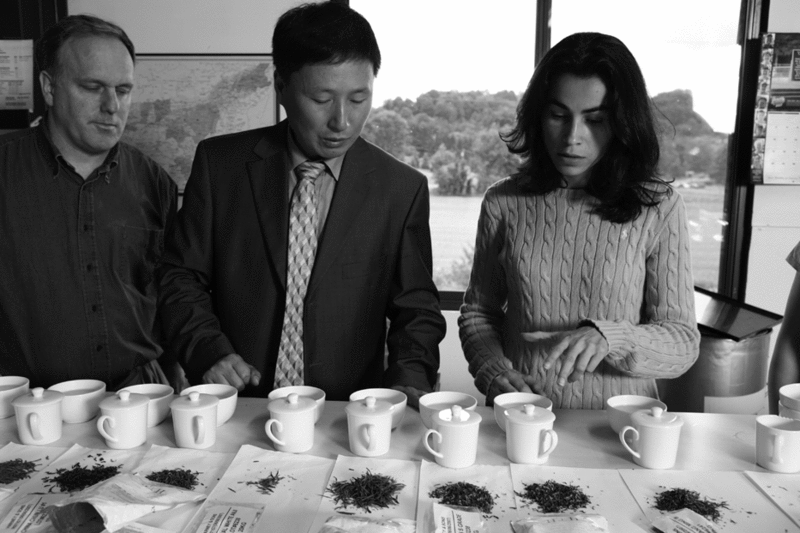
Mike Harney and Elvira Cardenas are the company’s official tea tasters. They select which teas to buy, and they test product that has been blended and packed, all in an effort to maintain consistency and quality.
In a room on the second floor of the factory, Harney and Cardenas taste about 50 teas a day. First they smell the tea. If it doesn’t smell right, they discard it. Next they weigh the tea on a small scale. To make sure that they brew, and taste, the same amount of tea each time, they use a dime as a counterweight. After the tea is brewed, Harney and Cardenas look at the liquid, evaluating it for clarity and brightness. If the appearance meets their satisfaction, they smell it. If the tea smells good, they then taste it by sucking it through the back of their mouths, making sure that it hits all of their tastebuds.
Among the many hotels that serve Harney tea is the Dorchester in London. Last April, the Tea Guild of the nonprofit UK Tea Council awarded the Dorchester with the tea world’s “Oscar” (so named by the Council): the Top London Afternoon Tea Award 2007. The Tea Guild’s inspectors, who travel incognito while scouting out tearooms throughout Britain, were impressed by the Dorchester’s “excellent range of teas that are beautifully brewed and expertly served by very knowledgeable staff.”
In another coup, Harney & Sons was selected by the Historic Palaces of England to blend and pack tea under the organization’s private label. The teas are sold in the palace shops and in hotels and retail outlets in the UK. American consumers can purchase the tea through the Harney website and catalog.
Starting this summer, Harney & Sons will be producing ready-to-drink, bottled iced tea. All five flavors will be made from fresh-brewed organic teas. Says John Harney, “The day we package it will be the day we make it.” Each bottled tea will be sweetened with a minimal amount of cane sugar and honey, and the calorie-content will be relatively low—around 40 calories per bottle).
In 2005, Bon Appetit magazine named John Harney its Food Artisan of the year. The publication lauded Harney for helping make tea respectable in the US and for starting a company that provided artisanal-quality product at decent prices.
What does John Harney drink on most days? In the morning, he has a few cups of Harney & Sons Sencha green tea at home. He drinks a cup of coffee on his way in to the factory. And around 3pm, he has a mug of his company’s own Irish Breakfast.
Harney & Sons Tea, 1 Railroad Plaza, Millerton. www.harney.com.
This article appears in July 2007.


