









John’s son woke up with a severe headache on March 26. His son, an inmate in Dutchess County Jail, completed a request to see an in-house nurse and gave it to a correctional officer. The officer slid it back under his cell door and said, “There’s nothing wrong with you.”
According to John (not his real name), inmates sometimes request medical attention just to get out of their cell. By the following day, his son still felt ill. So he completed another request the next morning, this time handing it to a different correctional officer. Hours went by, and he never saw a nurse. That’s when John called Eloise Maxey, president of the Northern Dutchess NAACP.
Maxey called Dutchess sheriff Adrian Anderson, who then contacted the jail. When John’s son was finally tended to by the nurse, he was scolded. “I don’t know why you did that. You could have gotten me in trouble. Wait your turn,” the nurse reprimanded. He had a 99.9-degree fever. John wonders what would have happened if he didn’t step in. “What happens to people who have no one who cares about them?” he asks.
His son didn’t test positive for the novel coronavirus, which has infected over 500,000 people in the United States, but he had every reason to be concerned.

While public officials stress personal hygiene and social distancing to curb the virus’s spread, in jails, prisons, and correctional facilities, those measures are nearly impossible to follow, making such facilities potential incubators for infectious disease. Crowded conditions, lack of quality medical care, and restrictions on hygienic supplies such as soap and hand sanitizer have left thousands of inmates vulnerable to infection. At Cook County Jail in Chicago, one of the largest single-site jails in the US, over 500 inmates and staff have already tested positive for the COVID-19.
COVID-19 Infections in Facilities
As of April 16, 165 inmates and 693 staff and correctional officers across all state-run correctional facilities have tested positive. The Department of Corrections and Community Supervision (DOCCS) won’t disclose the locations of those infected, citing security reasons.
But according to union stewards for the New York State Correctional Officers and Police Benevolent Association, as of April 3, at least 63 officers had tested positive, with another 238 in quarantine, across the Mid Hudson Valley’s five state-run correctional facilities: Green Haven, Fishkill, Downstate, Shawangunk, and Wallkill.
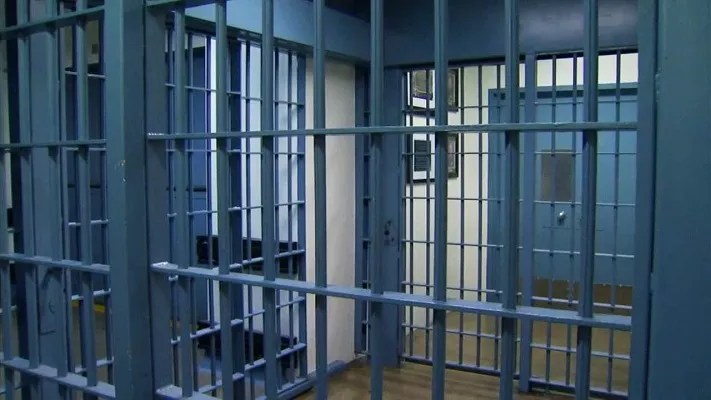
On the county jail level, there are zero confirmed cases among inmates at Dutchess, Orange, Ulster, and Columbia County jails, and none among officers at the latter two. Four corrections officers at Dutchess County Jail have tested positive, with another 15 in quarantine, as of April 16, according to jail administrator Michael Walters. Orange county Under Sheriff Kenneth Jones reported that the jail has a “handful” of infected officers, but declined to give specific numbers.
Since April 9, at least 23 Westchester County Jail employees and 33 inmates have tested positive. The inmates are quarantined and being monitored by the County Corrections Department.
Efforts to Protect Inmates in the Mid-Hudson Valley
To address the virus’s threat to inmate populations, Dutchess, Ulster, Orange, and Westchester County Jail officials have suspended visitations and are currently screening jail staff for exposure to the virus before they enter these facilities. This includes temperature checks and surveys about previous travel. In Ulster, staff must pass through a mandatory handwashing station before entering the facility. The jails and correctional facilities also increased sanitization efforts, and DOCCS is installing hand sanitizer dispensers in all facilities. Westchester County Jail will use a disinfectant fogger twice between now and June.
According to DOCCS, the correctional facilities are operating under a comprehensive infectious disease protocol that has been modified for the pandemic. The department says it suspended inmate transfers from county jails and transfers between correctional facilities, except in medical emergencies and other serious circumstances.
Officials are also screening incoming inmates. “Regardless of the outcome of that screening, a prisoner is subject to a 14-day quarantine to eliminate any possibility that a prisoner may have COVID-19 but no symptoms,” says Jones. One county over, in Ulster incoming asymptomatic inmates are isolated for 10 days.
Testing in Jails
The county jails and state-run correctional facilities are only testing inmates if they present symptoms of the COVID-19. Dutchess spokesperson Colleen Pillus says PrimeCare, the jail’s medical provider, is supplying tests as needed onsite. Orange County inmates who test positive are quarantined in negative pressure cells, where they receive medical care.
In Ulster, an inmate presenting symptoms is transported to a hospital for testing. “If the test is positive the inmate will be transferred to a medical facility,” says Ulster County sheriff Juan Figueroa.
Inmates in state-run correctional facilities are isolated as their swab test is processed. “If an individual’s test result is positive that person is maintained in isolation for a minimum of 14 days,” says DOCCS.
Positive Cases Among Correctional Staff and PPE
While staff in both county jails and state correctional facilities are now wearing personal protective equipment (PPE), such as N95 respirators and surgical masks, to avoid asymptomatic spread of the virus, PPE wasn’t an on-the-job requirement in the state’s correctional facilities until recently.
Previously, DOCCS only allowed masks “when appropriate to the medical situation.” The decision comes after 120 correctional officers in New York State tested positive for the novel coronavirus and 700 were quarantined.

State and county facilities continue to weigh whether inmates should wear PPE. The CDC’s guidance for correctional and detention facilities states that possible asymptomatic quarantined inmates and those who’ve tested positive should wear face masks.
Joans defends the Orange County Jail’s decision not to give inmates PPE. “Since we have a 14-day quarantine before entry into the general population, there is no risk that a prisoner has COVID-19 with no symptoms, thus no reason for surgical masks,” he argues. Dutchess County Jail will distribute masks by the end of the week for inmates to wear while out of their cells, says Dutchess County jail administrator Michael Walters. Before this announcement, John says his son was first punished then allowed to wear a makeshift mask.
Calls to Downsize Inmate Populations and Publicize Action Plans
In light of the growing number of positive cases among jail staff and inmates in the state, some criminal justice advocates say screenings, suspended visitations, and other such methods aren’t enough to protect inmates. On March 20, The New York Civil Liberties Union (NYCLU) addressed a letter to Governor Andrew Cuomo urging him to downsize the state’s incarcerated population, citing social distancing as the best way to combat the spread of the novel coronavirus.
“By their nature, prisons and jails—like schools or large crowds—are less conducive to social distancing. In the absence of immediate and decisive action, incarceration will turn into a death sentence for many New Yorkers,” the letter reads.
The organization calls for jails and prisons to release those:
• With underlying health conditions
• Over the age of 50
• Who’ve violated parole, court appearance orders, and other administrative violations
• Detained pre-trial and those who do not pose a threat to public safety
• Scheduled for release soon
On March 26, Governor Andrew Cuomo ordered the release of 1,100 parole violators across the state.
The Ulster District Attorney’s Office and County Court mandated the release of over 20 inmates with underlying medical conditions and under 30 days left on their sentence. So far, 65 inmates have been released from Westchester County Jail, and District Attorney Anthony Scarpino continues to review release requests.

Of the 21 cases submitted, Dutchess County Court released 18 individuals under the county’s Alternative to Incarceration programs, such as Electronic Monitoring and pretrial monitoring. An additional 12 people detained on parole violations were released. Since March 17, 15 individuals entered pretrial services instead of serving jail sentences at their arraignment. Pillus says this is an ongoing process as officials weigh public safety and the state’s new bail reform policies. According to Pillus, the reforms decreased the jail’s inmate population to a 150-person average, below its capacity.
Orange County hasn’t released any inmates. “Over a month ago we assessed the inmate population that were being held on non-violent crimes that fit the profile of persons most at risk if they contract COVID-19 and there were zero,” Joans says. DOCCS told Columbia-Green Media on April 15 that they’re looking to release prisoners over the age of 55 who have at most 90 days left on their sentence. To qualify inmates must also “not pose an undue risk to public safety.” Previously, DOCCS ordered facilities to limit double-bunking and cancel programs, including academic and vocational education, drug treatment, and sex offender programs to better facilitiate social distancing.

Ironically, NYCLU Lower Hudson chapter director Shannon Wong says that these programs’ absences keep many inmates from completing requirements needed to transfer to less secure facilities. Recently, the mother of an inmate in the Auburn Correctional Facility sought aid from the Lower Hudson chapter because her son is unable to graduate from his now-canceled program and leave the facility. “Everything just seems to be on hold right now,” Wong says.
Another issue concerning Wong is access to clear information from facilities, as her Freedom of Information requests to county officials have not been answered. Her concern echoes NYCLU’s request for DOCCS and county jails to make their COVID-19 action plans public. “There’s just a real lack of transparency at a time when transparency really engenders confidence and public trust,” Wong says. “People who have family and friends incarcerated want to know they’re safe in those facilities.”
John says he’s had difficulty contacting the jail to check in on his son’s health, with officials stating they’ll contact him if anything happens. His son is scheduled for release this week, and John looks forward to his arrival. “Everyone in these jails does have someone who loves them,” he says.
This article appears in April 2020.


