








For decades, the movie theater was the cultural heart of many rural communities across America. The 1920s and ’30s were the peak period for the proliferation of local movie palaces built to offer cheap, entertaining escape to residents in towns where there was often nothing else to do on a weekend other than enjoy a magical night out at the pictures. Even in the depths of the Depression movie houses thrived, with hundreds opening between 1925 and 1930 to become the artistic anchors of the small, agriculturally dominated towns they served.
But with the advent of television in the 1950s and the rise of cable and multiplex cinemas in the 1980s and ’90s, many of them shuttered or recalibrated to attract an alternative audience by reinventing themselves as arthouse cinemas. With today’s dominance of streaming movie services, however, surviving independently run, unconventional outlets have had their work cut out for them when it comes to making their bottom lines while keeping their doors open and their screens lit.
In the Hudson Valley, there’s the pioneering Upstate Films, which opened as a nonprofit in 1972 and acquired the Orpheum Theater in Saugerties in 2021; Denizen Theatre in New Paltz; multi-arts institution Time and Space Limited in Hudson; Tinker Street Cinema in Woodstock; and the Jacob Burns Film Center in Pleasantville. (The Community Theater in Catskill, which closed in 2020, will reopen in May as a film and live performance venue under new ownership.) And a handful have been able to keep their projectors rolling in the faces of the hydra-headed mall multiplexes and the streaming monoliths by adapting to become nonprofits that present non-mainstream programming. This month, we decided to check in with a few of the bold nonprofit theaters in the region to see how they’ve been faring.
[Editor’s Note: Due to an error in our research, we didn’t realize that the Moviehouse in Millerton became a nonprofit in 2022. Our apologies for not including the Moviehouse in the article.)

Collective Effort: Rosendale Theater
Built in 1905 as the Rosendale Casino, the building that houses the Rosendale Theater was briefly the town’s firehouse before becoming a full-time movie house in 1920 and adding a stage for vaudeville and burlesque performances in 1930. In 1949 the theater was taken over by the Cacchio family, who ran it until 2009, when their surviving members announced their plans to sell the business. In response to fears of losing their beloved local landmark to ever-looming thoughtless development, a group of concerned area movie lovers banded together to form the Rosendale Theater Collective with the goal of purchasing and preserving the theater.
The RTC’s board of advisors includes actors Aidan Quinn, David Strathairn, Melissa Leo, Denny Dillon, and Mandy Patinkin, radio personality Bruce “Cousin Brucie” Morrow, screenwriter Ron Nyswaner, and author Kim Wozencraft. Through dozens of small fundraising efforts—potluck dinners, live-music benefit events, an online auction—the group was able to buy the facility. A 2010 grant of $50,000 from the Pepsi Refresh Project covered much-needed renovation costs, and the theater attained its 501(c) (3) status the same year. Despite the Rosendale Theater’s success on those fronts, though, its existential efforts remain ongoing.

“Covid definitely hurt us,” says Rob Leitner, the theater’s managing director. “And, of course, streaming services, people binge watching at home, have meant falling ticket sales. We only have one screen, and we can’t get new big releases the first week they’re out—we don’t really do blockbusters or Marvel movies—so we try to find programming that appeals to broad audiences while also offering something different. We do newer indie films along with our themed retro film series, all of which have been greatly successful: classic films, music documentaries, spaghetti westerns, ‘Sunday Creature Features,’ our ‘WTF Wednesdays’ series of quirky films, silent films with live piano accompaniment. But ticket sales only account for about 30 percent of our gross revenue, and you can only make so much from selling popcorn and soda. So we’ve renovated to make it a more flexible arts space, taking out four rows of seats to open up a dance floor and expand into doing more live events.” (March 14 promises a concert by finger-style guitarist Henry Ferland.)
Centennial Celebration: Crandell Theater
Next year, the Crandell Theatre in Chatham will mark its 100th anniversary. “Right now, we’re closed while we work with an architect to do some renovations ahead of the centennial,” says the Crandell’s director, Brian Leach. “Since the property was built in 1926, there were some pressing repairs that we had to do, like updating the boiler, and the roof needed to be redone. We’re also expanding the lobby; restoring some of the original lighting fixtures; putting in a retractable screen and all-new, ADA-compliant seats; and converting the storefronts in the front of the building to spaces where customers can gather to wait for screenings instead of lining up outside when the weather is bad.” A major line maker at the theater is the annual FilmColumbia festival, which was initiated in 1999 to screen upcoming domestic and international films for 10 days in late October.

“With all of the competing movie-viewing options today, I think it’s rare for a historic one-screen movie theater to still be in existence and not have gone the nonprofit route and be multifaceted with their programming,” says Leach about the site, which became a nonprofit in 2010 and is the largest and oldest single-screen theater in Columbia County, and was added to the state and national registers of historic places in 2017. It runs community outreach programming that includes its Crandell Kid Flicks series and Farm Film Festival, which benefits the local food pantry.
“We’re always looking for new revenue streams, new ways to raise funds. And we’re always looking for ways we can expand our offerings within our mission by adding to our facility and expanding our programming. In the end, our ‘product’ is the movie-going experience, which is something you can only get at an actual theater like this one.” While the renovations are taking place at the Crandell, it’s keeping its presence in the area aloft via sponsored screenings at nearby multi-arts center PS21.
Triple Treat: Triplex Cinema
“It was originally a roller rink,” says Gail Lansky, a preschool teacher who serves as vice president of the Triplex Cinema about the architecturally modern complex in Great Barrington, Massachusetts. “In 2022, about 20 years after he’d opened it as a movie theater, the original owner decided to get out of the business and sell the building. An outside developer with a reputation for buying up older cinemas and shuttering them was interested in buying it, and when people in the community got wind of that in March 2023 they formed Save the Triplex, a grassroots group, to buy it and reopen it as a nonprofit. I’d just moved to the area, and I’d worked in indie cinema before, doing outreach for an organization in Amherst. I read about what was happening with the theater in the Berkshire Eagle, so I got in touch with the organizers and told them, ‘I don’t have money to help out, but I can offer my time.’” Save the Triplex swiftly lived up to its name, raising seed money through individual donors and taking ownership of the operation and reopening in November 2023.
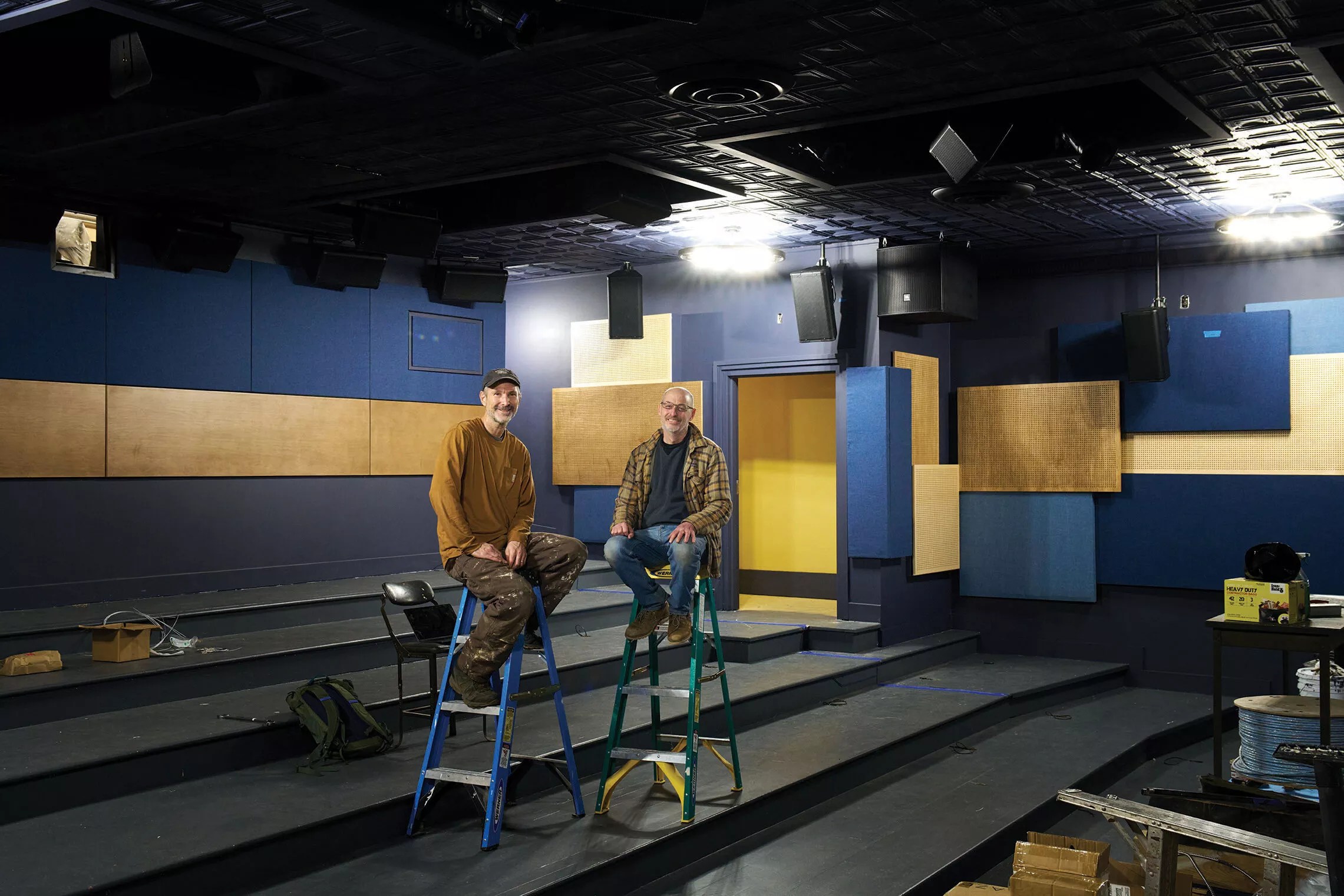
Also helping to sustain the theater is its membership program, which Lansky says now numbers more than 500 individuals. “Members get free movie tickets on their birthdays, discounted and early access tickets, free popcorn, and other perks,” she explains. “When the Triplex first opened two decades ago it was a seminal moment for Great Barrington, and it really became the nexus of nightlife here. We’re lucky to have the Mahaiwe Performing Arts Center two blocks away, but it’s not open every night. People here really feel strongly about the need to continue to have a movie theater in town and they’ve really stepped up.” Belying the cinema’s name, the building has a fourth movie-screening space, for which it has recently obtained a grant earmarked for renovations to get the additional outlet operable.
“A big moment for us was when Bill Murray came to speak at the screening of The Life Aquatic with Steve Zissou that we did after we’d reopened,” Lansky recalls about the 2023 guest-speaker film series that also included Leonard Bernstein’s daughter Jamie Bernstein for a showing of Maestro and director Susan Seidelman for Desperately Seeking Susan. “Murray said, ‘I don’t watch movies on TV. There’s nothing that can take the place of seeing a movie in an actual movie theater.’”
This article appears in February 2025.


