









The warm eyes of the piano player glance up to meet those of the customers shuffling into Aroma Thyme Bistro in Ellenville. He smiles and nods to each as his sprightly fingers navigate the standard “(Back Home Again in) Indiana.” Once they’ve taken their seats, scanned the menu, and ordered drinks, dinner, and dessert, most of them barely look at him again. “Just some nice jazz on a Thursday night,” the diners think. But if someone were to whisper to them the names of some of the musical projects he’s overseen, the mood of the room might turn to stunned silence as mouths are suddenly shut, forks put down, and eyes and ears shifted toward the unassuming guy at the keyboard. The lanky maestro is John Simon, who’s worked with The Band, Janis Joplin, Leonard Cohen, and Simon and Garfunkel, to name a few, producing some of the greatest records in music history.
But being in the background doesn’t bother Simon. “I told the [restaurant] owners in 2002, ‘If we got a piano in here I’d play for meals,’ and [in the warmer months] my trio has been there ever since,” says Simon. “For me, it’s just about the joy of playing music with other people. I call it my ‘jazz gym.'”

Simon was born and raised in Norwalk, Connecticut, to a country doctor who also happened to be a Julliard-schooled violinist. “My parents were always listening to classical records, but the first records I remember really grabbing me were their John Philip Sousa 78s,” he says. “I loved the brass and how rhythmic his music was. Then a relative gave me a copy of Benny Goodman’s Famous 1938 Carnegie Hall Jazz Concert, which got me excited about jazz.” After starting piano at age four, he was soon learning stride, boogie-woogie, and improvisational techniques and began writing songs before reaching his teens. With some buddies he started a jazz band whose first job was, unbeknownst to the group (or their parents) beforehand, was backing a stripper during a “gentlemen’s night” at a local Italian restaurant. Even though he would later do much to shape rock ‘n’ roll, when it first arrived in the 1950s it didn’t do much for him. “Coming from jazz, rock ‘n’ roll seemed too simple to me then,” he admits. He composed stage musicals in high school and enrolled as a music major at Princeton, where he wrote more musicals and studied with composer Milton Babbitt. His reputation spread and corporate recruiters came calling. “I got two job offers,” he says. “One was to write commercials for the Ted Bates advertising agency, and the other was to be a trainee for Columbia Records. I wasn’t sure what a trainee did, but Columbia sounded more interesting.”
At the label Simon worked on original Broadway cast recordings and historical projects before accepting an A&R/production position. After overseeing albums by polka king Frankie Yankovic and jazz saxophonist Charles Lloyd (the latter’s 1965 Of Course, Of Course, which, coincidentally, featured future Band guitarist Robbie Robertson), he had his first hit with The Cyrkle’s 1966 single “Red Rubber Ball.” Now given carte blanche at Columbia, Simon produced The Medium Is the Massage, a surreal audio verite album by media theorist Marshall McLuhan, and Songs of Leonard Cohen, the 1967 debut by the iconic Canadian singer-songwriter. Later that year, the young producer was directed to help with (no relation) Simon and Garfunkel’s Bookends, which became an immediate number one upon its April 1968 release. After hitting once again that year with Blood, Sweat and Tears’ Child Is Father to the Man, Simon, by then one of the business’s hottest rising producers, swapped his salaried staff position for the higher-paying status of a freelancer.
At the Monterey Pop festival in 1967, he had met Peter Yarrow of Peter, Paul and Mary, who invited him to his hometown of Woodstock to create music for and help edit You Are What You Eat, a countercultural film the folksinger was coproducing. One night, while Simon was editing rushes with filmmaker Howard Alk, the pair heard an awful racket outside the house. The noise turned out to be “four guys dressed in a half-hearted gesture toward Halloween, playing instruments with which they were apparently unfamiliar.” The revelers were Robbie Robertson, Rick Danko, Richard Manuel, and Garth Hudson—Bob Dylan’s band, the Hawks—who had recently moved to town to be near their reclusive leader (drummer Levon Helm would soon rejoin them, moving into the West Saugerties house shared by Danko, Manuel, and Hudson and known to locals as “Big Pink”). “Howard had heard my zany Marshall McLuhan album and he had heard a tape that Richard, Rick, and Garth had recorded in their basement,” says Simon. “It was entitled ‘Even If It’s a Pig, Part Two.’ Like the McLuhan album, it was a crackpot production. So Howard thought we all would be a good match. He was right.”
And how. When the Hawks slipped out from under Dylan’s wing in the fall of 1968 to make their own album, they felt Simon out about producing it. “It wasn’t until my third trip up to Woodstock that [Robertson] let me hear the songs that he and the others had taped on an old reel-to-reel in the basement of Big Pink,” says Simon, then living in New York. “Of course I loved the material.” That material was from the legendary Basement Tapes the group had recorded with Dylan, and the studio album the quintet—eventually known as The Band—would soon make with Simon was that year’s magical Music from Big Pink, home to “The Weight” and other timeless tracks. Simon and the five’s fruitful partnership continued with 1969’s The Band, on which he was listed as a group member—even though de facto band leader Robbie Robertson had rejected his overtures about formally joining. Recorded raw and largely live in a Los Angeles pool house rented from Sammy Davis, Jr., the sophomore set contains the classics “The Night They Drove Old Dixie Down” and “Up on Cripple Creek” and, arguably, surpasses even Big Pink as The Band’s high-water mark and stands among rock’s most perfect albums.

Despite the success of The Band’s first two efforts, however, the group next decided to produce themselves, bringing in Todd Rundgren to engineer 1970’s Stage Fright (although Simon did get a “special thanks” on the album for providing light input). Simon and The Band wouldn’t work together again until 1976, when the group tapped him to be music director for their grand, star-studded farewell concert. For the show, famously immortalized in the film The Last Waltz, the classically trained New Englander rehearsed and conducted the musically illiterate Band members as they performed the songs of Van Morrison, Neil Young, Joni Mitchell, and other guests.
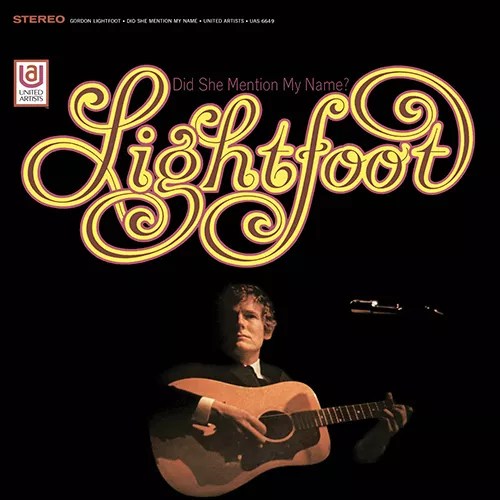
Between his work on the first two Band albums, Simon was paired in the studio with another act handled by Bob Dylan/Band manager Albert Grossman: Big Brother and the Holding Company, which included a young vocalist named Janis Joplin. Simon produced the group’s 1968 breakthrough, Cheap Thrills. “Janis was a very strong force in the studio—she definitely didn’t keep quiet when she had opinions,” Simon says about the powerful, infamously tough-living singer. “But [making the album with her] was hard. She’d been thrust into the world spotlight way before she was ready, and she was such a wild card because of her drinking and drug use. She’d suddenly lost any privacy she’d once had, until the day she died.” The year of the Cheap Thrills sessions, Simon also supervised Gordon Lightfoot’s Did She Mention My Name?, Mama Cass’s Dream a Little Dream of Me, and the Electric Flag’s An American Music Band.
Simon made the permanent move to Ulster County in 1969, buying the rustic, wood-frame house in Napanoch in which he still lives (for years, the recordmaker also maintained digs in New York). In 1970 he finally made his own debut with the plainly titled John Simon’s Album, an underrated gem featuring members of The Band, Leon Russell, and others. He’s since released seven more solo records that traverse rock, pop, jazz, and his unabiding love of the Great American Songbook (2000’s Hoagyland: The Songs of Hoagy Carmichael is a standout example of the latter style). “I guess I’ve always been attracted to [Great American Songbook standards] because they’re the bedrock of most jazz players,” he offers. “Those songs tend to be a challenge to play, because they usually have more than three chords. They also have melodies that are unfailingly beautiful and work well in tandem with the lyrics.” Simon has recorded as a session player with Eric Clapton, Howlin’ Wolf, Jesse Ed Davis, Dave Mason, and Taj Mahal (frequently touring with the latter), and produced other artists, including Bobby Charles, Seals and Crofts, Gil Evans, David Sanborn, Hirth Martinez, Al Kooper, Michael Franks, and Steve Forbert (1979’s Jackrabbit Slim, with the hit “Romeo’s Tune”). He’s also scored two ballets for famed choreographer Twyla Tharp, written circus music for high-wire walker Philippe Petit, and rekindled his high school love of Broadway musicals by producing the original cast album of The Best Little Whorehouse in Texas (1978) and assembling and supervising revues devoted to songwriter Johnny Mercer and rock ‘n’ roll from the 1950s through the 1980s.
In recent years, Simon has spent far less time in the producer’s chair and much more on the piano bench, playing at Aroma Thyme between accompanying his wife of 45 years, actor C. C. Loveheart, in the 2010 touring cabaret show “Alone Together for the First Time Again.” But there are those who observe that he’s simply rechanneled his renowned acumen into another medium. “John’s a lot like a producer when he’s involved in theatrical projects,” says Shadowland Stages’ Brendan Burke, who directed Loveheart and Simon’s comedic play “Jackass Flats” when it premiered at the Ellenville theater in 2011. “He’s an incredibly creative guy, constantly coming up with ideas. He’s also open to new ideas from others and can let things happen while keeping to the original trajectory of his vision.” In 2012, Simon, who currently sits on the Shadowland Stages board of directors, began developing “Rock Talk,” a lecture presentation on his life in rock ‘n’ roll. “Rock Talk” laid the tracks for “Truth, Lies, and Hearsay,” a production based on his unpublished memoir blending his reminisces with live music. It debuts this month.
Not that he’s never felt he shouldn’t be rewarded for the commercial success of the records he’s worked on, but for Simon commercial success has never been the prime objective. “I’ve always been interested in what records could do [artistically], rather than their commerciality,” says the 75-year-old. “If I happened to record something that did well commercially, that was all fun and good. But I was never aiming for commercial success. I just wanted to make records I enjoyed and hoped other people would enjoy in the same way.”
John Simon’s “Truth, Lies, and Hearsay” will premiere at the Kleinert/James Center for the Arts in Woodstock on May 14 at 7:30pm. Byrdcliffe.org.
This article appears in May 2016.


