









Poets reading on the local scene display ample energy, tell-all emotion, and volume, but they sometimes lack a basic desideratum: an ear for the beauty of words. The poems in these printed volumes, on the other hand, are constructed with such care for sound, they ask to be read aloud.
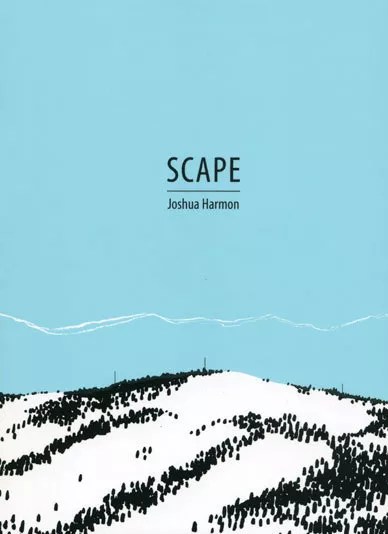
Joshua Harmon’s collection Scape opens musically (“heelprint and halter, halfway/heard”) and later passages recall Hopkins’s melodies: “My haloed seeing rues transparency,/shoos such likelihood aft, away: I yawn.” While inspired by landscapes, these poems wrestle with memory and sense impression, striving to constitute a self out of what seems a chaos of data. Topography becomes the stage on which the poet struggles to master time and change. A professor at Vassar College, Harmon often views past and future with uncertainty, while the present appears in palpable though fragmented forms: “scattered cast-off rags, torn strips of rubber” or “crumpled cardinal’s red feathers in the road.” Even these observed realities, though, seem often to point toward “the site of some larger omission.” The reader will be excused for neglecting thematics and simply listening to Harmon’s lovely, well-crafted sounds.
David Appelbaum’s Window with 4 Panes aims high: The poet in his “Overture” claims a prophetic mantle, aiming to speak a truth “beyond each simulation by language,” over obstacles of “dislocation, displacement, dissonance.” Appelbaum, whom we must thank for his work at New Paltz’s Codhill Press as well as for his poetry, acquits himself well, writing of big topics with a light hand using a spare, short line. The first section takes on mortality (“sorrow/to the bone/all for petty things”), while the second traces a kind of coping, promising “survival is rare glory.” “The garden must be praised,” he declares, for pushing on in this “dangerous oxygen.” The final poems are precise and authoritative, rather like oracular utterance.
Jeffrey Yang’s An Aquarium exhibits an ABC of sea creatures. One cannot object to certain surprising additions (Google, intelligent design) since Yang’s ocean is the unconscious imagination where, according to in the epigraph from Valéry, the mind can only wander “like a sleepwalker.” Accordingly, the Beacon resident’s poems are highly associative, setting off on semiotic bypaths suggested by a word or a sound. The poet adores verbal music and writes free-but-cadenced lines that revel in out-of-the-way terms, scientific words, and foreign tongues. Do we need a poem after he mentions the Hawaiian name for triggerfish: humuhumunukunukuapua?
For all his fondness for form (with the 17th-century essayist Sir Thomas Browne looking over his shoulder), Yang nails down content as well. In fact, many of the poems approach a traditional “reading the book of nature,” even concluding with morals (some focused: “War/and protectionism:/two causes of starvation”; some vaguer: “Every doorway tells a story.”). In this ever-so-clever volume the reader will explore the depths of the sea; he or she will move across the globe and through history (Yang is a translator of classic Chinese poetry) and learn a few words in the process. An Aquarium is polished, intelligent, and, for all its erudition, readable.


This article appears in May 2009.


