









The city of Hudson packs more juice into just over two square miles than many places do into 20 and always has. Whether in its early whaling era, its later industrial boom, the colorful reign of Diamond Street as the Hudson Valley’s wildest red-light district, or its current iteration as a mecca for arts, antiques, fashion, and hospitality, there’s a potent vivacity in the air here. Resident and photographer Chad Weckler has captured an evocative and powerful expression of its current moment in Creative Exposure: Portraits of Hudson, New York, a book that gathers photos and short verbal profiles of 107 of its denizens into a vivid mosaic of lives being lived.
“I had a list of hundreds to choose from, people that I thought had contributed their creativity to the community of Hudson over a period starting in the 1980s to now,” says Weckler. “So some people are in their 90s, some are in their 20s, and once I started, it grew. I was going to do 100 portraits in one year, which I knew I could do. And what I would do was contact an individual and say, ‘Would you be in it? Okay, you tell me where you want to be photographed and when, you wear whatever you want to wear, and I’ll meet you there.”

In defining creative impact, Weckler cast a broad net. There are lots of artists, musicians and writers; there are also activists, gallerists, inventors, entrepreneurs, a circus clown and Denise Kegan, the former head waitress of the iconic Red Dot Restaurant and Bar. “She was one of our first introductions to Hudson, and I think that’s true for a lot of people,” says Weckler. “Red Dot was the original hangout for a lot of artists and literary people and actors and painters, so Denise fit in, with her creative hospitality.”
An arts organizer with grant writing experience, Weckler was able to get some funding for film and processing for the initial 100 photos from the New York Foundation for the Arts and stretched his resources to cover seven more, and “as often with artists ended up financially unrewarded, but creatively fulfilled,” he observes. “Making a dream happen can be a reward itself.”
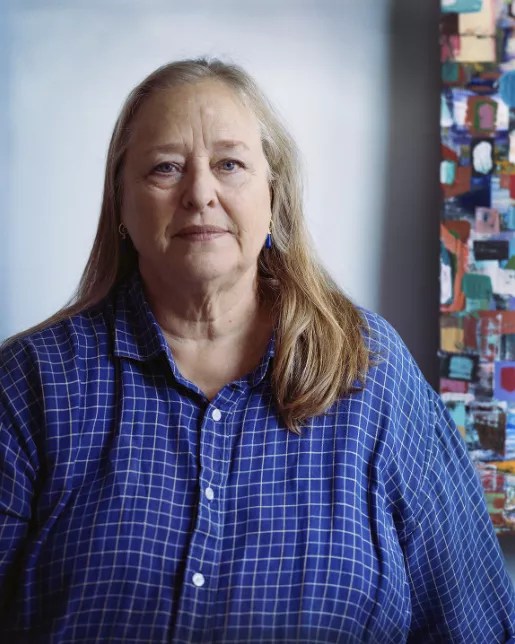
The photos were taken with a 4×5 film view camera. “I started using that format when I went to photography school in Santa Barbara, California in 1972,” Weckler says. “For nearly every assignment we had to use the 4×5 camera, so I got very comfortable with it. I wanted to use something more challenging than digital, where you can take tons of images. There’s a lot more technical work, because when you scan and enlarge you’re enlarging everything—every last speck of dust.”

Each subject wrote their own brief bio in either first or third person, and was photographed in whatever ambient light existed in their location of choice, in sessions that ranged from 15 minutes to a couple of hours. Some subjects were longtime friends; others were people Weckler had never met. Keith S. Nelson, co-founder of Bindlestiff Family Cirkus, opted to be captured on the railroad tracks, wearing clown regalia and carrying props. “He said he wanted to be photographed under the freight train bridge and showed up like that, so that’s where we went and what we did,” says Weckler. (“Weekends are dangerous for unicycle riding,” notes Nelson in his written contribution.)

The result is a fascinating juxtaposition of images, life stories, and reflections. “You’ll get from some of the biographies how people feel about the changes of Hudson, because it’s always, you know, any community is going to change over decades,” says Weckler. “I wanted to celebrate this time, this moment of Hudson. And the book is meant to go outside of the community, give people an opportunity to read the stories and get to know some of the people, even if you don’t know the people or the city at all.”
This article appears in August 2024.


