









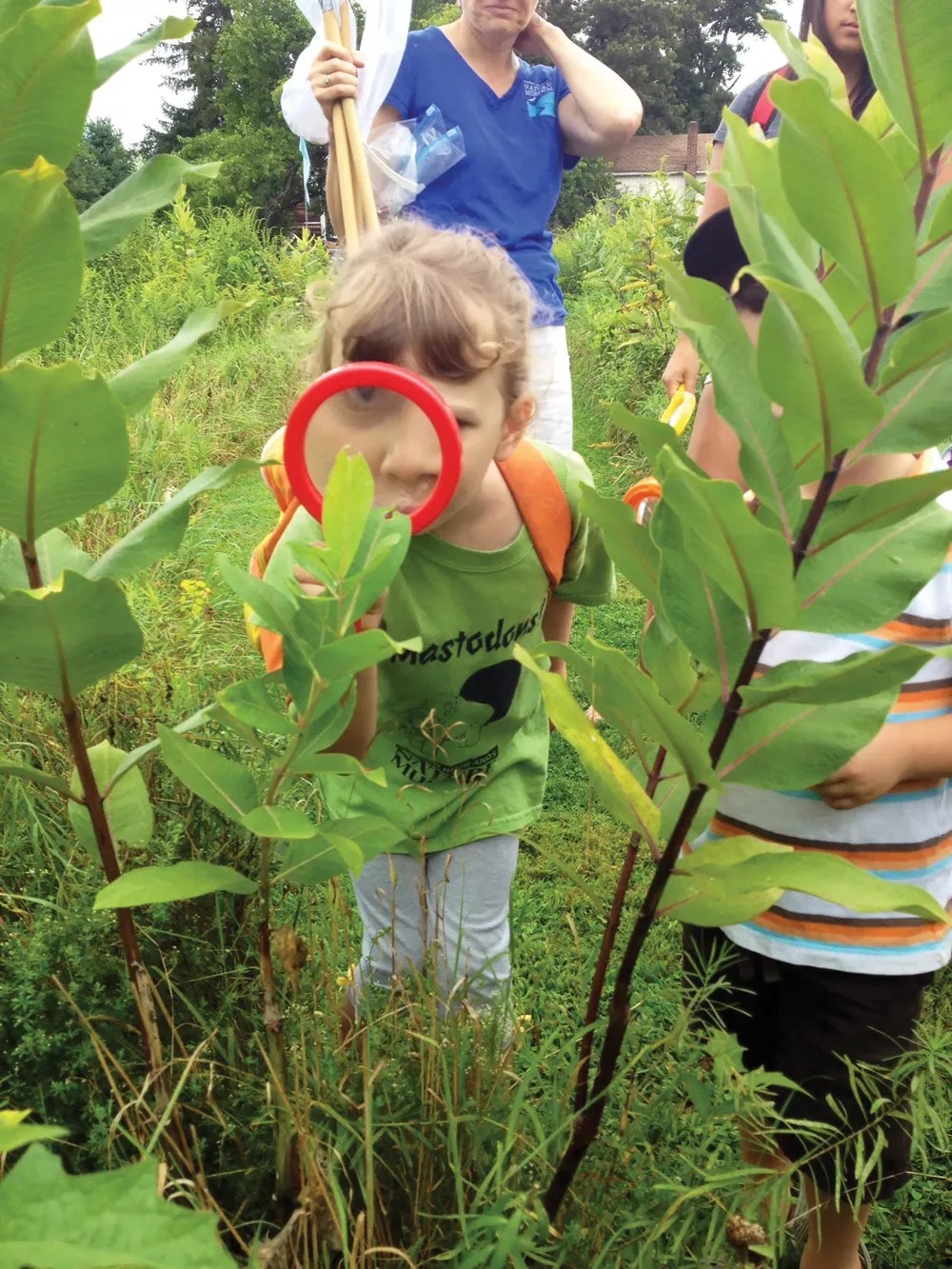
The Hudson Highlands Nature Museum (HHNM) has been one of the best places for kids and adults to make the most of the natural beauty and wildlife in the Hudson Valley since it first started in 1959, initially as a small summer environmental program for youth in a room of Cornwall’s Town Hall. By 1962, it became popular enough to need more room and began to take the shape of the space for environmental and wildlife education that it is today. Now, its events and programs take place in two locations, spread across meadows, woodland hiking trails, and galleries.
The Wildlife Education Center in Cornwall-on-Hudson includes the 1,200-square-foot Ogden Gallery, a 1,500-square-foot habitat exhibit space called the Hall of Animals, and woodland hiking trails. The 177-acre outdoor Discovery Center in Cornwall is home to the Young Naturalist Preschool, meadows, habitat trails, picnic areas, wetlands, and the nature shop.
Like many spaces, the HHNM was forced to cut back on outdoor programs and close its indoor spaces when the pandemic hit. While they reopened some spaces last year—this July, they reopened fully, finally welcoming visitors back into the indoor spaces at the Wildlife Education Center. “This is the first time it’s been open since last March, so it’s exciting to get people back in there,” says Joanna Marvel, HHNM’s communications and marketing manager.
They’ve reopened with a few changes: There’s now a maximum of 30 guests allowed per hour for most indoor programs, which means pre-registration is crucial if you want to ensure you get a spot. They do allow walk-ins, but space fills up pretty quickly. “We had 90 people in today, and we just opened,” says Taylor Ouellette, manager of the Wildlife Education Center. While masks are optional for fully vaccinated guests, they ask that unvaccinated and not-fully vaccinated guests wear one. There’s also been some changes and additions to their programs and exhibits.
Wildlife Education Center
Ouellette is most excited to bring children back to interact with the animals at the center, including what she thinks is the coolest to teach—the snakes. “Kids really like snakes. Parents, not so much! Our snakes are all non-venomous, so you get to interact with them, which breaks a wall between people and any fear they might have,” says Ouellette. They’re also working on expanding their collection, and Ouellette hopes to acquire a red-tailed hawk and a possum soon.
At the center, she also focuses on a process she calls enrichment. “It’s like mimicking an animal’s natural behaviors and changing it so they’re able to do them in here, to make sure they don’t get bored,” says Oullette. This process has benefited from the 30-person cap, she explains, saying, “When there are fewer people, the animals are more likely to participate with them watching.”
The Hall of Animals
The Hall of Animals has a variety of revamped exhibits. “A lot of the amphibian exhibits were redecorated and redone, and they’ve moved things around to make the areas more accessible, and to feature the animals more prominently,” Marvel says.
Education Station
One of the most exciting changes is their new “Education Station: Animal Spotlight.” Marvel says, “We have windows set up with an educator and a featured animal ambassador. And you can come talk to the educator and meet the animal up close.”
The program is a spin on “Meet the Animals,” held before the pandemic. Ouellette explains that this is a more intimate, informal experience from the original, where a large group would learn about an animal for 15 minutes. Now people can observe animals up close. “Educators have conversations with much smaller groups, so you get to ask more questions, and get more out of the experience. It’s been a good change,” she says.
Stomping Grounds: Habitats of the Hudson Valley
The Education Center is also ready to welcome visitors back to this indoor exhibit in the Ogden Gallery. Here, people can find out more about habitat types that may be right under their noses. “Humans interact with habitats every day. When we think of the word ‘habitat,’ we might picture a pristine area, secluded from humans, where exotic animals roam,” says Program Director Emily Marcet. “What we might not think about are the habitats that are within arm’s reach. The patch of grass between the house and the driveway might not seem like an impressive natural area, but that small piece of land probably supports more life than you realize.”
It’s open on Saturdays and Sundays for 50-minute windows, beginning every hour on the hour. Admission is free for Nature Museum members and children under three, and $5 for non-members.
Hike to Round Top
The hike to the summit of Round Top on the Nat Stillman Trail is back as well, and running through the summer, with scenic views of waterfalls and local landmarks in Cornwall and the Hudson Valley. While you get hour-long slots to complete the hike, you can remain there to use the trails as long as you like after.
Outdoor Events
The museum is bringing back a range of popular outdoor programs as well, some with exciting new updates.
Grasshopper Grove
Located at the Outdoor Discovery Center, the Grasshopper Grove Nature Play Space is where children are encouraged to play, explore, and experience things in the natural world around them that they would miss out on indoors. The museum describes the program as a “bridge between a mowed lawn and the wild woods.”
Play sessions are open from 10am to 3pm on Saturdays and Sundays, with each 45-minute time slot allowing up to 48 visitors. It’s open on Saturdays and Sundays for 50-minute windows, beginning every hour on the hour. Admission is free for Nature Museum members and children under three, and $5 for non-members.
The Family Campout
In September, the museum will bring back this popular event, which had to be cancelled last year. “This is, personally, one of my favorites. I wish it was something I had when I was a kid,” Marvel says. Here, families spend a night under the stars while learning the basics of camping. All you have to do is bring your own tent, and the nature education staff will teach you how to put them up, start a campfire, and run you through everything else you need to know.
Homeschool Naturalist
Another new and improved program is the Homeschool Naturalist, for kids between six and 10. “We adapted it last year to meet pandemic standards, and the new structure was so popular, people asked us to keep it! It’s longer—it’s eight weeks now—and kids meet once every week. Our earlier program was more sporadic, so here the kids will get to know each other better,” Marvel says. Children get wilderness training, sweep for bugs in the meadows, and learn to play and explore simultaneously.
Young Naturalist Preschool
Spots are still open for a few of the museum’s preschool classes, which help three- and four-year-olds get involved in science and nature-based activities. “This has been going strong for almost 30 years—it gives kids all the basics they need, but it’s integrated into an outdoor environment. They’re exploring and experimenting, but at the end of the year, they certainly know their shapes and colors and everything else they need for kindergarten,” Marvel explains.
2021 Meadows and Trails 5K
An exciting outdoor event to look forward to this fall is the 5K trail run, an off-road course that remains on museum property throughout. The non-profit event raises money to support the museum’s education programs provided to people throught the Hudson Valley. The run (or walk—you can go at your own pace) has some stunning views, including a spectacular one of Black Rock Mountain. Same-day registration on October 23 is $40 for ages 8 and up. If you register before October 11, the early bird fee is $30.
This article appears in August 2021.


