










Among the compelling reasons to eat out in the Hudson Valley restaurant scene is the widespread availability of local plus seasonal plus [insert any world cuisine]. Enter Pitanga North, a farm-to-table, new American restaurant with Brazilian specialties, that opened in February in the former Gardiner Liquid Mercantile space. Pitanga North fills the dinner void in downtown Gardiner, but that wasn’t the original plan.
Raquel Furtado, an East Village chef and bartender drawn to healthy eating who doubled as a personal juice chef, transformed her side hustle into the Bushwick cafe Pitanga in 2015. Named for the flowering plant native to Brazil, Furtado’s country of birth, pitanga has medicinal qualities and edible berries.
Around the same time, Furtado and her husband bought a home in Gardiner. They’d fallen in love with the area and also had the idea to replicate Pitanga in Gardiner. But the right opportunity often takes time.

Two years ago, Furtado finally found her spot in the Hudson Valley. The concept was originally intended to mirror the success of Pitanga in Brooklyn—a daytime cafe rooted in vegan, organic, green juice, and third-wave coffee culture. Quickly realizing, however, that the town craved dinner options, she decided to open a restaurant instead.
Before opening, Furtado renovated and expanded the kitchen to better accommodate her food-forward dinner concept. Determined to up her cooking skills, she also attended the Institute of Culinary Education and staged at Musket Room, a Michelin star restaurant in Nolita. Furtado also brought on Mike Rivera, a CIA graduate who recently returned to the area from Chicago, as chef de cuisine.
From the atmosphere to the food, Furtado’s ethos—light, layered, and intentional—is reflected. Absent any fuss, there is a warm elegance to the lime-washed interior. An antique, copper pitcher holds tiny yellow, paper flowers brought from Brazil. Furtado is anywhere she is needed: On my first visit, in the kitchen; on my second, front of house on a buzzing Saturday evening, greeting people, taking orders, busing plates, and stopping by each table to be sure that diners are happy.
Brazilian Dishes Meet the Hudson Valley Harvest
For its inclusion of an unexpected ingredient—miso—I chose the Shuggie Yuzu cocktail ($17). Bourbon-based, citrusy, soft, and savory, its complexity enhanced warm and mild pão de queijo (wheat-free Brazilian cheese bread, $12) that I would happily eat for breakfast or dessert as well as an appetizer.
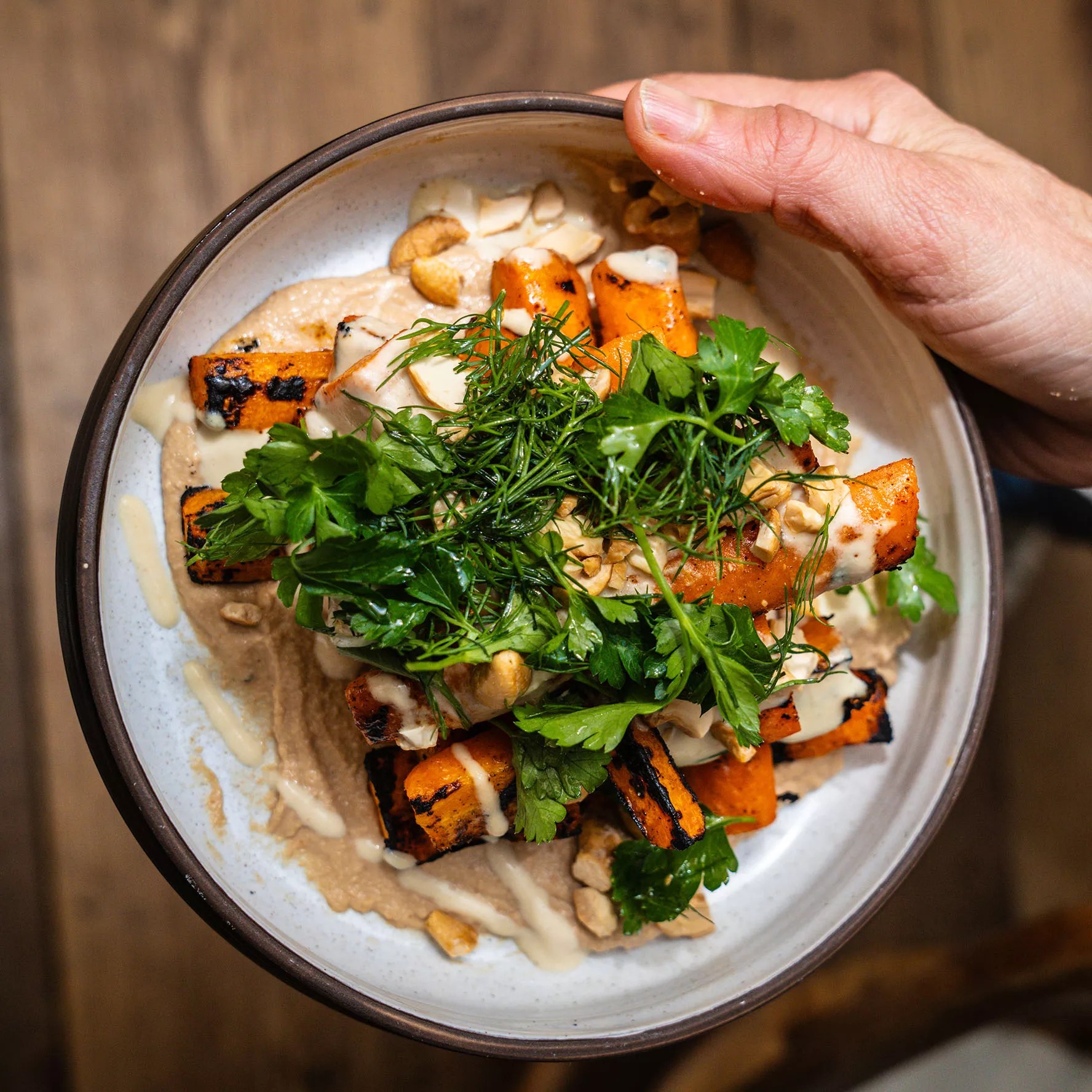
Weaving Brazilian cuisine with the local ingredients, vegetables are confidently showcased. Our next plates were grilled carrots topped with roasted cashew tahini and dill ($16) alongside a little gem salad dressed in bright, creme fraiche vinaigrette with crunchy parsnips ($15). Nuts, fresh herbs, and spices paired with sweet vegetables made for a light and flavorful beginning.
Moqueca, the Brazilian cod and shrimp (proteins will rotate) stew in a broth of acidic tomato, tamed by creamy coconut is served with al dente rice from Great Joy Family Farm in Pine Bush ($27). Absent richness, the entree is layered in flavor and texture.
Golden Tilefish, crispy skinned and plump, on theme, is served with a trifecta of green: curry, and seasonal asparagus, and peas ($34).
Feijoada, Brazil’s national dish, is vegan at Pitanga North. The black bean stew with farofa (toasted cassava flour) is made deeply flavorful by long cooking mushrooms from Daunt’s Farm just down the road ($25).

Meatier offerings include sirloin from Veritas Farms ($40), roasted half chicken ($32), and a burger ($21), all lightened by the gently sauced and seasoned plants that accompany them. Portions are generous—especially the vegetables—combining flavor with the feeling of healthful dining.
Ten wines are all available by the glass ($13 to $18) or bottle ($62 to $80) with a draft Verdejo (a trend that I like for its lower impact on the environment as well as the wallet). Local wines will soon mix in with the familiar and food-friendly varietals.
Among the nonalcoholic offerings there are wellness-inspired drinks called Elevate that include a zesty, turmeric and ginger sparkling ($12).

Pitanga roasts its own single-origin, Brazilian coffee beans for its espresso service. My cappuccino was a smooth and frothy complement to the not-too-sweet rice pudding and house made vanilla ice cream with dulce de leche (sweets are both $12).
Pitanga North doesn’t try to mimic its Brooklyn sister. Instead, it does something harder and more necessary. It listens to where it’s landed and sources and serves accordingly.
Pitanga North is open for dinner Thursday through Sunday, 5 to 10pm.
[location-1]
Related Stories

This article appears in May 2025.


