









The first night Helen Atkinson spent alone in her new home at the corner of Fair and St. James streets she saw a ghost. “I had this vivid, near-waking dream that a woman in Edwardian clothes marched straight through the hedge bordering our side yard, through the porch door, up the stairs, and stood very sternly at the bottom of my bed and demanded to know what I was doing in the house,” says Atkinson. It was 2013 and Atkinson and her husband Tim had just moved into the three-story, 1840 Greek Revival layered with resplendent Victorian additions. “In the dream, I gave some account of myself that appeared to satisfy her,” says Atkinson. “She harrumphed, nodded, and went back down the stairs and left.”
The ghost might have been more satisfied if Helen had been more candid with her answer: Really, she just wanted somewhere to throw a good party. “I hosted my first dinner party when I was 13,” says Helen, an editor and journalist. “It’s pretty much my favorite way to spend an evening.” The 4,300-square-foot home—then a bit more shabby than chic—seemed built for such an aspiration. Sitting at a corner where the tram used to pass by, the sprightly space invites conviviality. It’s not just the layout, which flows from the ballroom-like parlor into a sitting room and library then back to a Gothic Victorian dining room; it’s also the heart-of-Kingston setting, where neighbors have been stopping by for generations and even passing strangers are inspired to strike up a conversation and sometimes become friends.
In the decade since moving in, the Atkinsons have fulfilled their original mission, reviving the home for 21st-century gatherings and recovering its spirit (and uncovering the identity of Atkinson’s spirit visitor). Their initial hunch about the home proved correct—while the surrounding neighborhood has changed around it, the home remains timeless: “It was just made for parties,” says Helen.
The Ghost of a Saltbox
My family threw lots of parties here,” says John Ellis, who grew up in the house and still lives nearby. “Our extended family lived within a few blocks, so we’d have all the holiday parties in the dining room. My parents threw cocktail parties in the front parlor, where neighbors would tell stories of growing up in the area.” Ellis’s great-grandfather, Griffin Hart, was a Tivoli native who fought in the Civil War. After being wounded at the Battle of Chancellorsville, Hart recuperated at Chestnut Hill in Pennsylvania, where he met Ellis’s great-grandmother, a nurse, before returning to the Hudson Valley to open a dry goods store.
When Hart bought the family house in 1892, it already had a considerable history. The original home—a Colonial saltbox that was destroyed during the 1777 burning of Kingston—was rebuilt in 1840 as a three-story Greek Revival from the saltbox foundation. “The 1840 house included the front parlor and a back room as well as the stairwell going to the bedrooms upstairs,” says Ellis. “There was also a back staircase leading to an attic room on the third floor.” In 1860, a Victorian-style addition included a second living room downstairs and two more bedrooms on the second floor.
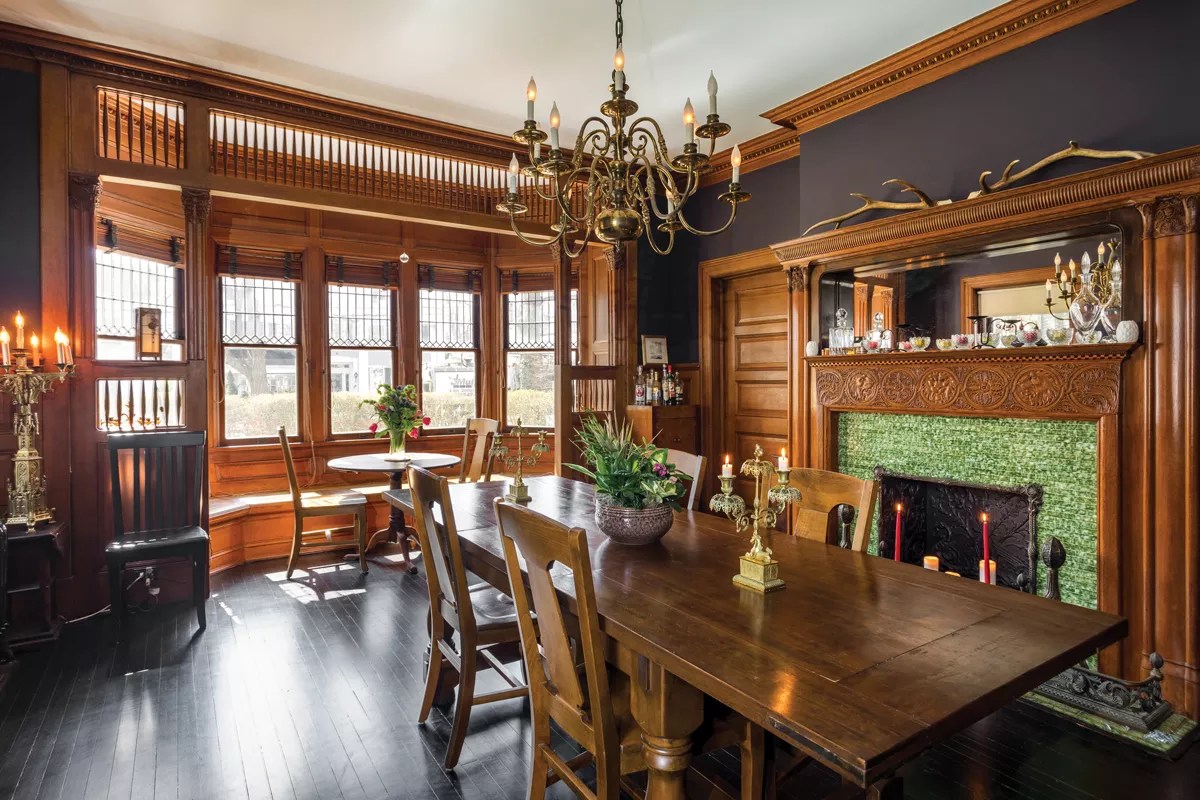
It’s possible Hart sensed the home’s potential as a gathering space, because soon after moving in he built an oversized dining room at the back of the home. With ample space for a long dining table, the room features carved oak walls and mantle, as well as an iron fireplace insert carved with a dragon motif. There was even a carved, built-in corner nook Ellis remembers as “the kids table.” The space would be the site of family gatherings for the following century. Hart also added additional kitchen space and two more bedrooms upstairs for a total of six.
Room to Grow
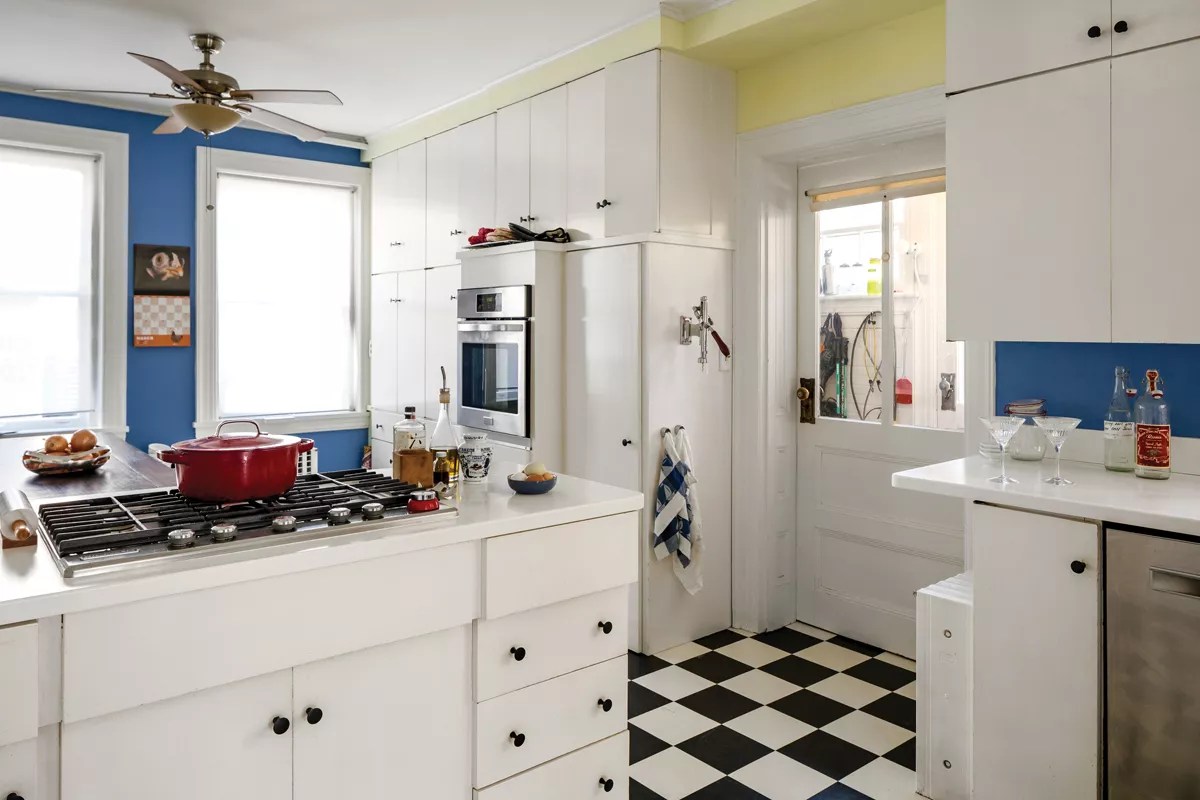
The home was passed down through Hart’s daughter’s line to Ellis’s grandparents, who lived downstairs. “My grandmother had tuberculosis and so she’d sit on the side porch to get the fresh air,” says Ellis. “She was very social, and neighbors would stop by constantly and sit in the side yard to chat.” Meanwhile, Ellis’s parents and sister lived on the second floor, where they’d converted a back room into a small kitchen and a front bedroom into their living room. Ellis’s grandmother died shortly before he was born, and when his grandfather passed away the family moved downstairs. They expanded the back kitchen and converted part of the 1860 Victorian sitting room into a study for Ellis’s father, who was an expert on Persian carpets.
Ellis inherited the home when his parents passed away and then lived there with his wife Judith for a few years. “But I’d always had a secret desire to live in the woods,” he says. He realized he was ready to move on and began searching for the right custodians to keep the home’s spirit alive. That’s when the Atkinsons stepped in.
Big House? No Problem
The couple, who are both from the United Kingdom, met in New York City and began coming upstate in 2005 to hike. They soon bought a small Cape in Hurley, which led to some unintended consequences. “We were up here every weekend and so our social life took off,” says Helen. “Our house was bulging with overnight and dinner guests.” They decided to downsize in the city and upsize upstate.
When they found the house on Fair Street, their reaction was immediate. “We walked in and said, ‘Okay, yes, we’ll take it,'” says Tim, who grew up in suburban London. “I’d never imagined owning a house on this scale before.” The home needed some work, and, even with his initial positive reaction, Tim was a little terrified taking on the project. “I thought, ‘big house, big problems,'” he says. “However, every time we had inspectors come through they assured us that that wasn’t the case. The house was really well made.”
Helen wasn’t intimidated. “I grew up in an even older home in Edinburgh, in a classical Georgian flat from 1765,” she says. “Everything was designed on the ‘divine proportion’ but we weren’t intimidated by the grandeur or age of the homes; we felt free to paint the walls wild, vibrant colors and to hang modern art or mix antique and modern furniture.” The couple moved in, but stayed in touch with Ellis, who found a woodland home nearby.
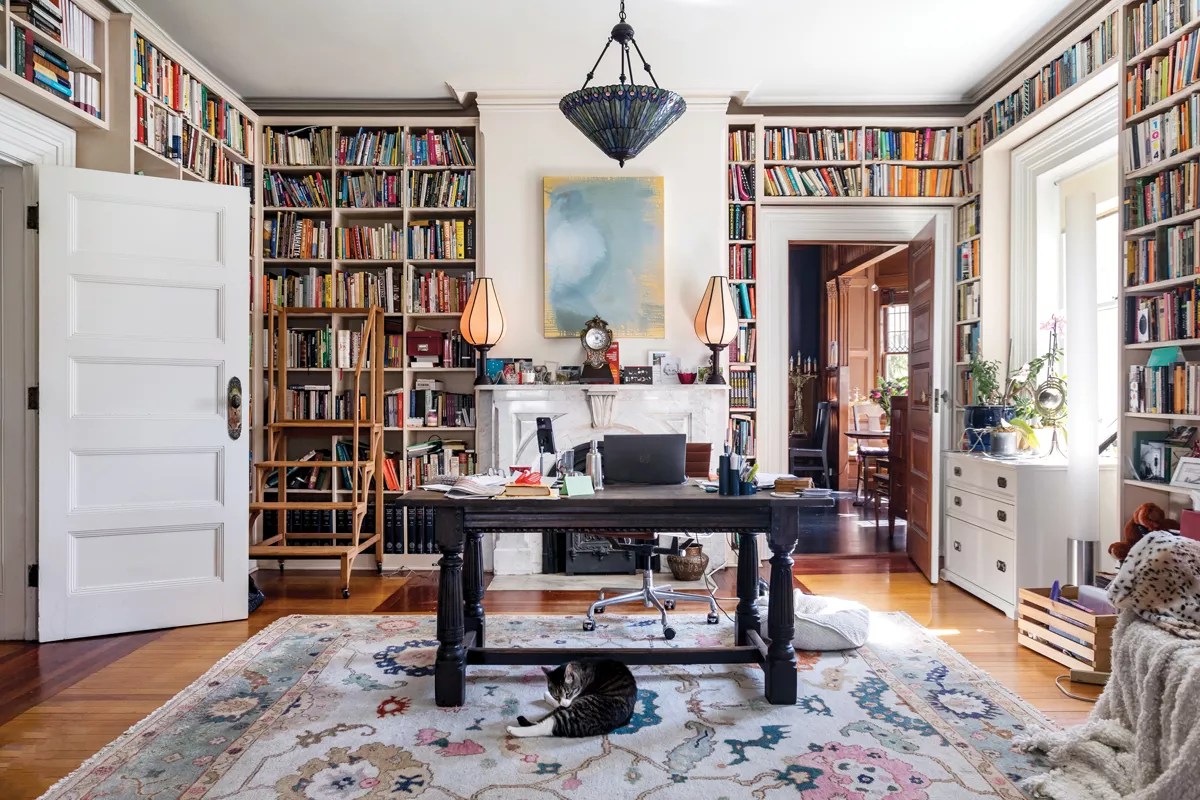
The Hostess with the Ghostess
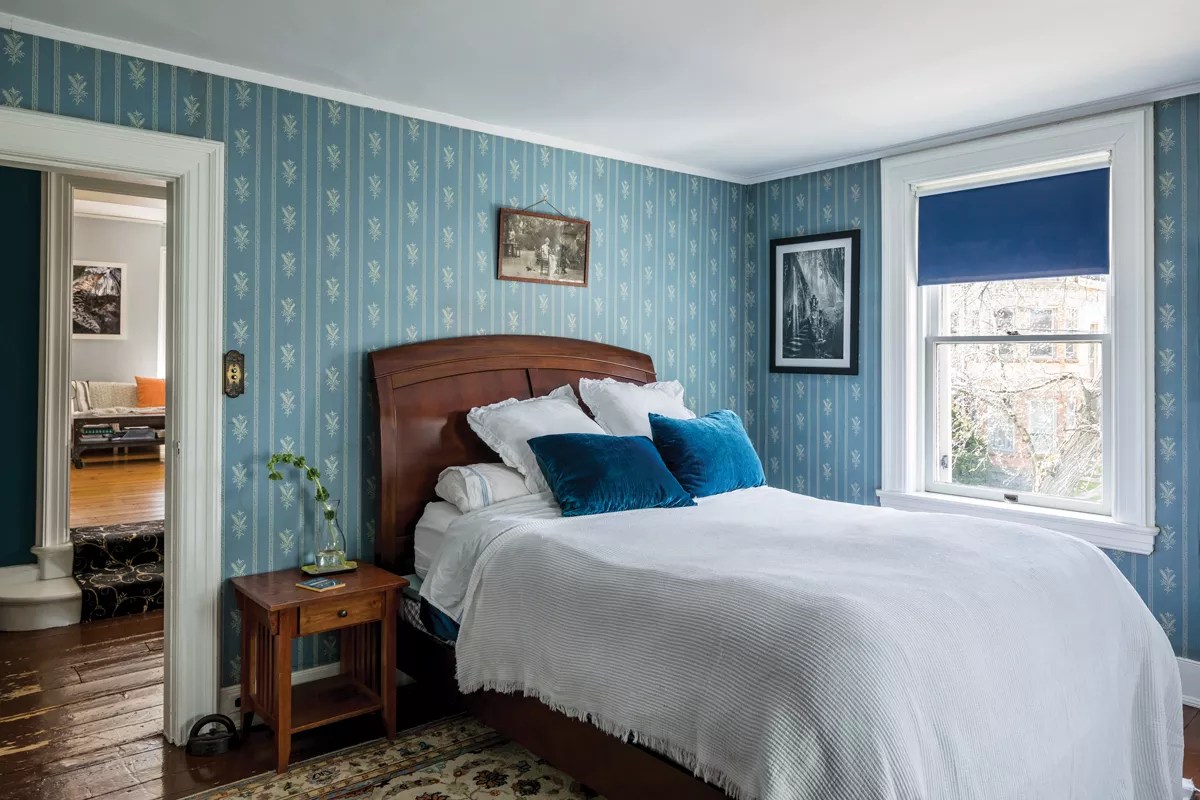
From the get-go, the couple intended to be hosts that lived up to the home’s legacy. To that end, they knew they’d need to add some modern amenities. “There was only one bathroom upstairs,” says Tim. “We imagined long lines to use it during parties and didn’t want that.” So they decided to divide the smallest bedroom, converting the space into two bathrooms. They also tackled the one original bathroom, stripping the peeling wallpaper themselves before they got overwhelmed and then hired restorer John Yonetti to finish the room and add a Moroccan painted tile floor.
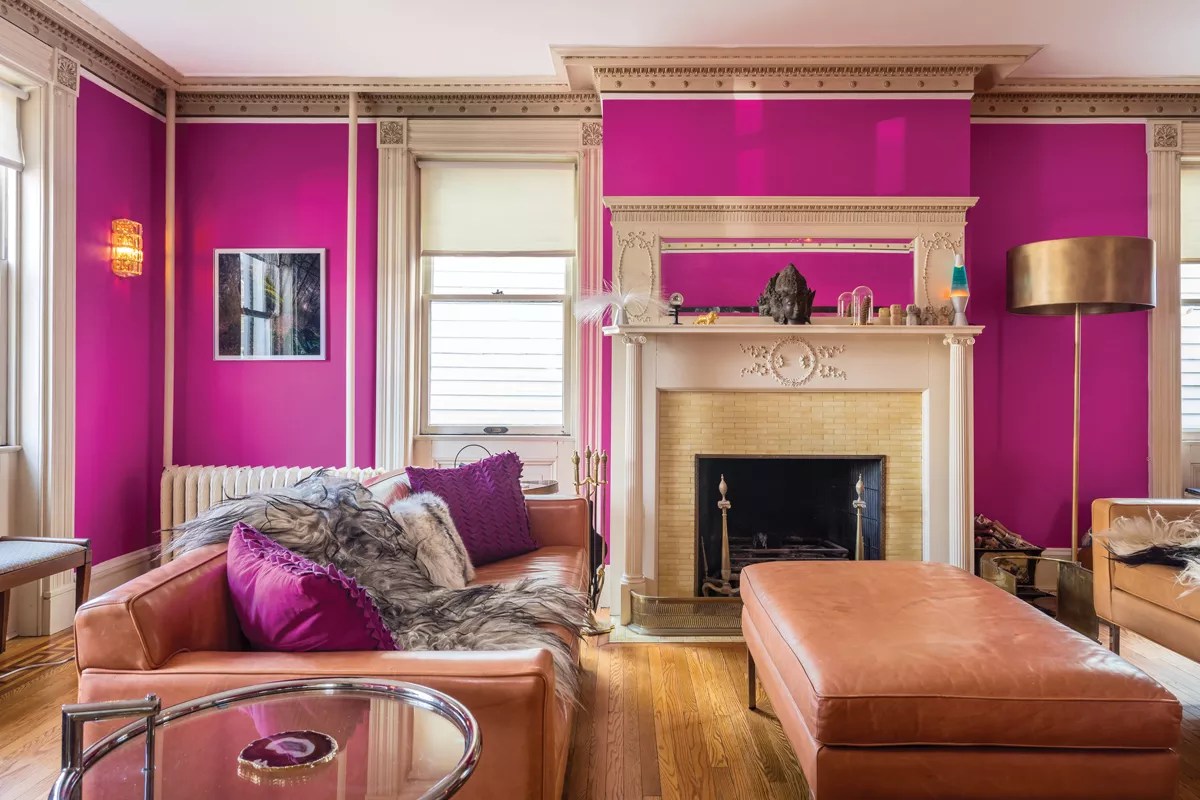
Downstairs, the couple restored the home’s grandeur by remaining true to the original design. “There was lots of crumbling stucco and peeling wallpaper,” says Helen. “But the bones were excellent.” The front parlor was in especially poor shape with cracked plaster throughout. Sticking to a “no sheetrock rule,” they began repairing the walls themselves, then hired a professional to replaster the parlor, hallway, and second-floor ceilings. “The room has magnificent gilt molding and nine stages of ceiling molding,” says Helen. To offset the detailing, they painted the walls a bright magenta and consulted architectural color specialist Joan Ffolliott to choose bright, oil-based woodworking trim for the rest of the home. They also opened two of the home’s wood-burning fireplaces. “They are an absolute delight,” says Helen.
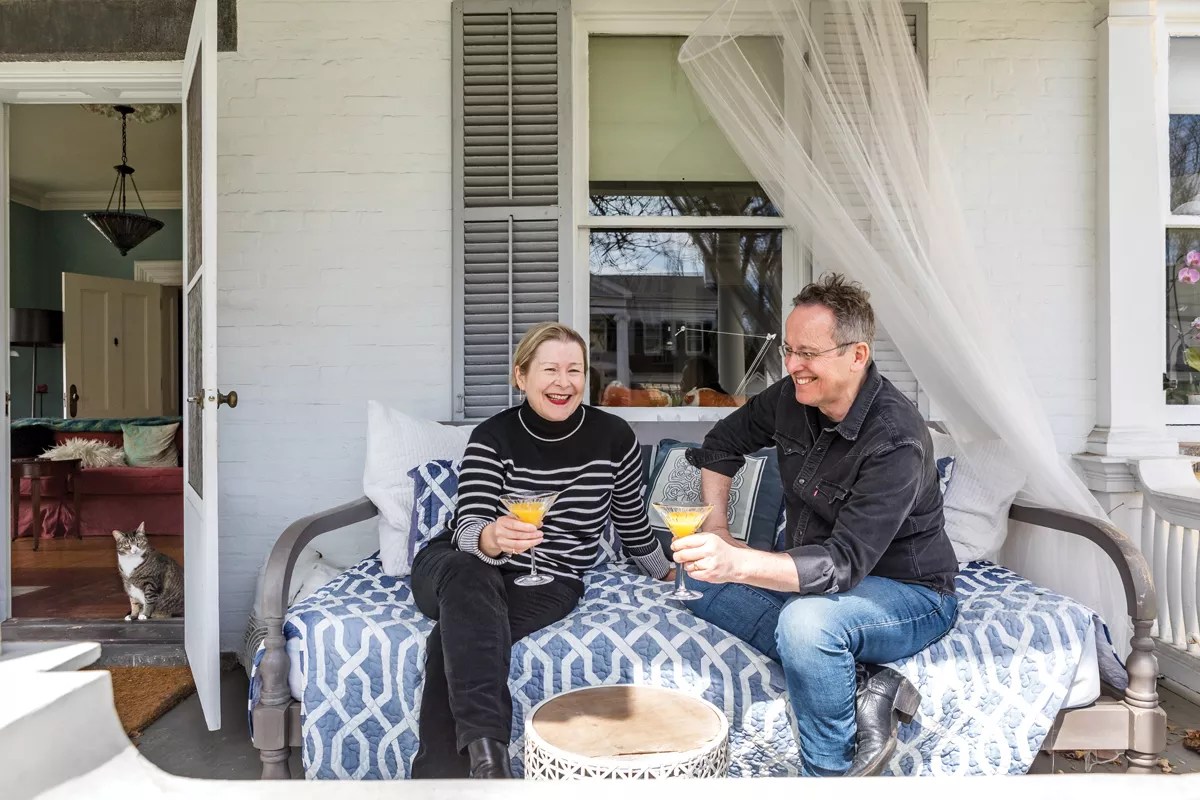
Over the past decade the couple have retouched almost every room in the house. They’ve also stayed in contact with Ellis, who’s continued to share the home’s history and help them understand the original design. It was during one of his visits, when Ellis was sharing pictures of his grandmother’s 1908 wedding, that Helen learned about the Edwardian ghost. The wedding, held at the home on the side porch and in the garden, was full of Hart family faces. “There was the woman from my dream,” says Helen. “She was a family aunt. And there was no hedge then, which explains why she marched right through it. This house keeps turning up surprises—there isn’t a right angle in the place, and that’s just fine with us.”
This article appears in May 2024.



I absolutely loved this story. It was great hearing about the house from someone who has lived there his whole life and Helen and Tim seem like the perfect owners for this beautiful home.