








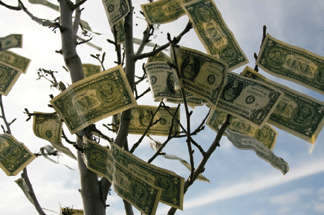
A shade tree growing in your yard—a core feature of the landscaping that provides privacy—is likely worth far more than its lumber. However, if you own a couple of acres, you would totally luck out if a previous resident had thoughtfully planted black cherry, black walnut, or sugar maple trees, perhaps to shield a structure now torn down. Not long ago, Hudson Valley farmers routinely cultivated small stands of trees, often food-productive varieties that would yield precious ornamental wood when cut.
That said, the probability of discovering a Thomas Cole painting at a yard sale likely beats odds of finding a truly pricey deciduous tree growing in your front yard.
“I get a call about once a month from someone convinced they own trees quickly converted into cash,” says certified arborist Jeff Decker, owner of Kingston-based Accountable Tree Service. “It’s extremely rare the trees are actually worth anything. Trees near a home usually have early branch growth; they don’t have to grow straight up to find light, like in the woods.”
Limbs sprouting low on the tree means there’s less log. Also, yard trees often contain nails, perhaps leftover from clotheslines or tree houses. Few know that a single embedded nail will vertically discolor an entire section of a living tree. That’s also why most commercial sawmills won’t take yard trees. Processing logs with hidden metal could seriously damage the saw blades while also endangering workers.
Decker says only once in the past four years have the trees he’s cut down on a client’s property actually been worth real money.
“Logging is so different from residential tree work,” says Stephen Hemberder, owner of Woodstock Tree Care for over 30 years. “Black walnut used to be a big money wood—it was heavily used for gun stocks—but it’s often replaced these days with carbon-fiber synthetic. It really depends on the market. Another common misperception is that the bigger the tree, the more valuable. In reality, ideal timber is 18 inches in diameter with no imperfections. When a tree gets bigger, carpenter ants eat the wood.”
“Trees should be pruned every few years to maintain their value as an asset,” says Hemberder. Seek professional advice for tree care; all tree specialists provide free estimates.
“If you have wooded acreage, you might be able harvest trees profitably every 20 years,” says Hemberder.
But for the most part, money doesn’t grow on yard trees.
This article appears in July 2012.


