








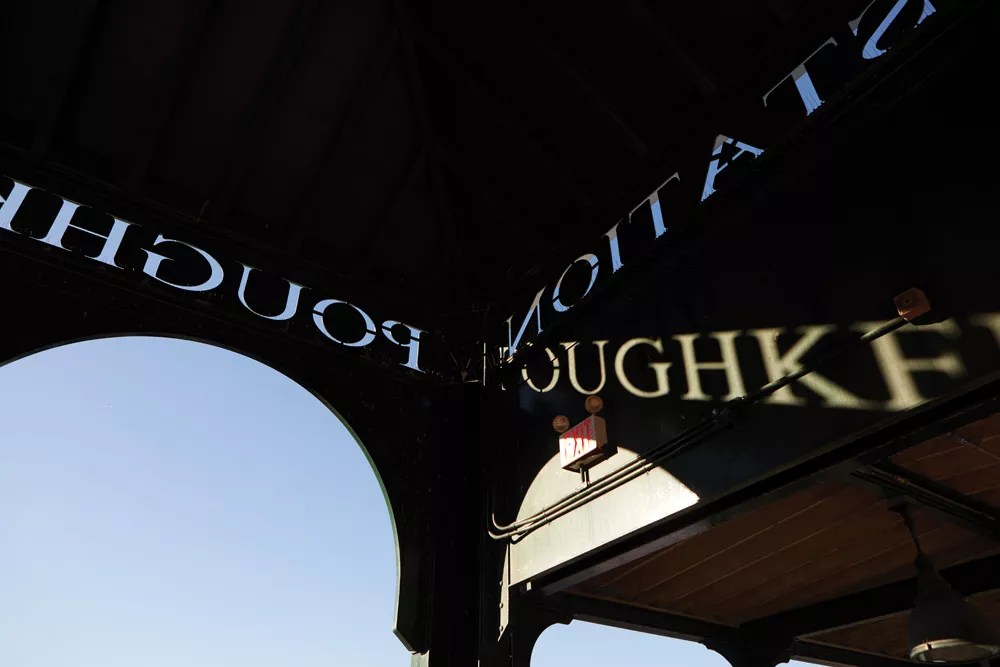
When industry left the Hudson Valley through the second half of the 20th century, the City of Poughkeepsie’s sails deflated. Unsuccessful attempts at reconstruction, like the federal Urban Renewal program, and the impact of multiple recessions left the “Queen City” floating in the doldrums for about a half-century. Over the past decade, however, a crew of invested stakeholders, developers, nonprofits, and local agencies has worked together to build new businesses, institutions, and opportunities intended to support the entire community. Even today, two years into the pandemic, the wind feels strong at the city’s back.
As the city sees progress on multiple fronts—and many new residents, who moved up from New York City during COVID—Mayor Robert Rolison says it’s the community that’s been here for years, making the city “cool,” that deserves the credit for Poughkeepsie’s current success. “There have been a lot of positive things in the city,” the mayor says. “The community came together to address the pandemic, and so much was done on the fly. Everyone is optimistic. You have to be.”
Developing Draw
Shopping centers, restaurants, breweries, and cultural institutions, all within a quick train ride from Manhattan, have made Poughkeepsie more and more appealing to folks looking to relocate upstate for a more comfortable home, as is becoming the norm for pandemic immigrants.
Live events at the Bardavon, the Mid-Hudson Civic Center, the Chance, and other entertainment and nightlife venues provide new residents with a more metropolitan lifestyle than other sleepier locales in the valley. Performance spaces have been put through the wringer over the past two years. The Chance was also rocked hard in 2021 when owner Frank Pallett died at the age of 51 of a sudden illness. He will be honored with a tribute show on February 4. Despite all the difficulty, venues like these have been a big selling point for developers luring new tenants to the area.

“There’s a little renaissance happening in Poughkeepsie,” says Brigham Farrand, Director of Business Development for local firm Baxter Built. “We are in the process of creating a new 80-unit apartment building at 361 Main Street, with a retail first floor, making a space for entrepreneurs and residents to live right in the heart of the city.”
Baxter is also presently opening one of the city’s most anticipated new ventures, the Academy, slated to open at the end of April. Located in a rehabilitated and restored office building, the Academy will have 28 apartments, a coworking space, event space, food hall, restaurant, and brewery.


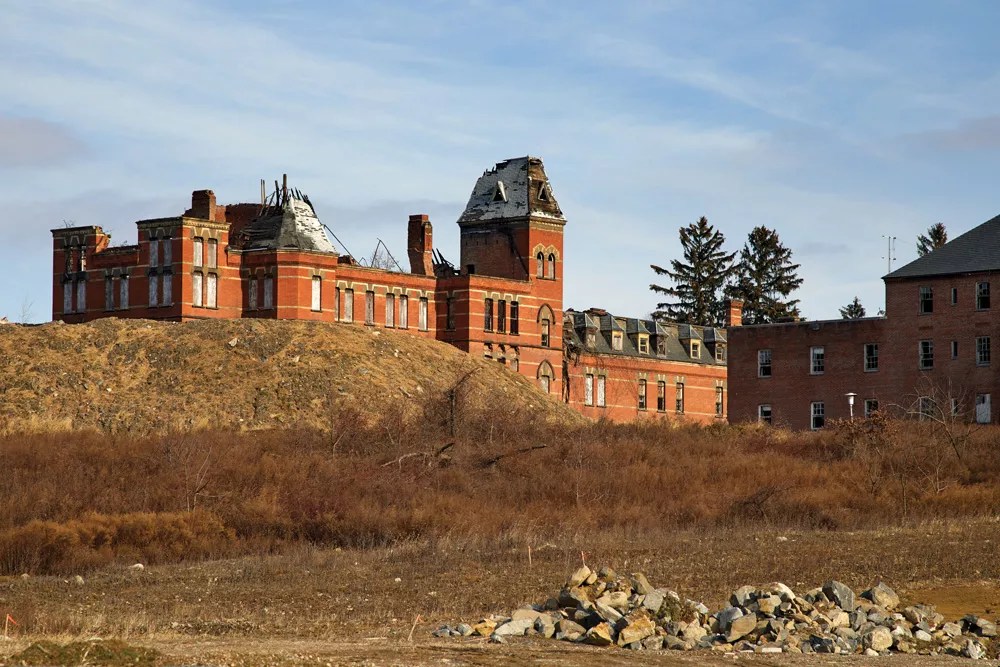
Farrand says Baxter’s sibling leadership team, Amanda and Eric Baxter, are committed to building in the city, even if it’s more complicated and expensive than doing so in the surrounding town like the giant multi-home communities underway like Eastdale Village, Hudson Heritage (at the site of the former Hudson River State Psychiatric Hospital), or Bellefield, in neighboring Hyde Park.
“I really think the opportunity is ripe for mission-driven development,” Farrand says. “We are trying to create what’s best for the community while allowing city residents to remain in the city.”

Building Optimism
The husband-and-wife development team at James J. Sullivan Corp., has also been investing heavily downtown. In 2018, Jim and Gina Sullivan opened 40 Cannon, which has 49 apartments (10 of which are low income) and a commercial first floor—home to the Sullivans’ office and Cafe 40. Shortly before the Pandemic the Sullivans also finished transforming the Masonic Lodge nearby into Revel 32. Conceived as a wedding and events venue, during the pandemic Gina Sullivan says they had to pivot and start producing their own events. While the concerts have been a success, they are looking forward to getting their original idea back on track.

The Sullivans also recently purchased the old county Board of Elections building across the street at 47 Cannon, and are currently seeking approval to add multiple stories to the building and create another 75 apartments and ground floor retail.
“I constantly feel like I’m selling the city to people, not apartments,” Gina Sullivan says. “The trajectory of Poughkeepsie was so good. We were hearing less and less negative stories. It was the first time it felt like the change was sticking. Then the pandemic hit and it was heartbreaking to see that stop. But we wouldn’t be buying buildings if we weren’t optimistic. 40 Cannon Street was a burned-out shell, this project was not just for us, it was for the city. It’s not just a building, it’s what it means to people.”
The Sullivans source a sizable portion of their workforce from the Poughkeepsie community, hiring young, underprivileged workers through the nonprofit Nubian Directions.
Healthy Nonprofit Investment
With all the focus on new places to live and be, there is also a collection of organizations acutely focused on how the changing natural and manmade environments of the city can equitably serve every resident.

When Poughkeepsie-based environmental nonprofit Scenic Hudson began its River Cities Program, which is designed to revitalize environmental access in urban centers, they started with community listening to find out what residents actually wanted. They heard about the same things—jobs, opportunities for youth, and food security—in Poughkeepsie, Newburgh, and Kingston.
Scenic Hudson is now working with the city on a number of projects to rehabilitate the Fall Kill creek, which winds through the city’s north side, and a major new urban trail system that was recently approved by county government and will connect northern Poughkeepsie to the river. The trail runs along nearly three miles of abandoned CSX rail line and is intended to be as much a pedestrian commuter thoroughfare as a linear public park. The trail will connect residents in underserved communities to schools, markets, job locations, churches, and the Walkway Over the Hudson.
Scenic Hudson’s other major project bearing fruit this year is the urban farm and 19 community garden plots that will come to harvest at Pershing Avenue Park, which is also in the city’s predominantly BIPOC north side. “It’s a clear example of how Scenic Hudson is moving forward with focus on equity,” said Zoraida Lopez-Diago, Scenic Hudson’s River Cities Program director. “The farmer who will be running the urban farm was raised in the community, and the garden will give residents and parishioners of the nearby church the opportunity to grow and share their own produce. I really love this work and think it’s an interesting model for environmental organizations, and land trusts in particular. We are showing that a ‘redline’ block can really be transformed in a way that comes from the community like the north side, which was really affected by urban renewal.”
Fringe Cities Lab
Another organization looking to make sure Poughkeepsie doesn’t repeat the development mistakes of the past is MASS Design Group, a global architecture nonprofit founded by Poughkeepsie native Michael Murphy. MASS’s mission is to “research, build, and advocate for architecture that promotes justice and human dignity.” (MASS stands for Model of Architecture Serving Society.) For the past five years, MASS has operated its Fringe Cities Design Lab out of Poughkeepsie. “Hey who you callin’ a fringe city?” you might ask. While the term-of-art might at first sound pejorative, MASS defines “fringe cities” as small, independently situated cities whose urban landscapes remain dramatically marked by the impact of the urban renewal program.
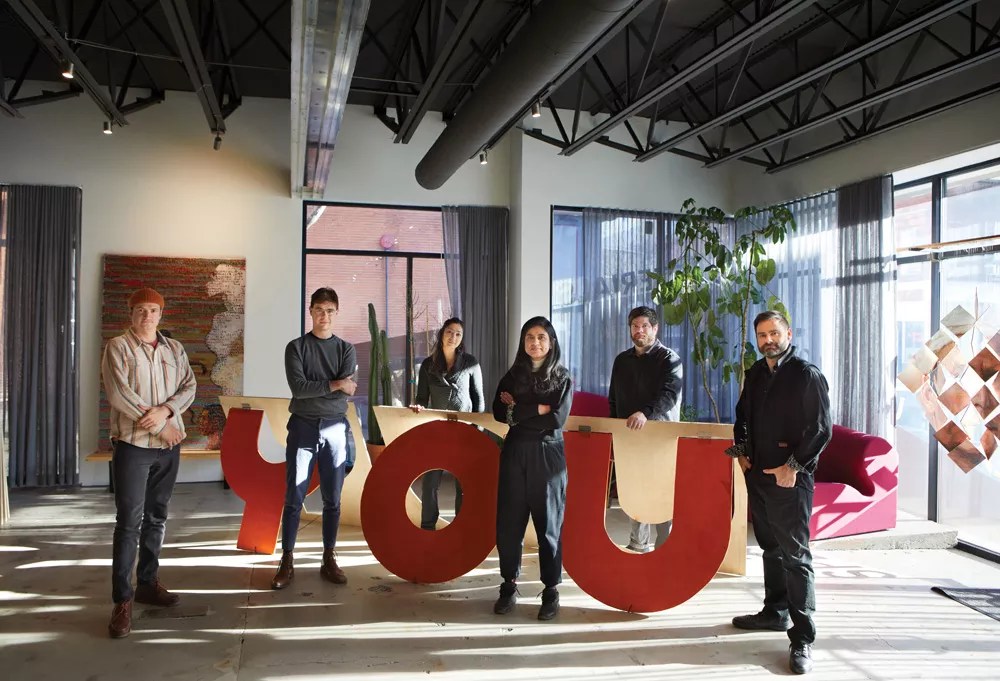
“Urban renewal and the injury it caused was the result of a one-size-fits-all, top-down planning process,” says MASS principal Justin Brown. “Fringe cities, like Poughkeepsie, need location-specific solutions developed in partnership with the people that inhabit them.”
MASS has been involved in the design phase of a number of civic-minded projects, including the Academy and Hudson River Housing’s Underwear Factory and Trolley Barn multi-use facilities. “Currently, we are helping the Family Partnership Center to create a new accessible entry space to their former high school building along the Fall Kill,” says MASS principal Christopher Kroner. “We are designing the former Standard Gauge factory to be a public garden and environmentally inventive office space for Scenic Hudson and have been in deep community listening for ideas as we design the Youth Opportunity Union (aka The YOU) for Dutchess County at the former YMCA site in Poughkeepsie this year.”

The Youth Opportunity Union will be a gathering place for the city’s youth. Poughkeepsie City Government has also formed an entirely new department that will oversee operations there and will be staffed the first quarter of this year, called the Department of Youth Opportunity and Development. The mayor says the new department will provide the city with the infrastructure and dedicated professional manpower to address the issues facing young people in the city through dynamic programing.
The Poughkeepsie Trolley Barn is yet another community space reaching the city’s youth through the arts. Along with the Hudson Valley Performing Arts Laboratory, the Trolley Barn is home to the Art Effect, a nonprofit that provides youth with not just the opportunity to express themselves through art but also experiences that foster careers in the arts. The Art Effect is in an exciting moment as it becomes operationally affiliated with the Barrett Art Center, which will soon be moving from its longtime home on Noxon Street to the Trolley Barn. The two entities have been working together on youth programing for some time, and their combined activities and are set to increase their reach and impact.

But Where to Live?
Even with many new apartments entering the market and more on the way, there’s just not enough affordable housing in the city for those looking for it. Demand has driven home prices way up and what’s out there sells fast.
Sandi Park is an associate real estate agent with Hudson Valley Nest/Berkshire Hathaway and author of the regional market analysis newsletter TheBrick. Park calculates that Poughkeepsie has the least residential inventory and the fastest absorption rate (the average time between when a property goes on the market and when it sells) in the county. According to the most recent figures, a house under $350,000 stays on the market in the city and town of Poughkeepsie for less than a month. While the end result is the same—less inventory—Park says the type of New York City buyer has changed over the past two years.

“The 2020 buyer was driven by fear. The 2021 buyer stayed in the city longer and took time to reevaluate their lifestyle before moving up,” Park says. “Before COVID, big builders like Eastdale, Bob Baxter, and others were already on the rise but new development can’t keep up with demand. New residents are bringing with them a new demand for services.”
Christa Hines, executive director of Hudson River Housing, sees the real estate surge from a different perspective. Her organization runs the county’s only homeless shelter, scores of subsidized housing units, and takes calls every day from city residents struggling with housing insecurity. “We were in a housing crisis before and it’s gotten so much worse,” says Hines. “Even people with subsidies like Section 8 still aren’t able to find housing. We can’t develop new housing quick enough. We want to make sure everyone knows we still have rent relief available through Poughkeepsie, Dutchess County, and from the state. We are helping people access those funds.”

In February, Hudson River Housing is opening 75 mixed-income apartments at the new Crannell Square, which it built in partnership with Kearney Realty & Development Group. Even with these new units, which include apartments designated for low-income families and artists, Hines says, “Our work can feel like a drop in the bucket.”
Hudson River Housing also owns a number of rehabilitated former industrial properties that now house nonprofits responsible for some of the city’s greatest civic success stories.
The Poughkeepsie Underwear Factory (PUF) is now an anchor for the organization’s work in the middle of the Main Street corridor. The three-story, 22,000-square-foot historic building was completely restored and features the PUF Cafe (temporarily closed), PUF Studios, and other commercial tenants. There are 15 apartments, including 11 affordable units, a community park, and frontage on the Fall Kill. The PUF also houses the Poughkeepsie Open Kitchen, a shared-use commercial kitchen that provides workspace for food entrepreneurs. One alumni of the Underwear Factory is Hudson and Packard, a Detroit-style pizza concept that started at the Open Kitchen and recently opened a brick-and-mortar location on Academy Street.
Breaking Bread
The restaurant scene in Poughkeepsie cannot be overlooked as another huge attracting force, even as local restaurateurs struggle with the fluctuating staffing, supply, and pandemic issues plaguing the industry. Eateries like Brasserie 292, Farmers and Chefs, Tavern 23, and Milanese have adapted to be more takeout-centric without sacrificing their standards. The craft brewery scene is also a booming new sector, and its brewers look forward to hosting large crowds again soon. Zeus Brewing Company, Blue Collar Brewery, Kings Court, and Mill House Brewing Company all offer hyper-regional brews, and most offer solid dining experiences of their own.

Brandon Walker, chef/owner of the captivating soul food fusion restaurant Essie’s, says business had ticked back up before the Omicron variant surge. “We are doing okay, it’s hit or miss,” he says. “We are hiring cautiously and taking it one day at a time. I didn’t design this concept to be a takeout restaurant.” A CIA grad who worked in a number of high-end Manhattan kitchens before coming back up river to make his mark at Essie’s, Walker is combining the flavors of his Jamaican and Southern roots with international style, local ingredients, and modern techniques.
A New Poughkeepsie
Like Walker’s cooking, the city’s identity is shaped by its cultural diversity and an openness to incorporating new ideas. Unlike the last time the city was restructured by development, today the voices of the entire community are joining the conversation about what the next era in the city’s history will look like. The level of investment in the city now shows that Poughkeepsie is well poised to come out of the pandemic ahead of the curve.
Related Stories

Goodnight Kenny Coming to Poughkeepsie Late Summer
This article appears in February 2022.


