









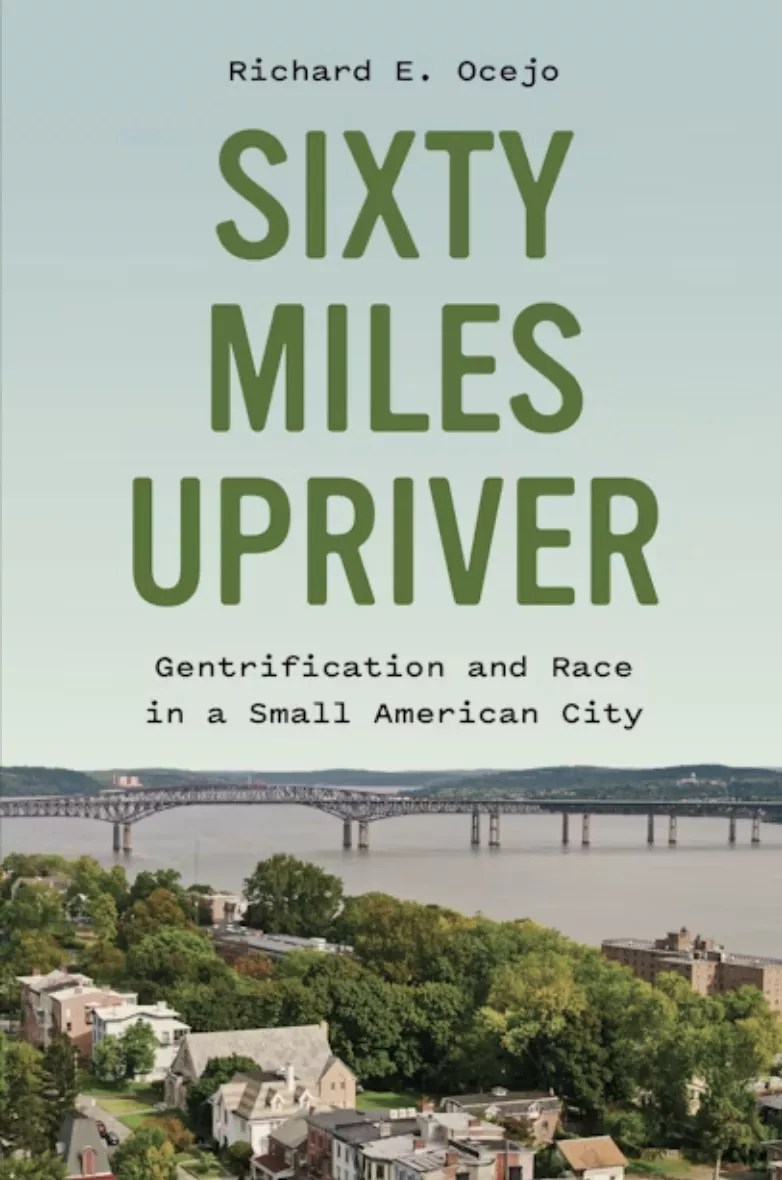
Richard E. Ocejo is a professor of sociology at the CUNY Graduate Center and John Jay College. His new book, Sixty Miles Upriver: Gentrification and Race in a Small American City, is a study of the transformation of Newburgh, a once hard-on-its-luck city that has experienced a boom of sorts in the last decade, but one that has benefited some residents more than others. We spoke recently about how gentrification plays out differently in smaller cities and what individuals can do to mitigate its harmful effects on existing residents. This interview has been lightly edited for length and clarity.
Richard Kreitner: First tell me a bit about your background, how you landed on this topic, and how you went about doing your research for the book.
Richard Ocejo: I was trained as an urban sociologist and ethnographer. I did most of my early work related to New York City. My first book [Upscaling Downtown], which came out of my dissertation, was about gentrification and economic policy, specifically related to the nightlife scene on the Lower East Side. My next [Masters of Craft] was a study of formerly working-class jobs that had been transformed and upscaled into cooler occupations: cocktail bartenders, craft distillers, men’s barbers, whole-animal butchers.
When I moved to the Hudson Valley about eight years ago, I needed a new project. I was hanging out in Newburgh a lot and got interested in what I was seeing, all these signs that changes were happening, but against this background of highly visible poverty and disinvestment. I wanted to learn more about how gentrification unfolds in a smaller urban environment. So I started visiting the city several times a week, hanging out at cafes and restaurants, attending a lot of government meetings, volunteering for community groups. I tried to embed myself in the life of the city. I eventually interviewed 144 people whom I had witnessed or observed in the field.
How does gentrification in a small city like Newburgh differ from how it transpires in a larger place like Brooklyn?
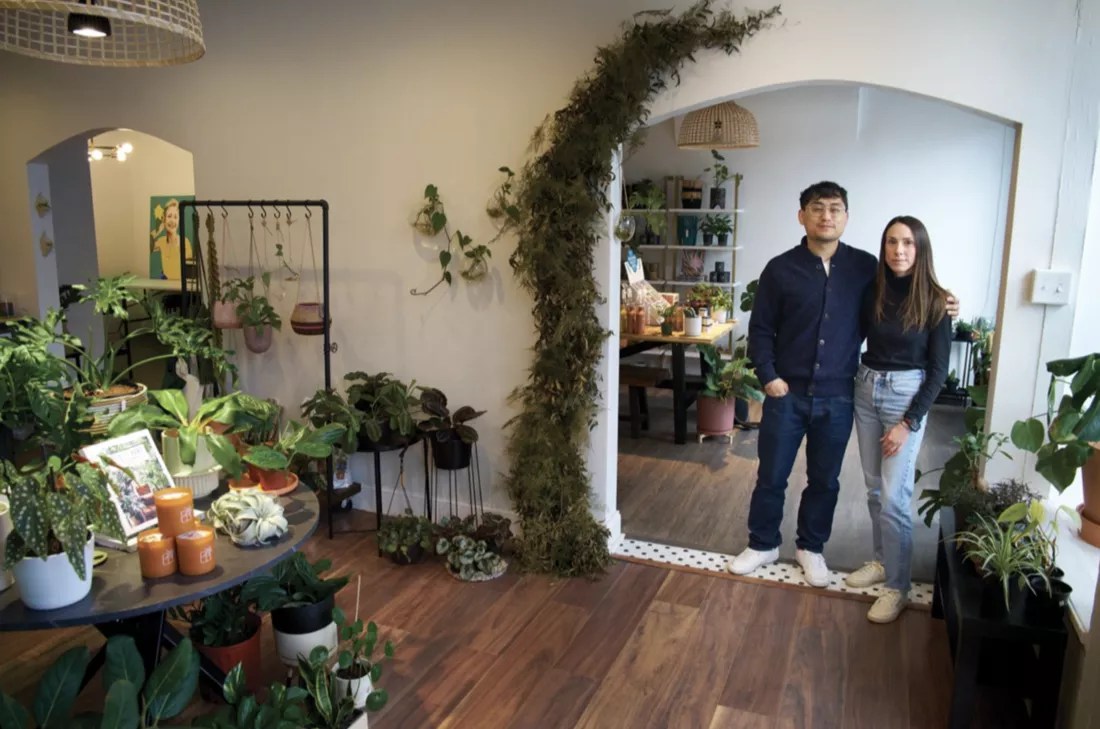
In a small city, real estate is more affordable, so gentrifiers are usually homeowners rather than renters. That gives them security from being displaced. They’re older, more advanced in their careers, so they have the capital to become property owners, investors, business owners, even small-scale developers—influential place-makers. That’s very different from what we see in large cities. As a consequence, these newcomers become more civically and politically active and engaged in a way they had not previously been. They go to city government meetings, they join community organizations, they participate in government committees. They get involved in local politics in Newburgh and try to shape its agenda, especially as it relates to real estate and property values and the expansion of arts and culture, the creative economy. Finally, they create both formal and informal partnerships with local residents who either lived there their whole lives or left and have now returned, usually after attending college. These are people who have been interested in seeing Newburgh revitalized for a long time and saw with the advent of gentrification that it was something they could finally realize, so they help facilitate it by partnering with newcomers to further and expand it. In large cities we don’t see these kinds of connections as much.
What is the “moral dilemma” you write about that lies at the heart of gentrification in a place like Newburgh?
This moral dilemma or tension exists in many gentrifying places. Gentrifiers typically appreciate social diversity, including racial and ethnic differences, and the presence of working-class communities—groups different from themselves. Living among these diverse groups is a key aspect of how gentrification unfolds. Gentrifiers do not want to live only among people who look like them or belong to the same social class. They value diversity on the one hand, but on the other hand, they recognize that the process they are part of puts these groups at risk of displacement. This tension is in gentrifiers’ minds as they participate in the transformation of a city or a neighborhood. They want to be part of the community they appreciate, but they know they might be contributing to displacement.
The primary way these folks resolve the moral tension is by reframing gentrification as positive for providing opportunity for existing residents—employment, renovated housing, exposure to arts and culture. Because the process provides new opportunities, gentrification in Newburgh is not harmful and should be encouraged, the thinking goes. The opportunities they provide, however, are mostly low-wage and unskilled service work, unaffordable real estate (faithful historic restorations, green architecture), and arts and cultural activities and events that are tied to real estate and help escalate property values. Their efforts therefore end up benefiting people like them while widening the disparities they claim to be narrowing.
What evidence is there that the gentrification of parts of Newburgh has indeed led to the displacement of existing residents?
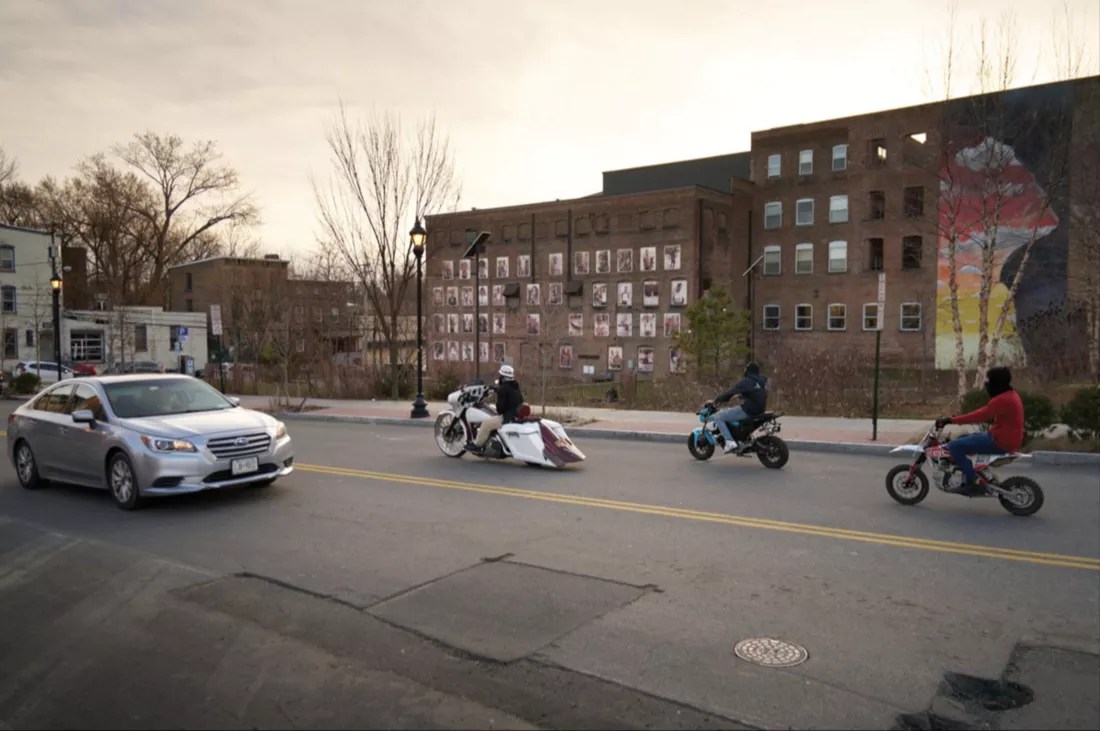
The book isn’t about whether people are getting displaced but rather how people react to gentrifiers’ presence in the city, how gentrifiers themselves make sense of the unfolding process, and what impacts it might have. I don’t seek to provide statistical evidence of displacement in Newburgh, but there are several indicators. One chapter is devoted to existing low-income residents of color, many of whom talk about being displaced because somebody bought their building, renovated it, then increased the rents, making it unaffordable for them to move back in. This is well-documented. Skyrocketing real estate prices affect both home values and rents. Recently, the Newburgh City Council declared an affordable housing emergency in the city. Some 61 percent of renters are cost-burdened in a city where 69 percent of residents are renters, meaning they pay more than a third of their gross income on housing.
Additionally, there is social and cultural displacement where residents feel excluded from the gentrification process. They feel the changes that are afoot don’t address their needs or interests. There’s also a decreasing Black population, especially in areas experiencing strong gentrification. Tracking residential displacement is difficult as it’s hard to determine where displaced people move to, since they’re not there anymore. My book focuses more on how gentrifiers reconcile their role in potential displacement with their interest in living in a diverse community.
How has Newburgh’s proximity to New York City shaped the course of its development?
During the urban renewal era of the late 1960s and early 1970s, many buildings were razed, prompting local citizens to save these buildings and start a historic preservation movement, aided both by New York City preservationists who had discovered Newburgh’s vast collection of classical American architecture and also by investors more interested in buying and restoring properties in order to flip them and turn a profit. This mix of preservationists and speculators shaped Newburgh’s development for decades.
It wasn’t until the 2010s that there was a sustainable influx of New Yorkers interested in homeownership and community engagement, not just speculation or preservation. New York was losing middle-class residents, and these newcomers started businesses and became part of the community, setting in motion a more sustainable gentrification process. This influx has opened new channels between Newburgh and New York City, involving consumers, weekend visitors, and investors interested in all types of housing. This relationship has expanded over the past decade, integrating Newburgh into broader social and business networks.
What role has the influx of Hispanic immigrants since the 1990s played in Newburgh’s changing fortunes?
In 1980, Newburgh’s population had shrunk to 23,000 from a peak of 32,000 in 1950. The city faced severe depopulation, disinvestment, poverty, and unemployment. When Hispanic residents began moving in, it increased the population, stabilized neighborhoods, preserved housing, led to new businesses opening, higher enrollment in local schools, and a more thriving labor market. Newburgh became a new destination for international migrants, offering more affordable real estate compared to traditional gateway cities like New York City, Los Angeles, or Chicago.
Currently, Newburgh’s population is 50 percent Hispanic. This demographic shift has made the city more primed for gentrification, which rarely happens in racially homogenous places. The Black population in Newburgh was previously too high to attract white gentrifiers, but the influx of Hispanic migrants changed the demographic mix, creating a more favorable environment for white middle-class newcomers and shaping Newburgh’s current identity.
You note that gentrification is a “structural” process, not the doing of any one individual or even a group of individuals. So what can we as individuals do to alter or mitigate the harmful effects of this process?
Individuals can start by recognizing that fact: gentrification is a structural process involving real estate, race, and social class. Addressing this requires taking one’s own interests and needs out of the center of their understanding and civic efforts and focusing on the needs of those most at risk of displacement. This means attending to the specific housing and cultural needs of existing communities.
These are general ideas, but fundamentally, newcomers who invest a lot of energy in arts and culture could instead focus on drafting and supporting housing policies in Newburgh to help mitigate the harmful effects of gentrification. Addressing Newburgh’s unaffordable housing crisis could significantly impact the community and lessen the negative consequences of gentrification.
This article appears in May 2024.

The River is an independent news outlet that produces in-depth, quality journalism and analysis about the Hudson Valley and Catskills regions. Learn more about our mission and ethics.


“Addressing this requires taking one’s own interests and needs out of the center of their understanding and civic efforts and focusing on the needs of those most at risk of displacement. This means attending to the specific housing and cultural needs of existing communities.” There are many assumptions made here, including that the need to focus on those at risk was not taken into account in Newburgh. I speak from years of personal experience living and volunteering and contributing to Newburgh. Those needs were, and continue to be, taken into account. But it often comes down to simple economics: it costs money to rehabilitate old and out of code housing. It also costs local taxes to sustain municipal services–which are more heavily used by poorer populations. There are only two choices as I see it, ‘recovery’ either happens with private investment coming in or with government subsidies-which ultimately are derived from our taxes. When private investments are made to restore housing, it drives up the cost of both rentals and sales. No way around this–investors are looking at their bottom lines or to build long term equity. When tax funds and government grants are used to encourage restoration or new builds, sure, you can maintain a supply of housing affordable for more people with lower income, but an imbalance develops. In fact, an imbalance did develop. Pretty simple math: you need to make money (from the ‘gentrifiers’) to spend money on (those in need) A city that is heavily subsidized and has the highest percentage of low income and supportive housing in the county, will have a very hard time climbing out of the hole without private investment and market rate renters and buyers. You have to put back in what was removed if you want to rebalance and restore the underlying economic structure. Unless we plan on rethinking capitalism….