









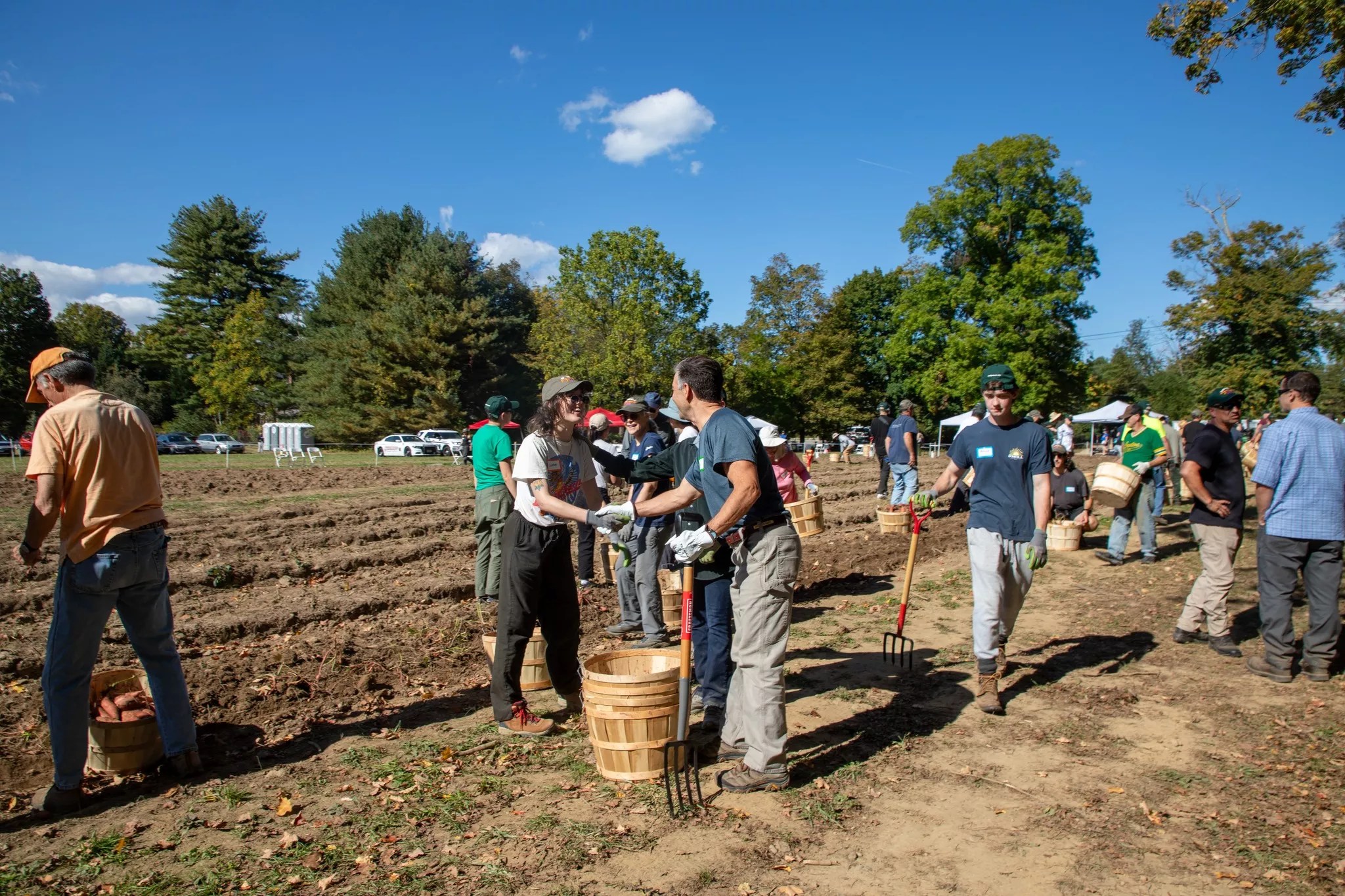
On a crisp October morning, dozens of volunteers hunch over side by side in a sprawling field as they dig into the earth. Hands caked with dirt, they pull up plump, orange sweet potatoes, tossing them into nearby baskets. Laughter and conversation weave through the group, their movement steady and rhythmic under the warm autumn sun. Together, they unearth thousands of pounds of produce.
This is a glimpse into The Great Sweet Potato Dig, an initiative run by The Sweet Potato Project with a mission to reduce food insecurity in the Hudson Valley. More than one in 10 people in the US are food insecure. This means that children are going to school without breakfast, and people who might have two jobs are choosing between paying for gas or a medical bill and buying food for their families. Amid rising need, this community is digging deep—literally.
The initiative is a collaboration between Stacey Farley, her husband Peter Davoren, the crew at Davoren Farm, the Town of Philipstown, and the surrounding community, dedicated to offering a nourishing response to hunger. On October 5, around 170 volunteers—from all walks of life, age five to 91, and from as far away as Kentucky—gathered on a plot of land across from the Desmond Fish Library in Garrison for the project’s first dig. By the end, the team harvested over 20,000 pounds of sweet potatoes to donate to over 20 local food pantries.
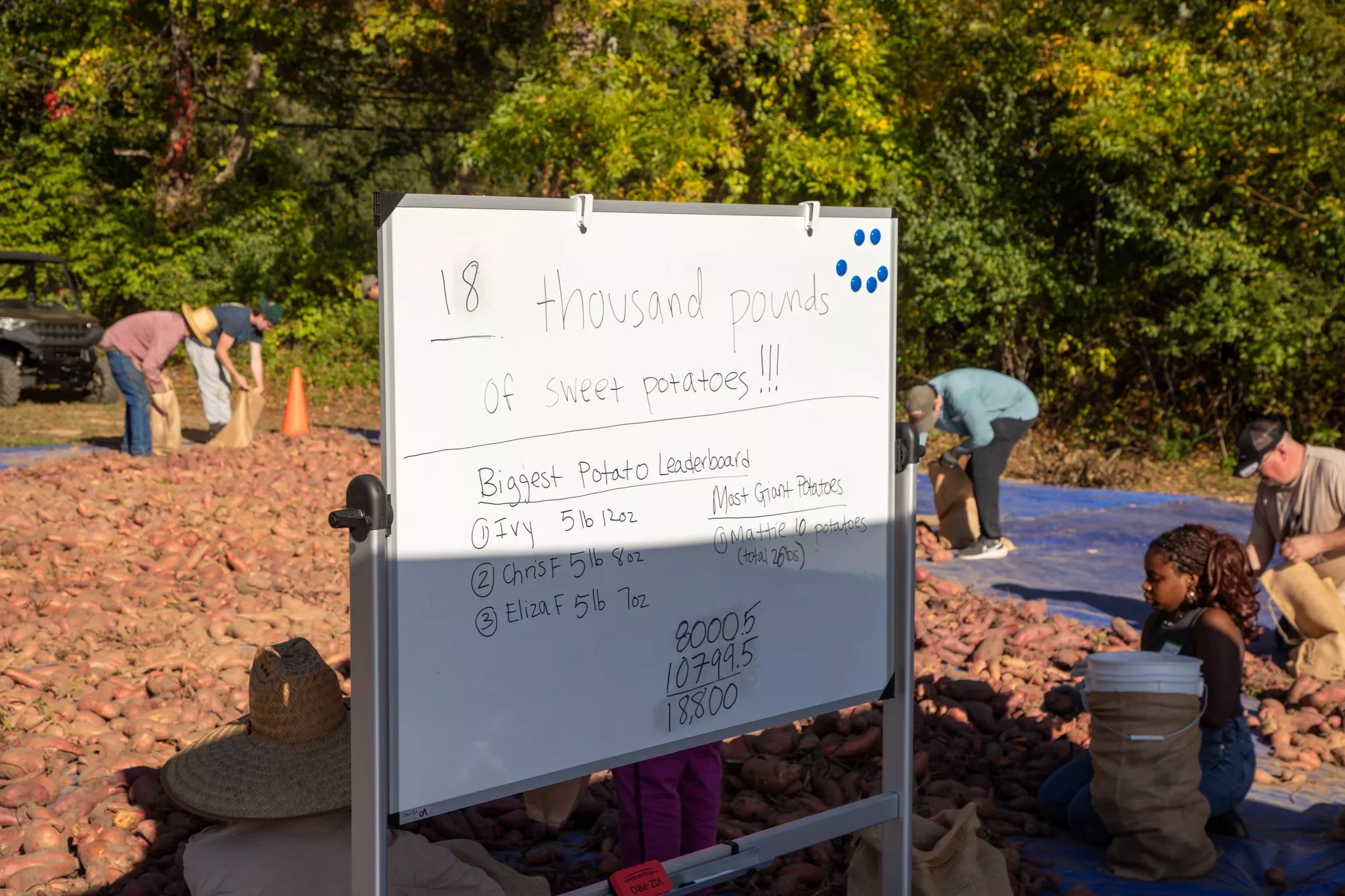
Farley describes the dig as a “big human dance.” She says they spent a lot of time setting up and figuring out the choreography, with many roles: digger, collector, loader, unloader, weigher, recorder, bagger, or tagger.
“It was a real testament to what people can do when they work together,” Farley says. “It was beautiful and powerful.
Her idea was to “borrow” a one-acre parcel of unused land belonging to the Town of Philipstown, which had not been farmed for over 60 years. Farley and her team plowed up the field, put in irrigation, prepared the rows for planting, and, with the help of over two dozen volunteers, planted 10,000 sweet potato “slips” of four varieties in early June.
The Sweet Potato Project chose to grow sweet potatoes because they are highly nutritious, grow underground all summer long with minimal maintenance, and have a long shelf life. This made them the ideal crop for such a project.
“Growing sweet potatoes is not going to solve everything, but it is something,” Farley says.

Just a few months after the slips were planted, the matured potatoes were ready to unearth, and the project’s mission to cultivate a community working together to help neighbors in need would come to fruition.
“If we grow more food locally, distribute it more efficiently, and waste less food, we can reduce food insecurity in the Hudson Valley,” Farley says.
A large focus for her was partnering with local food pantries and the “quiet heroes” who run them, because “these are incredible people,” Farley says. “They’re doing this beautiful work, creating safe and gorgeous spaces to feed people who are food insecure in a dignified way.” She urges: “Know where your food comes from. If you can, know your farmer. Know your food pantry. Volunteer.”
Farley hopes this experiment will inspire communities across the nation. “That would be a real dream for me, if this farm model is replicated in other communities,” she says. “This is something every community can do, anywhere in the country. Together we can ensure that everyone has access to healthy, nutritious food—something I believe is a human right.”

The River is an independent news outlet that produces in-depth, quality journalism and analysis about the Hudson Valley and Catskills regions. Learn more about our mission and ethics.


