









Hubert Jagodzinski, or Jag Fishing on YouTube, is a quintessential sports fisherman, embodying passion and persistence for his craft. At 37, this local angler has spent over two-thirds of his life casting lines into the Hudson River, a waterway he holds dear. “I remember as a kid everyone I talked to always said how filthy the river was and how the fish were sick and deformed from the unhealthy habitat,” he recalls. “The ecosystem that once thrived was now destroyed by untreated sewage, mercury contamination, Indian Point nuclear facility cooling water, and factories dumping oil, solvents, and paint into the river. We would never consider keeping a fish from the river but instead practiced catch and release.”
However, over the last two decades, Jagodzinski says he has started to notice a positive transformation. “When I went fishing for striped bass in May at my favorite spot in Albany, I was amazed to see the bottom of the river mid-tide” and to catch so many large, healthy bass, he says. To Jagodzinski, fishing isn’t just a hobby; it’s a connection to the river. With each new cast, he celebrates not only the sport but also the revival of a beloved ecosystem.

After years of being deemed “dead,” the Hudson River—America’s First River, the River that Flows Both Ways—is demonstrating a promising recovery, thanks to dedicated efforts by volunteer activists and watchdog groups to monitor and restore its ecosystems for the past five decades. Researchers and conservationists are actively revitalizing the river’s plant life, an initiative vital for supporting plankton populations, which feed fish like the striped bass—a favorite catch for local commercial and recreational fishers like Jagodzinski.
Restoring Submerged Aquatic Vegetation
As the river’s resurgence gains momentum, the 2024 Hudson River Symposium in October, hosted by the Hudson River Environmental Society and Cary Institute of Ecosystem Studies, underscored the collaborative efforts essential for its ongoing revitalization. Experts at the symposium showcased innovative monitoring strategies that empower communities to intervene and sustain the river’s delicate balance. With these initiatives, the Hudson is not just being preserved, it is being revitalized, ensuring a thriving habitat for aquatic life and a robust resource for local anglers.
Environmental DNA (eDNA) is among these groundbreaking techniques. The process identifies DNA from organisms in the Hudson, using cellular material shed into the surrounding water. This method allows for monitoring without needing to collect samples directly from the organisms. Current eDNA applications enable the early detection of invasive species in water samples, often before they can be seen or trapped in large numbers in nets, giving organizations a chance to intervene, as well as monitoring submerged aquatic vegetation (SAV)—plants that are always underwater. Monitoring systems and organizations collect water samples, filter them to capture DNA shed by plants in the water column, then analyze the DNA in a lab to identify which species of aquatic plants are present. This allows researchers to assess the health and abundance of SAV without directly observing the plants themselves; it is noninvasive and can be used to detect even low densities of vegetation.
The most common native species of SAV in the Hudson River watershed is water celery, but other species include clasping leaved pondweed, eelgrass, and such nonnative plants as curly pondweed and Eurasian water milfoil. These plants create crucial habitats for fish, wildlife, and invertebrates, providing areas for foraging, spawning, and sheltering from predators.

SAV beds offer a key refuge for plankton, allowing them to escape predation, particularly from invasive zebra mussels. “Zooplankton and phytoplankton are the building blocks for the aquatic ecosystem. So much relies on them,” says Matthew Best, the habitat restoration manager at Riverkeeper. “Without plankton, the food web would fall apart.”
Plankton serves as a primary food source for the invasive zebra mussels that were first discovered in the Hudson in the early 1990s. The species spread rapidly throughout the river, reaching a biomass greater than all other aquatic organisms in the area at the time. This population explosion caused phytoplankton and zooplankton biomass to drop over 70 percent, reduced counts of pelagic fish like herrings and smelt due to the reduction of their food source, and had a “devastating effect” on the freshwater mussels native to the river, according to Best. Two species—the alewife floater and tidewater mucket—haven’t been found in a survey since 2010. Despite evidence suggesting the species is losing its grip (thanks, in part, to native blue crabs), “zebra mussels are still prevalent, and their long-term effects on the ecosystem are being monitored by researchers,” Best says.

However, the SAV that protect plankton from this invasive species is at risk from warming water temperatures and high sediment levels that reduce light penetration, both of which are exacerbated by development, climate change, and extreme weather events.
The location and amount of SAV beds can vary year to year. However, studies conducted by monitoring organizations like the New York State Department of Environmental Conservation and Cary Institute have shown a concerning trend of declining vegetation populations over the past decade, particularly noted in the summer of 2012 when water celery was absent from areas where it had previously thrived. A likely cause of this decline is the sediment pulse from Hurricane Irene and Tropical Storm Lee, which buried stems and blocked light in the river during the late summer of 2011. These storms led to a 90-percent decline in water celery distribution due to decreased water clarity, as suspended particles like algae and sediment hindered light penetration essential for SAV growth and photosynthesis. According to the 2023 Hudson River Estuary Coordinator’s Report, periodic mapping since the late ’90s has revealed a net loss of approximately 1,800 acres of SAV in the Hudson over the last 20 years.
To combat this issue, the Hudson River National Estuarine Research Reserve partnered with the University of Maryland Center for Environmental Science to identify best methods for growing, transporting, and transplanting Hudson River SAV. In 2023, 20 native plants were shipped from Maryland and planted in areas where SAV had previously been documented but was no longer found. After three months, most of the plants appeared to have disintegrated. However, by the end of the summer, new plant material appeared at the planting locations, suggesting below-ground buds survived and grew. This is an ongoing attempt to develop methods to support future SAV and shallow-water restoration efforts.
The DEC has also recently established greenhouses to grow plants locally, allowing for a quicker response to climate events that threaten habitats and expedite the restoration of SAV beds.
The Importance of River Monitoring
These SAV restoration initiatives illustrate how monitoring systems can identify threats to the river ecosystem and inform research and efforts toward recovery—a key focus of the 2024 Hudson River Symposium.
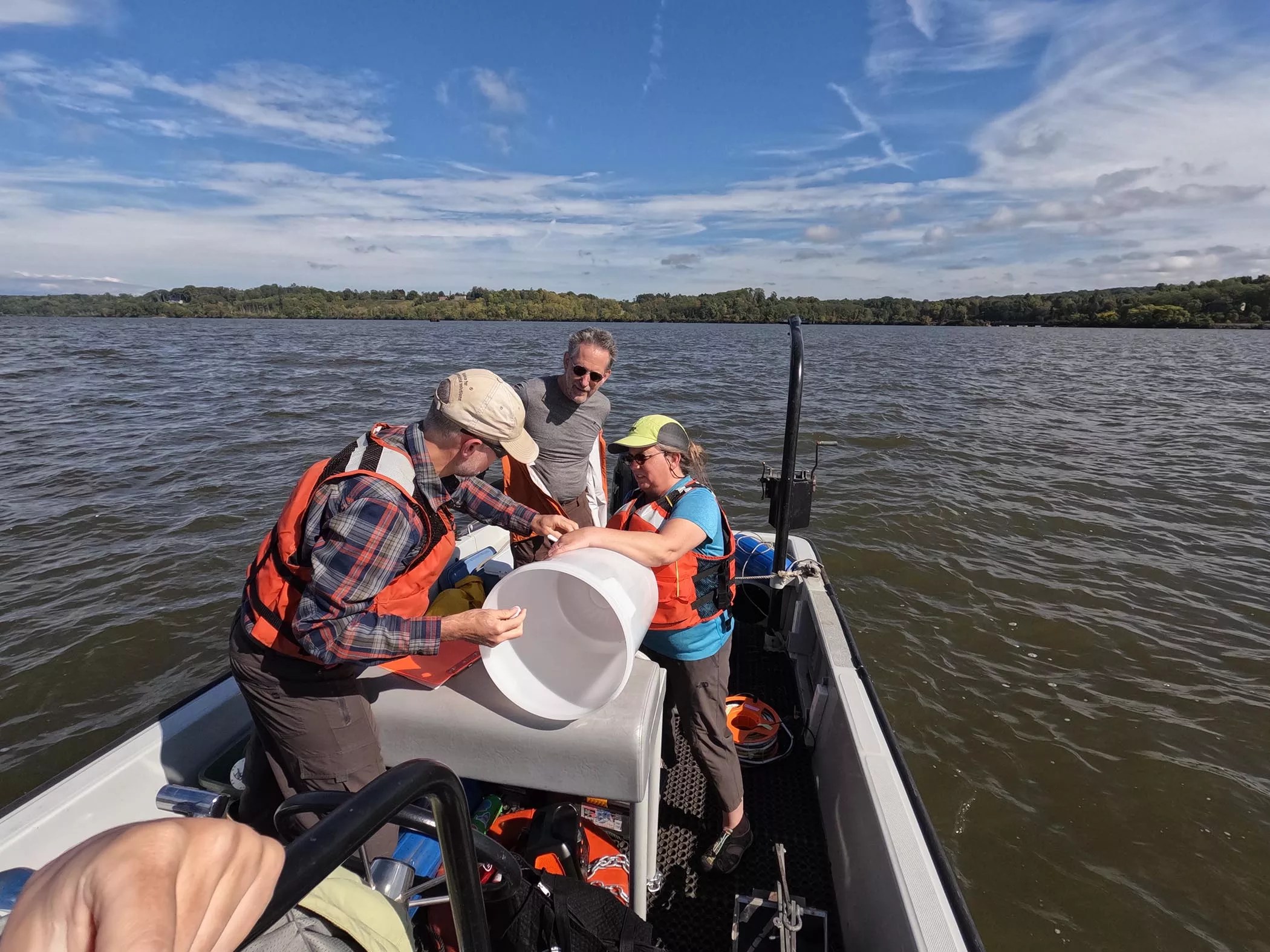
“If we weren’t paying attention, I don’t know how much submerged vegetation we would have in the river today. We could have just continued to lose that habitat, which would have had an impact on the species people like to go fishing for and that are commercially important,” says Chuck Neider, the vice president of the Hudson River Environmental Society and chief of the Bureau of Habitat at the DEC. “Through the monitoring and the science, we were able to discover how critical that habitat is for the health of the river, and then convince regulators to protect it. That’s a great example of why monitoring is important and how that information can be used to better understand and protect.”
“Monitoring and researching these shifts and changes to populations and food webs is critical to understanding the challenges and stress that our aquatic ecosystems face,” Best agrees. “I think the most important aspect going forward is putting all of the monitoring and research that has been done into action,” he says. “Part of our role at Riverkeeper is to take action and protect and restore the river that not only so many of us call home but so many fish, wildlife, and other critters call home too. I am hopeful for the future of the Hudson. I believe there are a lot of great organizations and individuals working to protect this great river.”
These collaborative efforts to protect and rejuvenate the river not only enhance the environment but also cultivate community pride and hope for a sustainable future, where people like Jagodzinski can find joy in their sport and put healthy food on the table.

“I am excited to see how the fish in the river will continue to grow healthier, bigger, and more abundant with a revitalized water system,” Jagodzinski says.

The River is an independent news outlet that produces in-depth, quality journalism and analysis about the Hudson Valley and Catskills regions. Learn more about our mission and ethics.


