








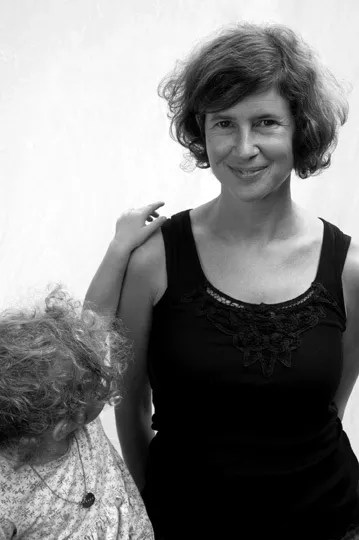
Last weekend I went to Omega Institute’s conference on Mindfulness and Education, imagining a Flowers Fall-style back-to-school column on the topic. Before going, I set up an interview with one of the keynote speakers, Jon Kabat Zinn, the author, speaker, and mindfulness-based stress-reduction guru. The conference was exciting, turning me on to the ways kids can awaken in and out of school. But watching Jon Kabat Zinn was even more inspiring. Not only was he a generous and engaging speaker, but as our interview happened at the end of the day, I got to stand there for an hour, watching him connect to each and every person who approached him with their story, request, or gratitude. And I was deeply impressed by his gentle responsiveness.
Our conversation happened on the porch of his cabin. It went all over the place, but—surprise, surprise—it was the practice of parenting (he has grown children of his own) that seemed to get both of us most riled up. So in editing this piece, that is what I have chosen to highlight.
The column I write is about my personal practice as a parent and how I work with the challenges that arise.
Parenting is the hardest work in the world. And the best!
Right. I have been practicing in a pretty traditional Zen setting for some time, and it’s a challenging path for parents. How is it within the mindfulness tradition?
When people have kids, you can’t expect them to train in the zendo for 15 years before they know what to do with their newborn.
Exactly.
I have a formal meditation practice and my wife doesn’t. It would be absurd for us to suggest that you have to be a meditator in order to be a mindful parent.
Do you find that people really can awaken in a meaningful way without a serious sitting practice?
I think the question of what is a “serious sitting practice” may be different for different people. I see parenting as the highest meditative practice there is. You get these little live-in Zen masters who are parachuted into your life and push every single one of your buttons. And you can either butt heads with them or honor them as miraculous beings and find out through that dance of relationality, moment by moment, what it means to be human, passing on life to the next generation. And yet, often you reach a point where you get so exasperated. You hurt your children! It can drive you that far into madness and distraction. But really that is attachment to your own idea. It’s like, I don’t want this to be happening, I didn’t sign up for this. I didn’t think this is what it would be like to be a parent, or a wife, or whatever. Well, too bad! It’s what’s happening! Mindful parenting is: Can you really listen, can you really see who your child is, and delight in their need of you? I mean, they didn’t ask to be born.
I know. I think about that all the time.
What blows my mind is when people have children and then hire other people to raise them, and I see the end result of that 40 or 50 years later when I hear people’s stories.
One of the things you talk about in your book about parenting [Everyday Blessings] is putting your child first. And that has such an interesting edge for people, especially women who have fought a lot of conditioning that always said to put others first. Then we grow up and have children and we’re supposed to take the backseat again. It can be very confusing.
Well, that’s not what I meant about putting your child first. What I meant was that being a parent means you take responsibility for your child’s life until they can take responsibility for their own life. That’s it!
That’s a lot!
True, but it doesn’t mean you can’t get help. I’m not expecting anyone to be supermom but just to be real, to ask deep questions about why am I in this situation in the first place, especially if you chose to have children. There’s no one way to be a mindful parent. But it turns out how you are as a parent makes a huge difference in the neural development of your child for the first four or five years.
That is so frightening.
[Laughs.]
I find that kind of information, as an adult child, can be very healing, but as a parent, it’s terrifying.
All that’s required, though, is connection. That’s all.
But the source of suffering is separation and that suffering happens a lot.
That’s true.
And I don’t want to be connected all the time.
I see. Well, everything has consequences.
Absolutely.
And you don’t know what the consequences are.
Exactly. So when I read some of this research that lays out the consequences—
Then it’s scary. How old is your child?
Four-and-a-half.
Well, I gotta say, I have very strong feelings about that kind of thing. As I said, she didn’t ask to be born. On the other hand, it’s perfectly understandable that a person wants to pursue her own life. How you negotiate that with your husband, other parents, in-laws, or whatever, those things are important. And there’s no one right way to do it, but there are an infinite number of ways to that are really seriously unwise—
Like with anger, resentment—
Exactly. We’re not talking some ideal like you shouldn’t be angry. And you know, kids are really quick to forgive. But not if you don’t name it. You’ve got to name it.
For myself first.
Right, and then you’re teaching emotional intelligence. Liberation is about seeing the impulse to get caught in something that is going to be harmful to you and her—or repairing it if you’ve gone too far.
And noticing the habits of only noticing what I do wrong.
That’s another story you’re telling yourself. What good does that do? It’s so judgmental. Everyone, in some sense, is, I believe, doing the best they can. But if they were more able to be in alignment with what’s deepest and best and most beautiful in themselves, that’s the work of no time. It’s just realizing you’re not as bad as you think. Maybe you’re beautiful, and you can share that beauty with your daughter. And they don’t need that for more than a few seconds. It’s not like this is going to keep you up all night. They just want to know that you care and that you’re there.
Did you have good parenting as a kid?
My wife would say no. But I’m an optimistic guy.
This article appears in September 2010.


