









At first, W. S. thought it was just aging. The reading glasses, heat crawling up her neck at night, a slow accumulation of change. But soon, her body began communicating in more confusing ways: sudden shivering, dry skin, thinning hair, numb fingers, aching joints, stronger bouts of depression, and a jittery sensation in her chest. “I felt like I was falling apart,” she says. “And I didn’t know who to talk to about it. All I’d ever heard about menopause was that it was terrible and would last a decade, and that your experience would be just like your mother’s,” which terrified her.
Now 55 and living in Woodstock, W. S. is semi-retired, childless, caring for elderly parents, and juggling part-time work with pet- and house-sitting gigs. Looking back, she realizes perimenopause crept in during her mid-forties—and no one had prepared her. She grieved the end of menstruation. “Despite never wanting children, I felt deep loss that my choice of whether or not to create life was no longer viable. I questioned what the point of my life was, what it meant to be a woman, and whether I made a big mistake.”
For years, she suffered in silence, hiding the depression, anxiety, memory fog, and urinary incontinence that made her feel embarrassed, unattractive, and alone. “It felt like the beginning of the end,” she says.
Eventually, she joined a group of women going through similar experiences, formed a “MenoPosse,” and began sharing stories, research, remedies, and encouragement. “The freedom to open up and share with others that understand is invaluable,” she says. “Even though each of our bodies are different and our process is unique—mine is not my mother’s or sister’s—we are not alone in this anymore.”
She tried hormone replacement therapy (HRT), supplements, pelvic floor therapy, weight training, yoga and Pilates, yoni steaming—a traditional practice involving sitting over herbal-infused steam to support pelvic health—acupuncture, and found a therapist. “Now I sleep on a terry cloth towel so I don’t have to change the sheets when I get night sweats,” she says with a laugh. “And now, when things feel hard, I have help and deep respect for my body.”
W. S.’s journey isn’t uncommon. While menopause impacts half the population, silence and stigma often leave women confused and unprepared. But that’s beginning to change. Women across the Hudson Valley are finding their voices, arming themselves with knowledge, and reframing menopause as a powerful transformation.
Understanding Perimenopause and Menopause
Perimenopause, the transitional phase before menopause, typically begins between ages 40 and 44, though some notice changes as early as their mid-30s. It’s marked by fluctuations in the reproductive hormones estrogen and progesterone, triggering wide-ranging physical and emotional shifts. Menopause is reached after 12 consecutive months without a period, usually between ages 45 and 55. About 6,000 women in the US reach menopause each day, with over 75 million currently in perimenopause, menopause, or postmenopause—the life stage following menopause.
Symptoms range from minimal to highly disruptive: temperature dysregulation, sleep issues, irregular periods, joint pain, elevated cholesterol and blood sugar, weight gain, loss of libido, vaginal dryness, urinary tract infections and frequent urination, digestive issues, hair loss, brain fog, mood swings, and new or worsening depression and anxiety. “Everyone has a story,” says Holly Shelowitz, a certified nutrition counselor, menopause coach of Nourishing Wisdom, and creator of the “MenoPosse.” “Every woman has had mysterious experiences and needs to know she is not alone.”
Despite its widespread impact, many women navigate menopause with little information or support. “There’s a stigma in our society about aging for women,” Shelowitz says. “As a result, women are not talking about it. It feels vulnerable. They are suffering alone.”
Dr. Suzanne Gilberg-Lenz, OB-GYN, chief medical correspondent for the “Drew Barrymore Show,” and author of Menopause Bootcamp: Optimize Your Health, Empower Your Self, and Flourish as You Age, puts it bluntly: “I like to say misogyny and ageism had a baby—it’s called menopause.” That silence is shifting, but many agree it’s long overdue.
Tracking, Nutrition, and Preventative Care
For Shelowitz, tuning into the body’s rhythms is central to wellness. Her work centers on menstrual cycle tracking and nutrition—essential tools during hormonal shifts. “When we track, we can see patterns, she says. “It could be one month is 28 days and the next is 36 days. That change has meaning.” Whether through an app or physical calendar, tracking provides a foundation for recognizing when perimenopause begins and ends.
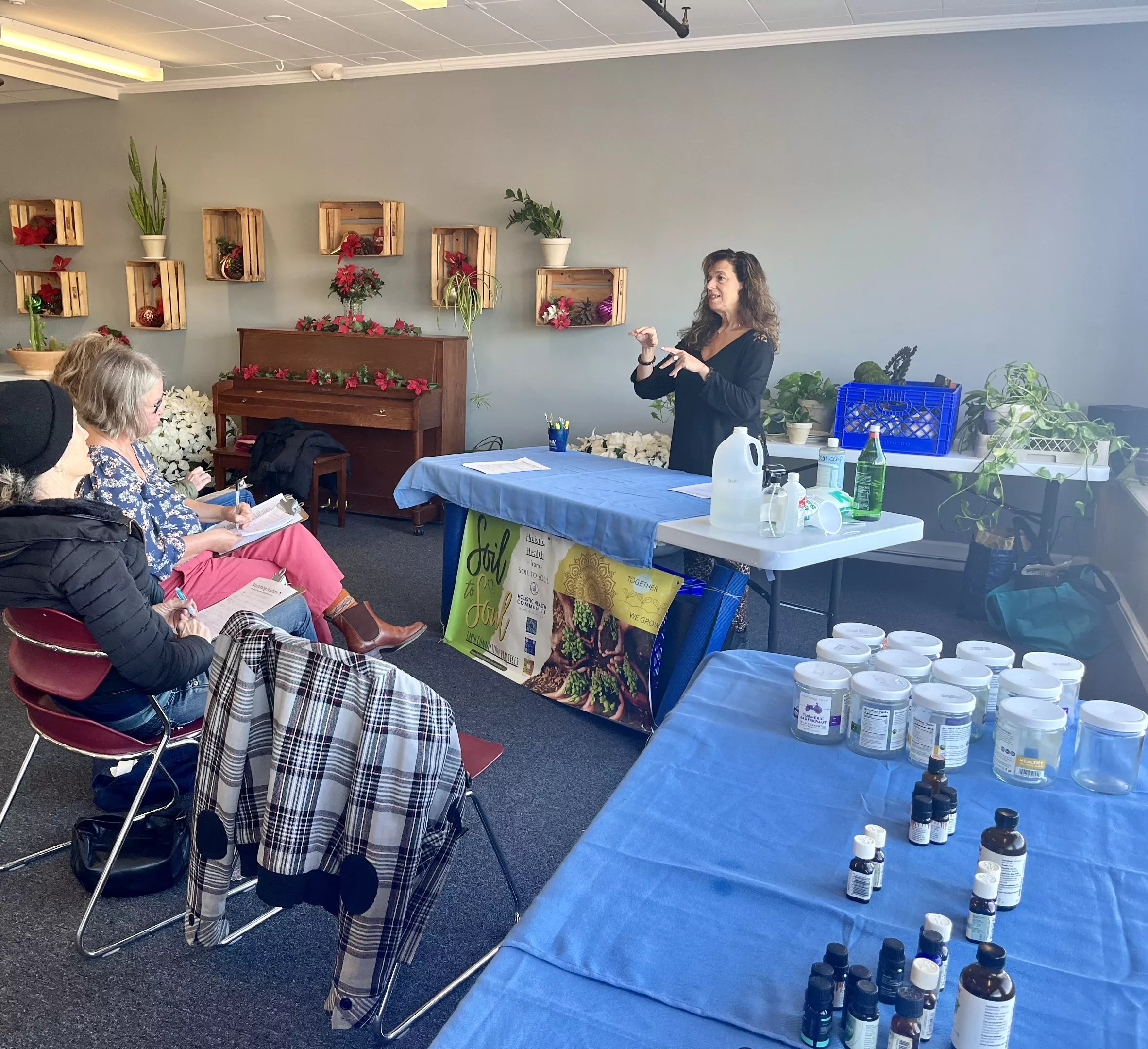
But that’s just one piece of the puzzle. During perimenopause, “what we eat, how we move, and how we live affects our menstrual cycles,” Shelowitz says. She promotes protein-rich meals, mineral-dense teas, and blood sugar regulation as tools for stability in a time of biological flux. Eating in sync with the cycle further boosts support. “There’s a beautiful, sacred rhythm we can use to full advantage,” Shelowitz says. Menstruation (days 1 to 7) is ideal for rest and replenishment with mineral-rich foods like meats, beans, leafy greens, and herbal infusions like nettles and red raspberry leaf. During the follicular phase (days 8 to 14), energy rises, so Shelowitz recommends fermented veggies, seeds, lean proteins, and complex carbs to prepare the body for ovulation (days 14 to 15), when energy and libido peak. The luteal phase (days 16 to 28) brings mood swings and cravings, calling for warming foods and magnesium-rich snacks like roasted root vegetables, nuts, and dark chocolate.
Shelowitz also urges rest when needed, time outdoors, and “horizontal time” with feet up and heart quiet. “One day at a time, these adjustments become our lifestyle,” she says. The same principles apply after menopause, continuing to support the body’s changing needs through nutrient-dense foods, consistent movement for bone and heart health, and routines that nourish emotional well-being.
Exploring Tools and Modalities
Functional Medicine
Lori Graham, a certified functional medicine practitioner based in Stamford, CT, focuses on identifying and addressing root causes of imbalance. She begins with personalized hormone testing—estrogen, progesterone, testosterone, cortisol, and thyroid panels—alongside gut health, inflammation, and nutrient assessments. “We consider antecedents, triggers, and mediators of dysfunction,” she says, highlighting how early life factors like birth method and feeding can shape the microbiome and impact health decades later. Treatment plans integrate tailored nutrition and supplements, stress management, reduced exposure to endocrine-disrupting chemicals that worsen hormonal imbalances, sleep optimization, movement, and low-dose HRT when appropriate. For Graham, menopause is “a powerful time for recalibration and renewal”—an opportunity to align biology, lifestyle, and emotional needs.
Chinese Medicine and Acupuncture
In traditional Chinese medicine, menopause is known as the “second spring,” a profound life evolution and time for reflection, renewal, and fuller embodiment. Hillary Thing of Kingston’s Nourishing Life Health Center explains it as “a time of great change and transformation,” focusing on restoring harmony between Yin and Yang energies, as Yin—the cooling, nourishing, calming force—naturally declines. This energetic balancing act is supported through holistic practices that strengthen kidney and liver meridians, thought to be central to hormonal and emotional stability.

Customized herbal formulas, including dang gui (Chinese angelica), huang bai (phellodendron root), sheng ma (black cohosh), and red clover, are paired with acupuncture to regulate the body’s internal energy systems (Qi), drawing on centuries of wisdom passed down through practice. “Acupuncture and Chinese herbs help reduce symptoms, build back blood and Yin deficiencies, and move Qi,” by releasing stagnation and gently guiding the body back to equilibrium, says Kingston-based acupuncturist Jipala Reicher-Kagan. “Chinese medicine zeroes in on nurturing a lifestyle that values the feminine.”
Mayan Abdominal Massage
Mayan abdominal massage supports the uterus and pelvic alignment as estrogen levels decline and ligaments, bladder, and uterine tissues shift. “What we’re doing is taking the woman as a whole being and realigning the uterus within the pelvic girdle,” says Ellenville-based massage therapist Natasha Zajac. This repositioning, combined with breathwork and rainforest-native herbal medicine, supports lymph flow, hormone production, and energetic balance, easing the transition into postmenopause. “We have this beautiful communication circuitry between our reproductive organs and brain,” Zajac says. “When there are abdominal adhesions, blockages, energy cysts, impasses between the two, the hormones get disrupted. With the anatomical repositioning into homeostasis and emotional nurturing, we’re working with a more balanced hormonal possibility.”
Her practice is rooted in personal experience and cross-cultural ancestral knowledge passed down from herbalist and naturopath Dr. Rosita Arvigo, who studied with a Mayan shaman in Belize. “The womb is an emotional archive,” Zajac says, and menopause is a time to let go and reconnect. With consent, she sometimes “sings into clients’ bones” to release trauma and reawaken the body’s innate intelligence.
Hormone Therapy and Conventional Medicine
Conventional care, especially when supplemented with holistic practices, remains a vital support for menopausal women. Gilberg-Lenz combines clinical knowledge with education and advocacy, creating a space where women feel informed and empowered in their health decisions. Her Menopause Bootcamp series, including an upcoming session at the Omega Institute in August, was born out of the limitations of standard visits: “I created a half-day of content to teach about the basics—terminology and stats, solutions to the most common and least understood symptoms, a full workout session with a trainer, and meditation,” she says.
She supports HRT when it fits a woman’s needs, considering risk factors, symptom severity, age and time since menopause began, and preferences—often recommending bioidentical hormones and individualized plans. “One size will never fit all,” Gilberg-Lenz says.
Still, systemic barriers remain. While HRT itself isn’t expensive, getting access can be—especially without good insurance or a well-informed provider. “Menopause care is time-consuming and poorly reimbursed,” Gilberg-Lenz says. “Until this system shifts dramatically or crumbles, I don’t think we’ll see much improvement.”
Reframing Perimenopause
as a Rite of Passage
W. S.’s journey highlights that what we commonly refer to as “menopause” is a layered process—one that unfolds over time, reshaping identity and purpose as it leads into a new phase of life. Rather than a single moment, it’s a gradual and often challenging transformation that marks the threshold into a woman’s later years. “When a woman enters menopause, her womb closes and her throat opens,” Zajac says. “There is a trembling potential energy for the complete, vast power, clarity, and healing aspects of women’s voices ready to be heard. It’s time for women to be in their full holistic power, to come back to the body, come back to the earth, herbs, plants, water, prayer, touch, what it is to be human, what it is to be a child of the Earth, and to have this kind of sharing with other women.”
Shelowitz agrees: “Menopause is a rite of passage, an awakening, a time of deep understanding of the power of being a woman.”
Related Stories


Could Your Pelvic Floor Use a Renovation?
This article appears in May 2025.


