









“Yet, though it is like this, simply, flowers fall amid our longing,
and weeds spring up amid our antipathy.”
-Dogen Zenji, Genjokoan
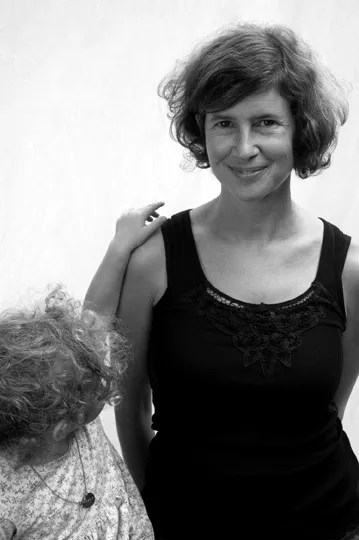
Last night I had the pleasure of sitting with Azalea and reading a fine book called The World’s Biggest Tea Party. It is about the My Little Pony crew and how on “one bright spring day in Ponyville, a group of pony friends gathered at Sweetberry’s Sweetshoppe.” One pink pony named Rainbow Dash, Azalea’s personal favorite, posed the question of what they should do that day and they came up with the crazy idea of having a tea party, and not just any tea party, but, as suggested by Pinkie Pie, “the world’s biggest tea party!” Azalea was riveted.
It’s such a trip learning who my daughter is—what she likes and how her mind works. And the craziest part is that she really is just four and a half, meaning she’s not faking it. When T and I first got our Siamese cat Jimmy we used to joke that he felt to us so sentient, so totally aware, that he seemed like a human in a cat suit. And when I look at Azalea sometimes I see a grown-up in a kid suit. Not because she acts like an adult, but because I kind of can’t believe that her kidness is so real, so true, even honorable. Azalea really likes cartoons. She loves to put rings on her toes, a scarf around her waist, be tickled, and then jump from the couch to the chair, and then back again. Not only would I rather not do any of those things now, I don’t think I ever let it rip like she does; according to my family, I have always been pretty serious. It is just impossible to imagine myself popping up and down from the dinner table in order to check on my horses in the next room, or hiding under my covers, begging to be found. Again! To people who know what it’s like to feel that type of playful exuberance, perhaps my dawning realization that childhood is real might seem bizarre, or even absurd. But I actually think that we are all parenting based on some pretty funky assumptions about who our kids are and what they’re capable of.
The Buddhist term for these assumptions is conditioning. It often feels like what we believe about the world is utterly personal, idiosyncratic, and sometimes it is. But conditioning also comes from forces larger than ourselves or our families. One of my very favorite books about the cultural conditioning of children is called Preschool in Three Cultures, Revisited: China, Japan, and the United States. In the original edition of this juicy ethnography, the authors traveled (in 1984) to these three countries, spent time in preschools, interviewed teachers about their pedagogy, shot lots of video, then showed video clips to teachers in other countries, asking them to respond to what the other countries’ schools were doing. In the Revisited edition, the authors returned to the schools in 2002, asking the current teachers to reflect on their schools’ past practices, as well as what is presently happening in the other countries via updated videos. What results is a cornucopia of conversations about who we think children are, and should be.
In the 2002 edition, the authors discuss how, as they continued to travel around the world, one incident in the 1984 Japanese classroom persisted as the most controversial. The Japanese preschool was housed in a Buddhist temple, which is typical. The incident of intrigue, however, was not about Buddhism so much as Japanese ideas about children (though the two are certainly related), and involved a boy named Hiroki, who in our great land would have been given a hefty dose of Ritalin (or worse, see the New York Times article on medicating children, from September 1, 2010) right off the bat. He fought with other kids, pulled out his willie during circle, threw flashcards off the balcony, and sang loudly while other kids were trying to talk. And the amazing part is that the teacher did nothing to intervene. She sent the other children to fight their own battles with him and generally ignored his misbehavior. The authors, Western-trained educators, said it took everything within their power to not put their cameras down and tell the kid to cut the crap. Likewise, Chinese and American teachers who watched the video were appalled at the boy’s “spoiled,” disruptive behavior and what was seen as the teacher’s lack of control.
At one point the authors asked the principal of the preschool if the teacher ever punished Hiroki, and he responded by asking, “What do you mean? Like, tie him up or something?”
The Japanese teachers believe that deliberate and respectful waiting is the most effective strategy for working with children, and believe that Hiroki and his classmates benefit from learning how to deal with one another, becoming “more complete human beings.” While we in the US tend to foster independence, Japanese preschools give kids as much space as possible to discover, for themselves, their amaeru, a word that describes the presumption of benevolence of others, and thus, dependency. Hiroki was not seen as a problem that needed to be fixed, but just a kid exhibiting tereru, the behavior of someone who is ashamed of his wish to be dependent.
When the authors asked the Japanese teachers what kind of children they thought they were shaping, they answered, “Kodomorashii kodomo,” which means “childlike children.” Cultivating child-ness in children. Something for me to consider.
And another thing to consider is how much all these people care. It’s heartbreaking, really. Human beings have wildly different opinions about childhood, education, and adulthood, not to mention radically different resources and capacities. And I think it’s really important to know where we are coming from and where we get our big ideas. And to ask questions. But it’s also incredibly healing to look around and see how many people try really hard to do the right thing for kids. Most educators just want a good life for their students. And parents love their kids! Around the world they get them ready for preschool, ribbons in their hair, favorite shoes on their little feet, little pockets stuffed with random things. Regardless of what I happen to think is real, there is something unconditioned there.
This article appears in October 2010.


