









Yet, though it is like this, simply, flowers fall amid our longing,
and weeds spring up amid our antipathy.
— Dogen Zenji, Genjokoan
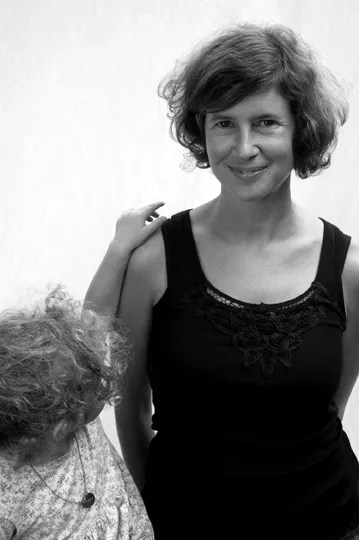
Judith Simmer-Brown is a professor of Buddhist studies at Naropa University in Boulder, Colorado, where she has taught since 1978. She began her practice with Zen master Shunryu Suzuki, Roshi, in 1971, and then became a student of Trungpa Rinpoche in 1974. She is an Acharya, or senior teacher, in the Shambhala Buddhist lineage, dean of the Shambhala International Teachers’ Academy, and teaches widely on Buddhism and contemplative education. Her book, Dakini’s Warm Breath (Shambhala, 2001), explores the feminine principle in Tibetan Buddhism. She is married and has two college-aged children. I interviewed her recently at Zen Mountain Monastery, where she was leading a retreat titled “Waking Up from the Nightmare: Transforming Strong Emotions.” Our conversation was very powerful and healing, and much too juicy to limit to one installment. So stay tuned next month for part two.
Buddhists like to say, “My kids are my practice.” I tend to wince at that because I know it doesn’t work for me.
That’s really important. What I would say is, yes, my kids are my practice and I must practice for my kids. I think that we have to do both. If our kids are our practice, and we look at our states of mind and our emotions, we find that we are losing it all the time, and we’re lousy practitioners.
So, how do we proceed?
As parents and practitioners, we have to make sure we’re not just sloughing our children off on others all the time. We have to really focus on them as a priority. But, the other thing is that from the time my children were very young I really saw the importance of maintaining a practice while having young children. I needed to unplug enough to get some kind of clarity about my own patterns, motivations, and my own ability to be present with my children. By the time my children were very young, I went on retreat every year, from 10 days to two weeks. I would come home, overlap with my husband for a day, and then he would go on retreat. It was excruciating. I weaned my daughter when she was two—my son was five at the time—and left. I went off on this retreat and I was a complete wreck—milk—you know, the whole thing. I did it every single year from that year on, through their entire lives, and my husband did as well.
Did you and your husband ever go away together, for a vacation?
We did short things like overnights, but nothing longer.
I know you are very close with your grown children now. What’s your secret?
I don’t know if there’s any secret because I can’t take any credit for who they are. But practice helped me be there with them.
What do you think is the hardest part about being a parent?
My personal experience is just that it shows you your mind in exaggerated ways. So, the hardest part for me was to see how unprepared I was to be a parent. I had been practicing for 15 years. I had a fair amount of maturity I thought. Ha!
Did you lose your temper?
Of course! But my husband and I had the sense that it was important for us to show our emotions to our children, and to talk to them about our emotions. If my husband and I had a disagreement, we would disagree and work things through to show that anger doesn’t destroy things, so there would be no fear of anger. We’ve always been very open with our emotions with our kids. And I think that has given them an emotional range.
Trungpa Rinpoche, your original teacher, said, “We need to learn to bring up all of our children as statesmen, royalty almost.” What do you think he meant by this?
I think his biggest critique about American society is that we all have a sense of basic badness, a kind of wound about our worthiness. So, one of the things that Rinpoche emphasized—the royalty theme—was the sense of dignity and confidence that was associated with royalty, and I think the statesman thing is related to the fact that he felt we have a responsibility to make the world a better place and to bring a quality of confidence and dignity to others as well. He felt that American education and family life were based on basic badness and that the most fundamental thing that we need to instill in our children and families is that there is a quality of appreciation of goodness.
How is that different from the overpraising or spoiling?
I think we can give people a sense of basic goodness without telling them that everything they do is fantastic.
How so?
My sense is that when you overpraise a child, the child feels actually like there’s something wrong, otherwise why would this be going on? Trungpa Rinpoche’s style was not an overpraising style! I saw him around his children and he was not an overpraising parent, that’s for sure. He watched his children very closely and he gave them feedback, but he was raised extremely strictly [as a reincarnated lama] himself, and his children were raised very strictly. And I think having a strong sense of discipline is very important. Another thing he talked about a lot was a strong sense of consequences, that behaviors have consequences. It’s not at all a matter of denigrating the person who has negative consequences. If a child can learn cause and effect in their experience, if there’s something that they do that causes them to fail an exam or whatever, you’re not going to go to the teacher to try to get the exam grade changed. If they overspend, then they don’t have money for a while. If they break rules, then they’re grounded. You don’t take away discipline. It’s really in an atmosphere of discipline that children become much more confident in basic goodness.
This article appears in March 2010.


