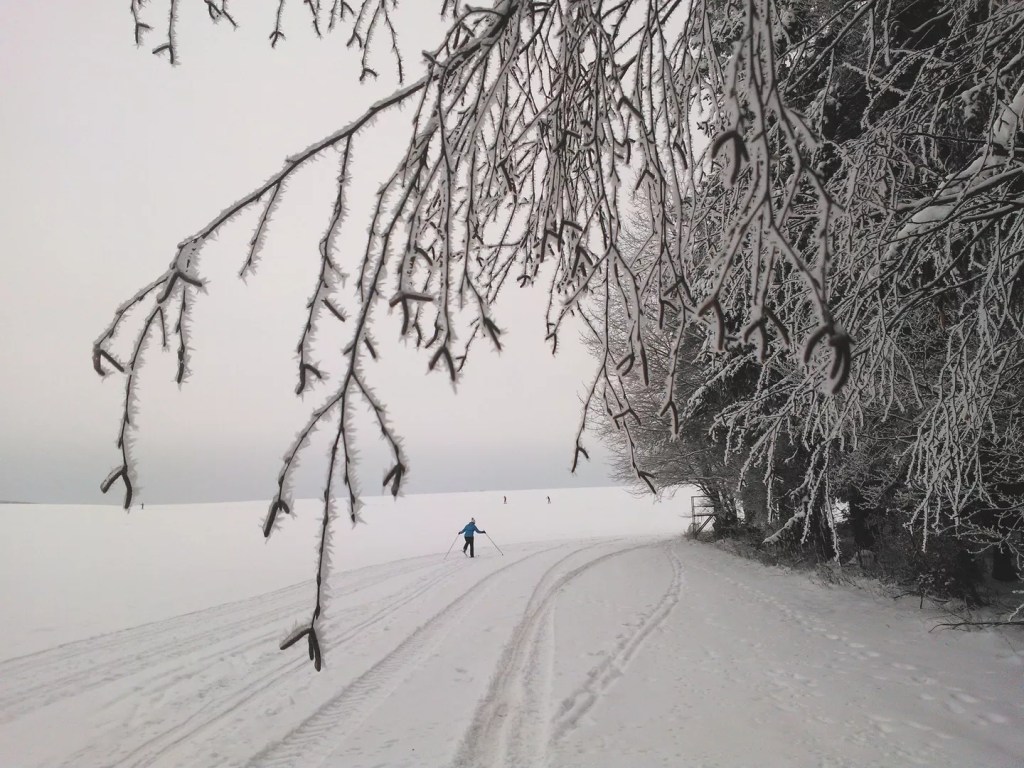









Alexandra Weinbaum says she did a lot of thinking as she crossed the meadows of Lake Hill. When the part-time Woodstock resident shifted from education to authorship, her topic was harrowing, and the fields offered solace. After a long career focused on how to best teach, and how to spark the curiosity that makes us learn, Weinbaum tasked herself with writing a book all about the art of inquiry on the most personal level. How do you bring back lives lost when all you have is a box of their letters? Her book Careful Old Letters: A Jewish Family’s Story. Lodz—Warsaw—Paris (Epigraph Books, 2015), does just that.
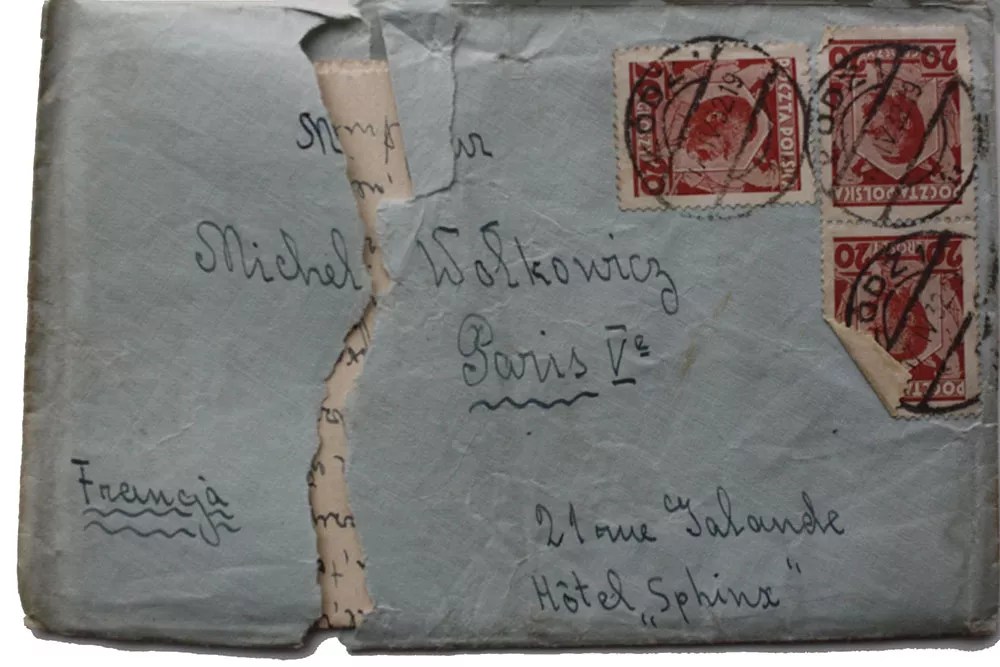
The book is based on Weinbaum’s accidental discovery of a box of 139 old letters and postcards from World War II, most written by family members as they languished—and perished—during the Holocaust. The box was tucked away on the back of a shelf in her mother’s storage locker, which Weinbaum and her son were cleaning out in that time-honored rite of dealing with the effects of the newly departed.
Can you send flour? they write in Polish and German from the Jewish ghettos in Lodz and Warsaw. It’s getting cold.
Weinbaum, a trained historian, rolled up her sleeves and began reading between the lines. Aided by a team of translators, connecting the dots on trips to Europe, she enabled a collective resurrection. It’s all that’s left of most of these letter writers: Only a few survived beyond the war. But done with so much care, it makes this book feel far larger than it actually is. As we spoke about the book, it became clear this for Wienbaum, this really was a labor of love.
Your book mixes memoir, detective story, history lesson, elegy—we read the letters in translation, see them reproduced on the page, many with Nazi postmarks. It’s such a chilling contrast between the fact of the massive genocide of the Holocaust and those sweet old family photos. But mostly we experience these lives, brought back to life. What was the genesis of this book?
My mother had just died, and my son and I were cleaning out her storage closet. I was about to throw out what looked like a very old box. Just a cardboard box, battered and dusty. My son stopped me, pointing at a handwritten label: Careful Old Letters in my father’s large scrawl. My father—he was already gone—had been the preserver in the family, so I knew it must be something important.
What happened when you opened the box? Did you just dive into its contents and start writing?
When I opened the box I realized it was filled letters and postcards from Europe—many with swastika postmarks from the Lodz and Warsaw ghettos. So it didn’t take me entirely by surprise: I knew my grandmother had died in the Lodz Jewish ghetto, and my other grandparents had been in Warsaw’s Jewish ghetto. I knew that’s where most members of my family were imprisoned and died. But we didn’t talk about it very much in my family. My parents had just said that nearly everyone was lost except for two survivors. They had probably kept this box from me because it was so painful—to them, as they knew it would be for me. They had read me one postcard when I was a little girl, from my grandmother, but I had no idea there were more. Still, that postcard, with its pleas to send supplies, food, was etched in my consciousness, and I think it had a lot to do with my wanting to write this book.
But when we found the box in 1996 I was still busy working. I had someone translate a few postcards right away and came face to face with the wartime experiences of family members I’d never known. After I retired, I finally started. It was completely consuming: finding translators for French, German and Polish, setting it all in a historical context, retracing their steps. It brought up a lot of feelings.
There’s so much denial that goes on with the Holocaust. What I found so interesting was that in your own family, so much was swept under the rug. Did you feel like you were, in any sense, betraying your parents’ wishes as you worked on the book?
I understood why my parents didn’t want to share this with me as a kid. I never resented them for that. They emigrated to the States in 1938 with the help of a relative who had seen the writing on the wall. I don’t think anyone realized there would be a time when everyone else would be trapped. They didn’t know how bad it would be. Then they didn’t have very much money to buy supplies or send packages—they had come to America young and broke, just beginning their new lives.
It’s harrowing how these letters reveal the hopes and then the desperation of those who had been left behind.
Yes. You can see it in the letters from my grandmother, whose real name was Mera. She uses the name Maria on the return addresses, because it sounds more German. She was born in Poland when it was part of Russia. She had this whole life, a whole family. Her husband had died and she’d moved in with her sister, and was trying to pull her life together and deal with her own grief. She writes about the steps she’s taking, her plans. But then there’s this amazing letter written on the very day that the war broke out and the Germans invaded Poland. That’s the day everything stops. Apparently, she kept moving from apartment to apartment until finally, in May 1940, she’s taken to the ghetto. And then she resumes her letters.
In some, Mera sounds like any mother, asking about everyone, sending birthday wishes. And then you begin to read into her messages: She’s clearly holding back, yet she’s starving, and scared.
Yes, the last postcard outside the ghetto was from March 11, 1940. And then the next letter she went was from inside the ghetto, dated May 23, 1940. She talks about trying to get money she’d had in a bank in Berlin, about a relative living in the Soviet Union who is sending her food and money. She’s already censoring herself: She mentions a family member who’s “on vacation,” which is code for trying to leave Europe. But he didn’t get out.
So she was fighting to survive.
Yes. And she would die after two years, at the age of 56, in 1942. She starved to death. The Germans routinely confiscated packages sent from outside, crushed the contents, destroyed the food. I found a few receipts in the box from packages my parents had sent. Probably, my parents didn’t understand what was happening, and my grandmother tried to hide it until she was totally desperate.
How did you find out what had happened to her? That’s another compelling part of Careful Old Letters: you found documentation of what happened to them.
I went to the archives—there’s a documents office in Lodz, and you can order the documents. It was miraculous to get my grandmother’s death certificate. The cause of death was listed as malnutrition. Horrible. We know what that means. In some places the Germans completely destroyed evidence, in other places they had to keep records—they were required to. And in Lodz, they kept the records. I took trips to Europe, looked up old addresses. I found the street my grandparents had lived on once, found the school my father had gone to as a boy. You get a sense of the geography and it makes these people seem even more real.
In the midst of working on this book, did you have any moments of closure, of feeling a sense of relief?
I did. When I visited the Jewish cemetery in Lodz, that was a very moving moment. The cemetery is the largest Jewish cemetery in all of Europe, and it was part of the Lodz ghetto during the war. With some help, you can find out where your relatives were buried there. But at some point, they stopped marking the graves, and just buried people in an enormous field. My grandfather was buried there—I knew where he was because there were markers for other members of the family. My grandmother was too, though her grave wasn’t marked. But going there, I cried. I didn’t know either of these people, but from working on the book I had such a strong sense of them. And I felt a tremendous satisfaction knowing the two of them were close to each other. No one could take that away from them. It gave me a real sense of peace.
This article appears in November 2016.