









That orgy of cool, the Woodstock Film Festival, returns later this month for five days of exhilarating but calculated excess: 150 films, concerts, panels, and parties throughout the region. Anchored by its commitment to indie films, music, and progressive politics, the annual event has become an autumn tradition: For a few days, the tie-dyed local flower child gets to wear high-priced shades and strut about like a Hollywood insider.
To commemorate the 11th year of this Mid-Hudson Valley tradition, Chronogram has expanded its special preview coverage of WFF. Festival co-founder Meira Blaustein is quizzed about how she makes this low-budget event fly by the seat of its pants and still makes it soar. The men behind three WFF films with local connections are interviewed. Also interviewed is director Bruce Beresford, recipient of the 2010 Maverick Award, who recently set up camp in our backyard for a film starring Jane Fonda and Catherine Keener.
While everyone else has been romping in the summer sun, I have again eschewed daylight for a marathon screening of new films slated for the festival schedule. Traditionally, the opening and closing night films are not made available to me in advance. They tend to be big-screen commercial works that will be in your cineplex within a few weeks.
However, I duly absorbed 37 WFF feature films in 40 days. This was the number made available to me. (To be accurate, I was actually loaned 40 films. However, an Israeli narrative film was pulled from competition after I had screened it and two additional narrative films were screened past deadline.)
My reviews are intentionally idiosyncratic, perhaps even, at times, cranky or combative. They should not dissuade someone from viewing a film. Rather, I welcome a dissenting view. Spirited disagreement is healthy for the film community.
If you place any store by my taste, then you will want to head to www.chronogram.com for companion WFF coverage. There, I have named the WFF films that I feel deserve the title of Best Documentary and Best Narrative Film. (To see if the Festival judges are as sober and discerning as I, be sure to attend the WFF Awards ceremony on Saturday, October 2 at Backstage Studio Productions in Kingston.)
The Woodstock Film Festival runs September 29-October 3, 2010. For schedules for films, panels, concerts, and special events, as well as for ticket orders:
www.woodstockfilmfestival.com; (845) 679-4265.
DOCUMENTARY FILMS
Arias with a Twist: The Docufantasy (Dir. Bobby Sheehan)
The chameleon in mascara, pancake, and black silk known as performance artist Joey Arias finally attains canonization. Sheehan’s film begins with a recent spectacle, in which Arias was showcased with equal outrageousness and reverence by the gifted puppeteer and set designer Basil twist. Sheehan careers puckishly between Arias’s New York City beginnings (he was a singer, video artist and collaborator with the otherworldly Klaus Nomi) and his recent works, including an unlikely stint with Cirque de Soleil in Las Vegas. Thierry Mugler, Kenny Scharf, and Isabel and Ruben Toldeo attest to this genius, a prominent member of the gloriously chaotic 1980s East Village art scene. A struggle with drug addiction is glossed over, puzzlingly, for it would have enhanced the scope of Arias’s achievements. A richly errant profile of a man who defies categorization.
Camp Victory, Afghanistan (Dir. Carol Dysinger)
Long before WikiLeaks, director Dysinger was gathering information about the American presence in Afghanistan and our training of the ragtag Afghan National Army. (If this were a sitcom, their ineptitude would be laugh-out-loud.) Her astoundingly unrestricted access has uncovered a litany of operational failings that should force the resignations of a number of top-brass personnel. Bottom line: more evidence of our folly that will somehow be ignored by the Pentagon.
* Don’t Quit Your Daydream (Dir. Clark Stiles-Merritt Lear)
Nobody recalls Abinsthe, a hot `90s band whose debut album tanked. The band broke up and destroyed friendships. Two former group members, the immensely appealing Nathan Khyber and Clark Stiles, shove aside resentments and embark on a creative experiment: They drive into a town, connect with a local musician, and record a newly composed number. The results are refreshingly tuneful. The viewer, in turn, learns much about the elusive creative process. A magical voyage whose wonderment slowly accumulates and washes over you. Featuring Entourage star Adrian Grenier as musical collaborator number seven.
* Family: The First Circle (Dir. Heather Rae, Russell Friedenberg, Randy Redroad)
Director Heather Rae has several family members who are crystal meth addicts. She follows them to Boise, Idaho, where poverty and drug availability keep them tethered to their demons. Afforded incredible access due to her proximity to these people, Rae and her co-directors follow inveterate addicts through their incremental advancements and more common relapses. We meet a police officer assigned to monitor addicts and take away their kids when necessary. Gritty moments of defeat are interspersed with moments of raw emotion. Family is a film that demands attention, but never does it sacrifice the inherent dignity of the addicts or their children.
Gerrymandering (Dir. Jeff Reichert)
This grown-up version of “Schoolhouse Rock” explains, with alternating laughs and scolds, the deeply entrenched American political tradition of redistricting voter blocs to change election outcomes. The story focuses on a spirited California campaign for redistricting reform, and Golden State governors Gray Davis, Pete Wilson, and the current “Governator” weigh in. A funky and engaging civics lesson.
Grace Paley: Collected Shorts (Dir. Lilly Rivlin)
The quirky Grace Paley was a brilliant short story writer whose advice was succinct: “Write what you don’t know about what you know.” She was an even more impassioned leftie activist. For many years, you could find her either reading at a Manhattan bookstore or being dragged off by cops at an antiwar protest. Sometimes both. Collected Shorts is a placid, respectful celebration of this protean creature, fortunately leavened by Paley’s own wry, self-deprecating remarks, as well as by footage of the poet-writer reading her own works, and a chorus of admirers, including Alice Walker and Allan Gurganus.
*Journey from Zanskar: A Monk’s Vow to Children (Dir. Frederick Marx)
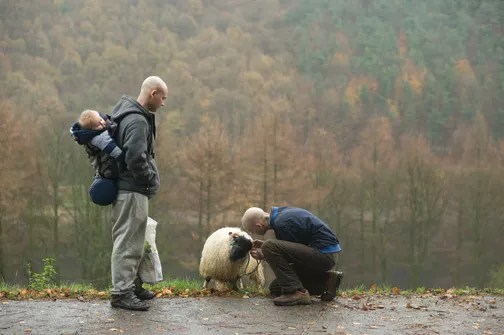
In an isolated part of India, schoolchildren languish, cut off from their Tibetan heritage and teachings. A group of Zanskari Buddhists decides they must take the children to a school 180 miles away over snow-covered mountains and narrow trails. Relying on horses and modest supplies, they begin the trek, followed by courageous filmmakers working under horrific conditions. While I doubt this was the filmmaker’s intention, Journey is a troubling look at the lengths to which people will go to honor the tenets of religious dogma. Narrated by Richard Gere.
Made in India (Dir. Rebecca Haimowitz-Vaishali Sinha)
While the British may have left, India still toils in the shadow of colonialism. This time, however, occupation occurs in the wombs of this country’s women. A surrogate pregnancy business thrives in Mumbai, and Texan couple Lisa and Brian Switzer are availing themselves of the services of a fertile woman named Aasia. The directors illuminate the red tape of the process as well as the emotional impact on all players, but they also confront the ethical issues.
* Marwencol (Dir. Jeff Malmberg)
Kingston resident Mark Hogancamp welcomes you to the complex world he has created—internally and externally—to deal with a traumatic attack that changed his life. (See interview with Jeff Malmberg, page 39.)
*Mi Vida Con Carlos (Dir. German Berger-Hertz)
For Chilean national Berger-Hertz, his father is only a ghost, calling to him from the eight-millimeter films that capture moments in his brief and fiery life. Carlos, a dissident in the time of Pinochet, was one of tens of thousands of people executed in the 1970s during the dictator’s regime. Mi Vida is an unabashed tribute to Carlos but also a brazen attempt by the director to force Carlos’s surviving brothers to remember his late father’s existence; he summons his uncles (one now living in Canada) back to visit places where his father lived, struggled, and eventually died. Fiercely intelligent and merciless in its embrace of painful memories, Mi Vida also attains a visual poetry in its celebration of grief.
*My So-Called Enemy (Dir. Lisa Gossels)
Building Bridges for Peace is a New Jersey-based organization that brings together young Israeli and Palestinian women for a weekend of discussions about the ceaseless bloodshed that marks their people’s conflicts. What starts as a bleeding-heart-liberal exercise in self-congratulation, destined to end in a group hug and choruses of Kumbaya, takes an unsettling and revelatory turn. Director Gossels follows the participants back to their respective worlds, where ongoing border disputes and suicide bombers exact their toll on hopes for resolution. This thought-provoking study arrives just as these two factions return to the negotiating table for the first time in almost two years.
One Lucky Elephant (Dir. Lisa Leeman)
For 16 years, an African elephant named Flora has been the star attraction of David Balding’s St. Louis-based circus, charming audiences with a repertoire of tricks such as packing a suitcase. Offstage, she holds Balding’s hand with her trunk when they walk, clearly devoted to him. But when Flora exhibits a listlessness, Balding decides it is time to return her to the wild. But can he? In a variation on the film Born Free, Leeman explores the challenges of placing wild animals in captivity and separating long-term friends while honoring the unique relationship forged by the pair. A bittersweet tale that is never mawkish.
*Phil Ochs: There but for Fortune (Dir. Kenneth Bowser)
The folk singer-activist, purer of intention, sweeter of plaintive voice, and rawer of poetry than his friend/rival Bob Dylan, is rescued from undeserved obscurity by this far-reaching, kinetic retrospective. Ochs’s rambunctious life, shaped by the watershed moments of the civil rights movement, is remembered by Joan Baez, Peter Yarrow, Billy Bragg, Sean Penn, and Van Dyke Parks. Vintage footage and a soundtrack of 30-plus Ochs songs complete this illuminating time-travel.
SoLA: Louisiana Water Stories (Dir. Jon Bowermaster)
When someone takes a dump in your backyard, you can either ignore it or raise hell. Meet a number of Louisiana residents pushed to the brink who are fighting back against the corporate pollution and willful destruction of their wetlands. (See interview with Jon Bowermaster, page 38.)
Sounds Like a Revolution (Dir. Summer Love)
Political manifestos are a drag, but a good protest song can rock the house—and perhaps the Republic—to its foundation. This slick and fast-paced film, ideal for VH1, celebrates the artists who jettisoned Top 40 fame to craft songs of dissent. Whether musicians led youth to the polls for Obama, as this doc suggests, is your call. Featuring several generations of troubadours and rabble-rousers, including Pete Seeger, Ani DiFranco, Michael Franti, David Crosby, Steve Earle, Henry Rollins, and Jello Biafra.
* The Disappearance of McKinley Nolan (Dir. Henry Corra)
The wounds left on America by our presence in Vietnam refuse to heal, and this staggering documentary explains why. In November 1967 a rural Texan named McKinley Nolan went AWOL in Vietnam and has not been seen since. Some say he took a Vietnamese wife and, sickened by American atrocities, went over to the other side. When a fellow veteran, Lt. Dan Smith, claims to have seen him in 2005, Nolan’s family is alerted and his brother Michael journeys to Vietnam with Smith. A voyage for answers stirs up dormant pain of more than four decades on both American and Asian sides. A masterful achievement that effortlessly tears at the heart while also reaffirming the notion that forgiveness is our only recourse.
The Kids Grow Up (Dir. Doug Block)
Watching a child leave home is never easy, but Doug Block seems to have been preparing fearfully for this moment since his daughter Lucinda’s birth, as evidenced by the extensive footage he has shot. Yet the Manhattanite continues to videotape his college-bound child, despite her protests. Block’s commentary is lackluster, but he is blessed with a wise wife and son who astutely, if mercilessly, analyze his cinematic motivations. The result is an unexpectedly affecting meditation on youth, age, and family ties.
The Singularity Is Near (Dir. Anthony Waller)
This fanciful mash-up of a film, part fiction, part documentary, suggests a near-future when computer-generated beings may well be considered individuals with rights. Waller plays loose and fast with the facts in service to his far-flung concept, the story enhanced by dazzling graphics. Featuring a parade of seers and hucksters, including self-help guru Tony Robbins, Alvin (Future Shock) Toffler, and lawyer Alan Dershowitz. The perfect computer geek date movie.
*William S. Burroughs: A Man Within (Dir. Yony Leyser)
Addict, homosexual, mystic, novelist. These are but a few of the facets displayed by Beat legend Burroughs. He would probably have a good phlegmy horselaugh, however, over Leyser’s fervent attempts to explain his inherent contradictions and the specifics of his indisputable legacy. The director calls on Patti Smith, John Waters, Iggy Pop, Amiri Baraka, Laurie Anderson, and Gus Van Sant for tributes, but their assessments bring to mind the six blind men describing the elephant: All have merit, but all differ substantially. Other interviewees, in an attempt to nail down Burroughs’s sexuality—straight or gay or bi?—offer cocktail psychology observations that are little more than self-inflicted Rorschachs. Ultimately, the value of this appropriately hyperactive film lies in the raucous, scattershot journey rather than the arrival at one purported destination.
*Windfall (Dir. Laura Israel)
In our quest for renewable energy, wind power seems a green and blameless no-brainer. Guess again. An Irish consortium called Airtricity makes overtures to Meredith, a small farm town in Delaware County. They want to install a fleet of 400-foot wind turbines along the countryside. However, in a slyly effective fashion, Windfall ticks off the number of hazards associated with wind power. Director Israel has a marvelous eye for the telling detail, and her treatment of both advocates and opponents in the ensuing battle is both compassionate and pointed. A sobering look at the downside of yet another alternative energy source.
NARRATIVE FILMS
3 Backyards (Dir. Eric Mendelsohn)
Veering between passages of experimental film imagery, stark naturalism, and occassional pretentiousness, Mendelsohn pricks at the psychic wounds of several separate stories: among them, a suburban businessman (Elias Koteas) who has forgotten how to communicate, a helpful neighbor (Edie Falco) taking a troubled actress (Embeth Davidtz) to the ferry, and a young girl wandering onto the property of the local sex offender. The performances are deep, bleeding a helpless sense of alienation that plagues every suburban redoubt—not merely these Long Island neighborhoods.
*Bitter Feast (Dir. Joe Maggio)
Foodies beware: A perfectionist chef is on the rampage. What ensues is as much a blood-spattered thriller as it is a cathartic social satire. Gleefully sadistic, relentlessly troubling, and a stomach-churning laugh riot. (See interview with producer Larry Fessenden, page 34.)
Cherry (Dir. Jeffrey Fine)
Technogeek Aaron (Kyle Gallner) has arrived at college, intent on asserting his independence from a suffocating home life. But he gets more than he can handle when he meets sexy older classmate Linda (Laura Allen) and her sullen daughter Beth (Brittany Robertson). Both are drawn to his virginal nerdiness and Aaron learns the downside of getting what you wished for. Cherry allows the myriad traumas of freshman year to pile up quickly, exhausting the viewer. But an ensemble of strong actors keeps the tale from being dragged down by the sheer weight of its subplots.
Don’t Go in the Woods (Dir. Vincent D’Onofrio)
If there’s an audience out there waiting for the first slasher film replete with power ballads, director D’Onofrio has answered your prayers. The film has a familiar storyline: A bunch of clueless teens—in this case, the members of a Brooklyn rock band—goes on a camping trip to extract inspiration for their next album. Their girlfriends surprise them, bearing weed, booze, and breasts. But another visitor lurks beyond the campfire circle. Mayhem, as the saying goes, ensues. Songs by Sam Bisbee.
Hello Lonesome (Dir. Adam Reid)
Far more compassionate than Todd Solondz, yet not as manipulative as Miranda July, director Reid opens a gentle window onto three disparate and troubled worlds: a voiceover actor (Bill Chase) seeks forgiveness for bad parenting skills, an elderly woman (Lynn Cohen) bonds with a cynical younger neighbor (James Urbaniak); and two lonely Manhattanites (Sabrina Lloyd, Nate Smith) meet through an awkward computer date. While the highs and lows seem more scripted than organic, one appreciates the director’s adoration of his flawed characters.
Inuk (Dir. Mike Magidson)
Shot in Greenland against a canvas of snow and ice, this tale combines the glory of ancient legend with the sting of modern social problems. Inuk (Gaba Petersen) lives in the projects with his mother and an alcoholic stepfather who beats him. A social worker intervenes and remands Inuk to a group home for at-risk children, where he is brought on a traditional seal hunt to reinstill the pride his generation has lost. The symbolism of this saga is writ large but is no less affecting for it.
Nice Guy Johnny (Dir. Edward Burns)
A sweet, formulaic rom-com that acts as if the Apatow era never happened. Struggling Bay Area DJ Johnny Rizzo (the winning Matt Bush) heads East for a job interview, compelled by his castrating girlfriend. Along the way he collides with a blond, leggy free spirit (Kerry Bishe). Can you guess what occurs? Director Burns, who also plays Rizzo’s horndog Uncle Terry, maddeningly takes his time arriving at the inevitable. But there are tender moments and off-color laughs along the way.
Norman (Dir. Jonathan Segal)
A wise-ass high schooler, Norman (Dan Byrd) has reason to be snarky; his mother died in a car accident and his father (the pitch-perfect Richard Jenkins) is succumbing to cancer. In a grand screw-you to the world, Norman claims that he is the terminal case in question and luxuriates in the sudden burst of compassion from his classmates and teacher (Adam Goldberg). A sweet-sour trifle elevated by wonderful performances.
*Some Dogs Bite (Dir. Marc Munden)
A trio of British halfbrothers—one an infant, one with a mental impairment, and the third consumed with rage—escapes a welfare system that has separated them. They head to Inverness, Scotland, where a suitcase of stolen cash awaits them, and possibly their father. Along the way they collide with a pair of girls just as raw and emotionally starved as they are. Beautifully shot and realized with a tough-minded tenderness, Some Dogs Bite owes its formidable power to a strong cast of young actors, including Thomas Brodie Sangster as the childlike Casey, Aaron Taylor as the emotionally calloused H, and Michelle Asante as Venetia.
The Colonel’s Bride (Dir. Brent Stewart)
As quirky and elliptical as a Flannery O’Connor short story, this film depicts an embittered, widowed Vietnam veteran (JD Parker) awaiting an Asian mail-order bride (Alicia Truong). The tale is expressed in a series of brief but vivid vignettes, many of them wordless, the strangled emotions lurking beneath the surface. A love story of belated redemption.
The Imperialists Are Still Alive! (Dir. Zeina Durra)
This deadpan tale of love and identity politics among some Manhattan hipsters possesses a mongrel 1980s indie film vibe. At the center is Asyah (Elodie Bouchez), a Palestinian-Jordanian conceptual artist and her new boyfriend Javier (Jose Maria de Tavia). The lovers spend as much time debating conspiracy theories as they do shagging in this ambitious but muddled comedy.
*The Locksmith (Dir. Brad and Todd Barr)
A delightful shaggy dog story set in New York City, The Locksmith wears its heart on its sleeve while still making some trenchant observations about how New Yorkers talk at and over one another. A work-release ex-con (Anslem Richardson) is employed by a locksmith. On one job, he is asked to drill a stubborn lock by a sweetly ditzy woman (the beguiling Ana Reeder). Only too late, he learns she is breaking into her boyfriend’s apartment.
*The Tested (Dir. Russell Costanzo)
Dre (Michael Morris Jr.) attends Manhattan’s Washington Irving High School where he’s trying to stand up to the thugs as much as he covets their brutal power. His mother (the powerful Aunjanue Ellis) remains obsessed by the slaying of her older son. Julian (Armando Riesco), the cop who shot the boy, tries to rebuild his life amid the suffocating guilt. As much an opera as an urban saga, The Tested soars thanks to naturalistic performances from an unknown cast and the nimble touch of its self-assured director.
White Irish Drinkers (Dir. John Gray)
Brooklyn, 1975. John Gray drops us into a world that echoes both Mean Streets and the story of Cain and Abel. Danny (Geoff Wigdor) is a thug in the making; Brian (Nick Thurston), his younger brother, more interested in art than petty crimes. The target of his father’s (Stephen Lang) drunken beatings, Danny wants to pull one more robbery before leaving home for good. When Brian’s boss at the local theater announces a Rolling Stone concert, Danny plans to steal the box office receipts but needs Brian’s help. Powerful performances from the ensemble cast (including Karen Allen as the mother) surmount the plot mechanics and occasionally sentimental overwriting.


This article appears in October 2010.


