









Hunger is a growing problem in America. In 2009, the USDA reported that 15 percent of us were food insecure, meaning: “uncertain of having, or unable to acquire, enough food to meet the needs of all of [our] family members.” The Supplemental Nutrition Assistance Program (food stamps) has increased by 10 million recipients nationally over last year, to 42 million. One in four Americans receives some form of governmental food assistance. Let that sink in for a minute. It sounds daunting, but people are hard at work. Locally, in Kingston, Diane Reeder is battling hunger on multiple fronts with passion, collaboration, and innovation.
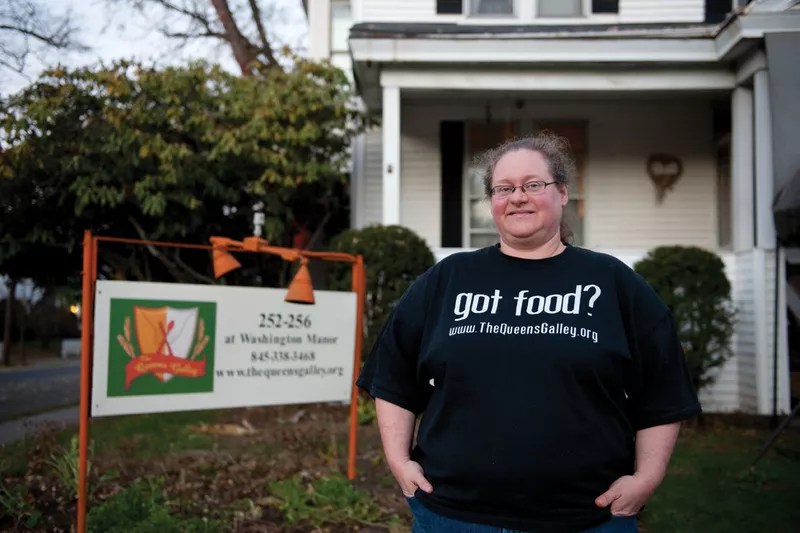
The Queens Galley occupies several connected wood-frame buildings on Washington Avenue in Kingston. It’s a homeless shelter with around 50 residents, and includes a soup kitchen. Reeder’s involvement began in 2006, when she started teaching culinary and nutrition classes at the shelter. In 2008, she became director and has been steadily expanding its reach and mission since then. The Queens Galley serves three meals a day, no questions asked, to anyone who walks through the door. As a result of the lack of means testing, the soup kitchen does not qualify for government funding. Reeder believes that there’s no need for such vetting, explaining that “most people making a living wage don’t come to a soup kitchen. There’s no such thing as abuse of our system; you can just walk right in and eat.” Seven staff members run the organization, which is funded entirely by donations averaging less than $50 each. They serve 9,000 meals a month.
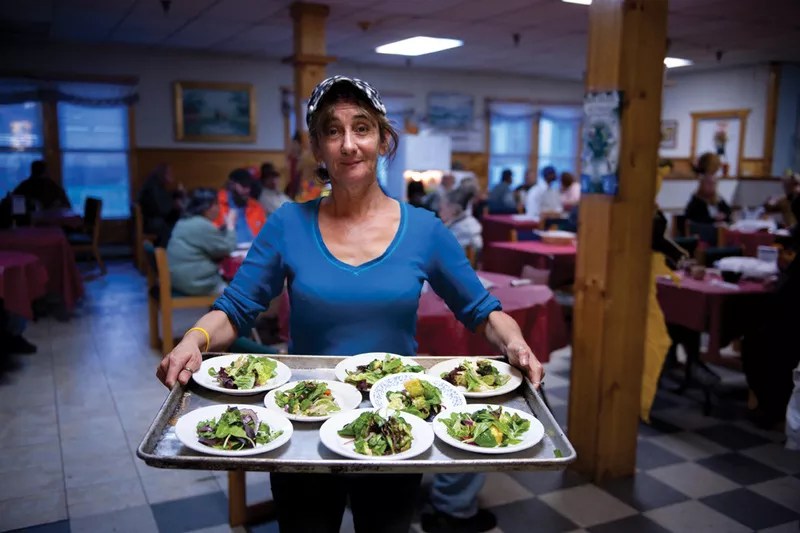
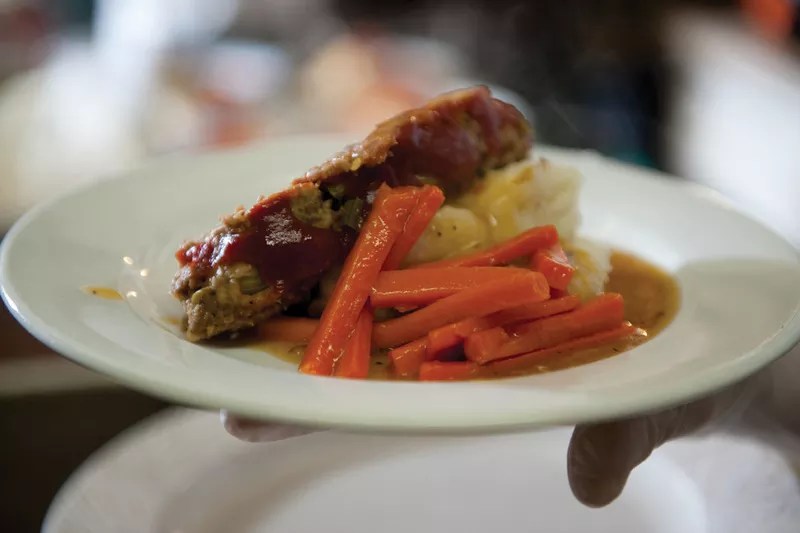
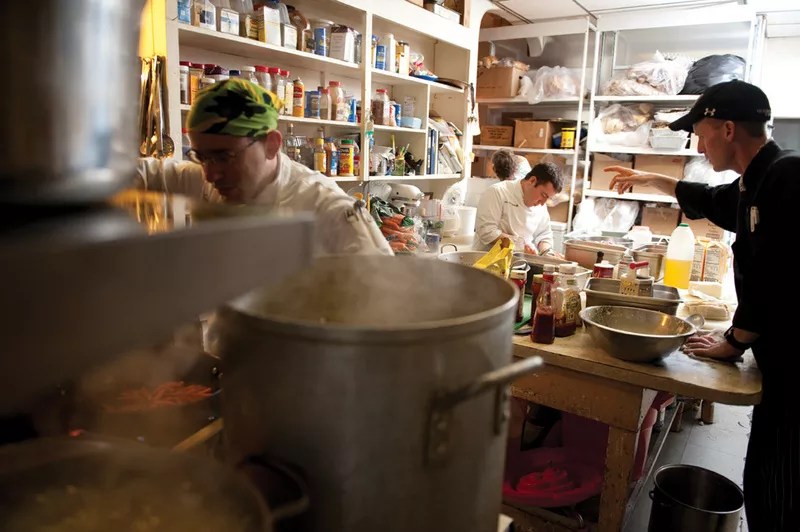
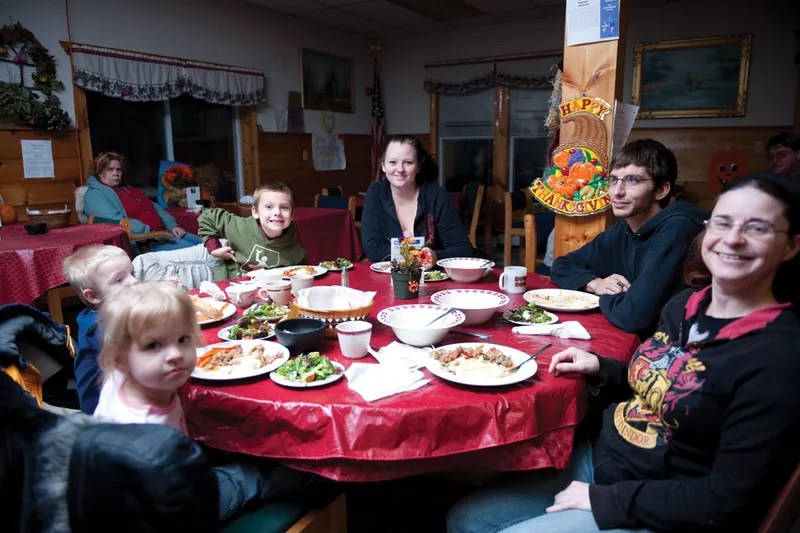
In the large dining room, volunteers clean, set, serve, and bus the tables. Students from the Culinary Iinstitute of America help in the kitchen. As guests begin to file in for dinner, they are met with a smile and a bowl of soup. Salad often follows, then a hot entrée, then dessert. The mood is calm and friendly, and the guests obviously enjoy their food. Reeder’s background and perspective is that of a chef (she is working toward a degree from the CIA), and it shows. “Everyone is served the highest-quality food possible—all prepared from scratch—with dignity, in a sit-down setting. We’re the first to admit that our food is better than some restaurants’,” Reeder says, and that’s exactly how she wants it. “I have fired people for saying ‘It’s just a soup kitchen.’ It’s more than just putting food on the table; it’s respect for who’s eating, who’s serving, and who grew it.” For her, the goal is not just to feed people, but to do so in a way that connects them to their food and helps transform their lives.
The Queens Galley is also devoted to education. Through nutrition and cooking workshops aimed at seniors, parents, and kids, Reeder’s goal is to help people choose and prepare food that keeps them healthy. “A hungry kid can’t learn and can’t behave properly. If we can start with every kid having access to fresh fruit, vegetables, and grains, then we’ve accomplished a lot. Better food means a better society.” Reeder explains her key for helping kids to make healthy choices: “Does the food remember where it came from?” (An apple does, a Pop-Tart does not.) She explains the nutrition facts label, all the while emphasizing that whole foods (which do not require labels) are generally healthier. And she teaches adults to stretch a food dollar: A whole chicken can provide two meals of meat and then make a pot of stock.
Reeder was instrumental in getting the Kingston Farmers’ Market to accept food stamps; the board got a grant to pay for the EBT (Electronic Benefits Transfer) machine. The market became a food stamp vendor, and now people can use their cards to get tokens from the main table that they can spend on almost anything the market offers. The first year (2006) the market only took in $50 in EBT transactions, but this year the amount was in the thousands. In addition to Kingston, farmers’ markets in Woodstock, Rhinebeck, and Ellenville also take EBT. Reeder is on a mission to expand the list to include as many as humanly possible, stating: “There’s no excuse for any market to not be connected to EBT.” She prints out application forms and drops them off at markets that haven’t yet made the change.
In addition to donations of food by the public, the Queens Galley receives regular help from institutions and organizations. Local CSAs donate shares, and the Rondout Valley Growers Association also provides a lot of produce. UPAC donates uneaten backstage catering, and several local restaurants give extra food from banquets and events. It ebbs and flows, Reeder says, smiling, but it always seems to work out: “There’s something special about this place. I’ll be in the kitchen saying ‘We’re out of rice,’ and then Jennifer [McKinley] from Kingston Natural Foods will walk in with a big bag of it.” Another time, she remembers, “I said, ‘I need a chicken,’ and just then somebody brought one in! One of the staff joked that I should have wished for money instead.” Jim Hyland of Farm to Table co-packers and Winter Sun Farms CSA—both companies donate canned and frozen goods to the food pantry—recalls: “Last year we brought over some peppers, and they happened to be making chili. They opened the bags and started adding them to the pot as we brought them through the door.”
Recently, Reeder has been working with the Kingston Land Trust’s South Pine Street City Farm. The half-acre plot—which just ended its second season—furnishes the Queens Galley with produce, and the farmer, Jesica Clark, sells some to support herself. Volunteers learn to grow food, and take some home as compensation so they can cook and eat it. It’s a perfect illustration of Reeder’s holistic and collaborative approach to feeding people. Rebecca Martin, director of the Kingston Land Trust, remarks, “Diane is just one of those people that you want to work with, to help. If there’s something she can’t do, she finds someone who can.”
In much the same way that the City Farm has helped ensure a steady supply of produce, Reeder is embarking on an even more ambitious collaboration to develop a reliable revenue stream for the Queens Galley. Working with RUPCO and Family of Woodstock, she plans to open a restaurant in the historic Kirkland Hotel in Uptown Kingston, which is owned by RUPCO. “Family has the case-working talent, strategies for recovery, and life skills training. RUPCO has a financial education program that teaches household budgeting and management.” All these programs will be tied into the restaurant, says Reeder, which will be staffed with people who need help entering the workforce. “We’ll teach the staff the new gold standard of hospitality and service, so they can work anywhere after working with us. Everyone—the dishwasher, the wait staff, the chef—will know the food from the ground up.” The planned opening is for December 2011. Weekdays will feature casual American bistro fare, and on weekends chef Greg Garrison will offer a tasting menu combining local ingredients with the avant-garde techniques he developed while cooking at Clio in Boston. Reeder’s emphatic goal is for the bistro’s menu to be the same as what she will serve in the soup kitchen.
Reeder also works with the YMCA and the Boys & Girls Club in Kingston, making hot lunches for the kids enrolled in their drop-in days. These programs allow parents to go to work when schools are closed for snow emergencies. Reeder feels strongly that it’s important to make meals for all the kids, removing any potential stigma from those who really need it. “One way or the other [any extra food] gets eaten.” When asked whether all of these different projects might be stretching her and the very limited resources too thin, Reeder responds quickly. “That’s what the restaurant will be for: steady income that lets us keep building on what we’ve done so far.”
By working closely with farmers, vendors, and the City Garden, Reeder has managed to create a soup kitchen where food is no longer the most pressing need. Her supply chains are fairly well established, if erratic (she still enthusiastically welcomes donations of good food from anybody, anytime). The scarce resource is money. Utilities, wages for staff, maintenance, cleaning products—these costs are real and increasing. “The very fact that we can keep our doors open is a miracle,” Reeder says. “If I have to ask for money and food, I won’t get enough of either. If I only ask for money, it’s easier.”
In 2010, the Food Bank of the Hudson Valley will distribute 9 million pounds of food, up 1.2 million pounds from last year, to 370 organizations in the six counties. The Food Bank’s Jessica Bell explains that they too prefer donations of money; by buying directly from growers and distributors in huge quantity, they get huge discounts. Food stamps work out to roughly one dollar per person per meal. The Food Bank can provide four meals for a dollar. Bell concludes: “People need to understand that there should be no stigma to hunger; it’s affecting people in all walks of life. It’s not that they’re not trying; they just can’t make ends meet.”
This article appears in December 2010.


