








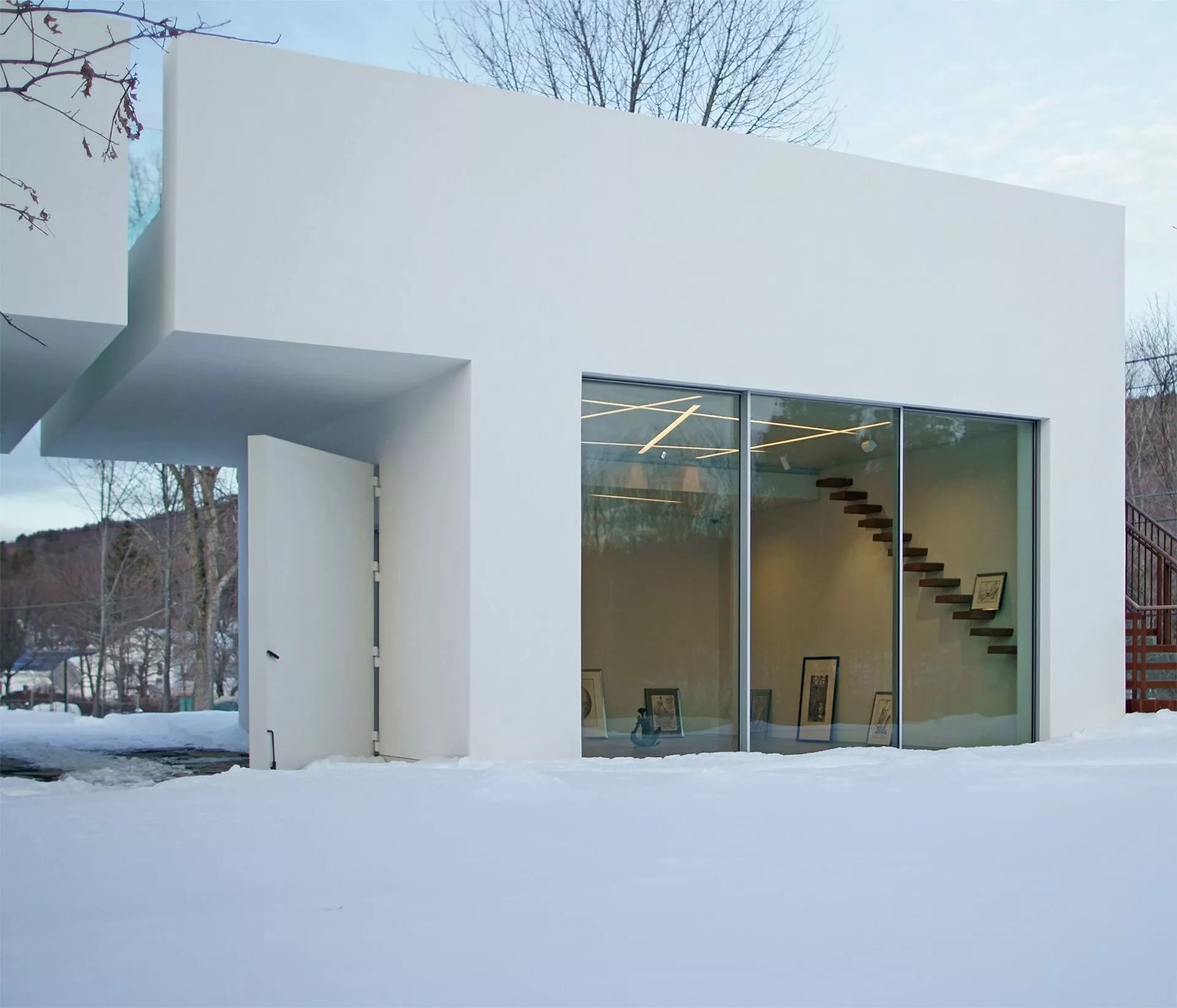
Architect Grigori Fateyev’s designs are inspired by the fundamental mechanics of human experience. “How do we experience a stream of light entering the room?” he says. “What is it, where does it land, what do we feel?” These questions that sound existential have practical applications. A recent house Fateyev designed has a 1,600-square-foot flat roof. “The water is gathered into pools above the windows and forms waterfalls,” he says. “Rain can be a nuisance, so we make it beautiful. We plan the living room so it will be shady in summer but in the winter, when the sun’s angle is different, the light streams in.”
In 2010, Fateyev founded Art Forms Architecture, based in Hillsdale, with a focus on developing contextual and contemporary architectural solutions for cultural institutions, museums, artist studios, private art collections, and theaters. He’s worked with Shakespeare & Co, Bard College at Simon’s Rock, Turn Park Art Space, Mass Live Arts Theater Festival and Studio One, LLC, and is currently serving as curator at Turn Park, an outdoor gallery of contemporary sculpture in West Stockbridge, and at Architecture for Art, a Hillsdale gallery devoted to interdisciplinary exchange and artistic cross-pollination.

Whether it’s a cultural institution or a residence, Fateyev’s process is much the same. “You look at who the client is and their needs and find a way to summarize that together, for them and for yourself,” he says. “The site, obviously, is physical, but in any place there are historical, economic, and social factors to address—those are more complex in civic and public projects, but over the years the understanding of family, of residence, and the meaning of having a house have evolved. So what do you do with all that?”
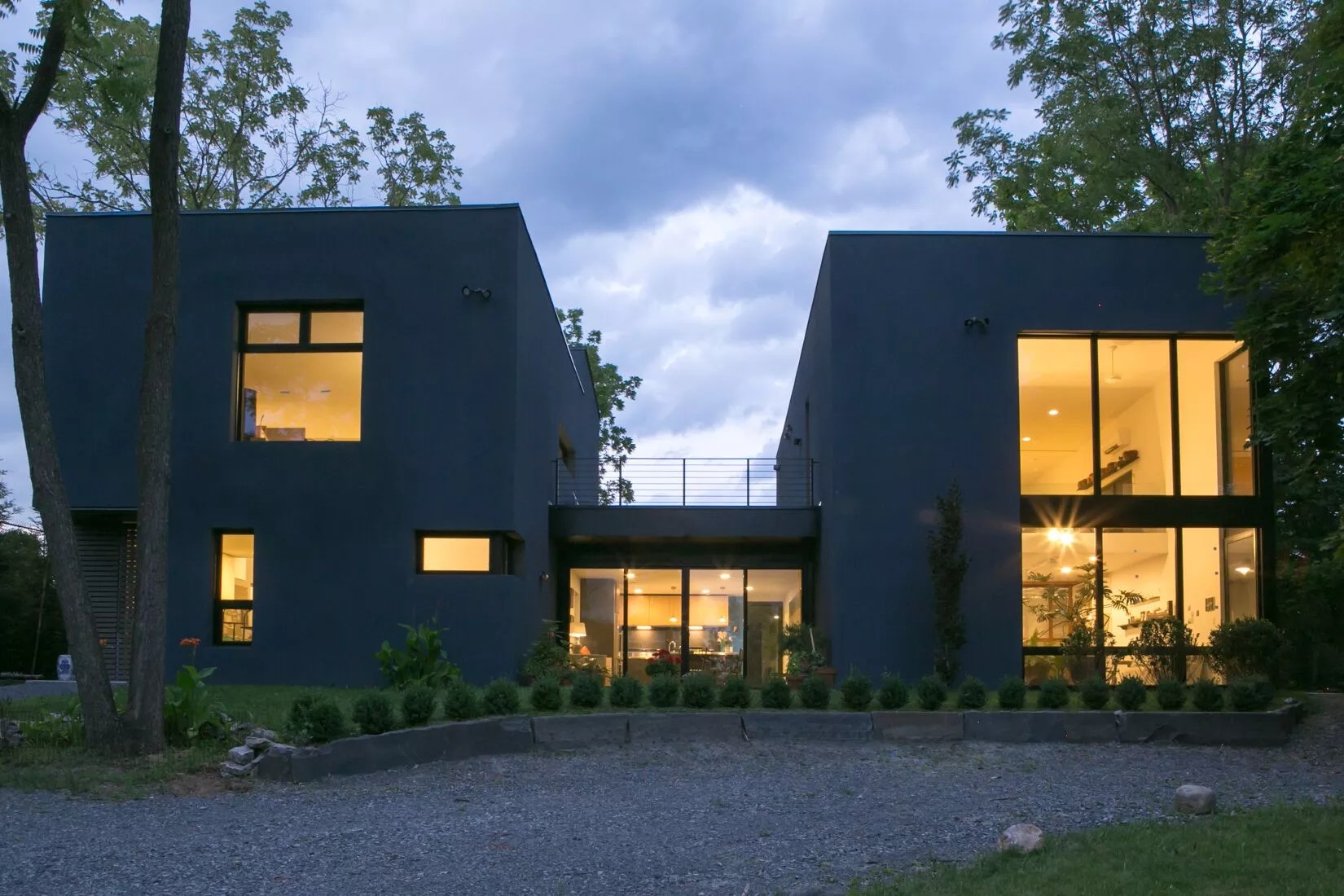
In Fateyev’s work, the art very much forms the architecture. One of his favorite reactions to the finished product came from an artist five or six decades into his career. “He’d been trying to build a studio for 10 years,” Fateyev recalls. “He came in with a list of needs and a sketch. So we built it and a couple of years later, I asked him, ‘so how’s the house?’ He said, ‘I’ve got everything I wanted, and nothing I expected.’ And that’s what I hope for my buildings, that they continue to surprise and inspire.”
Fateyev has sought surprise and inspiration throughout his own life, ever since his childhood in St. Petersburg, Russia. “I was part of a strange generation,” he says. “It was the Gorbachev era, the breakdown of the USSR, and there was a massive release of information. The horrors of Stalinism had been in the past, but glasnost brought things right back up. The borders opened up, and America was elated at having won the Cold War, and a lot of my generation took the chance to explore the world.”
In his case, that meant that in the second year of his design studies he decided to try for a US art school. He traveled, checking out Boston and Chicago before settling on Cooper Union in New York. There he studied under John Hedjuk, the Czech-born architect who began teaching there in the early ’60s and served as dean from 1975-2000.
“He was this amazing blend of practitioner, poet, and draftsman, and he wrote a groundbreaking book,” Fateyev recalls. “A very inspiring teacher. We studied poetry and architecture, drawing and model-making, and thinking. That’s what architecture is—we have the tools to make material reality from thought. Architecture is everywhere; it can’t be ignored. Even if we’re not actively noticing it, it can influence our experience.”
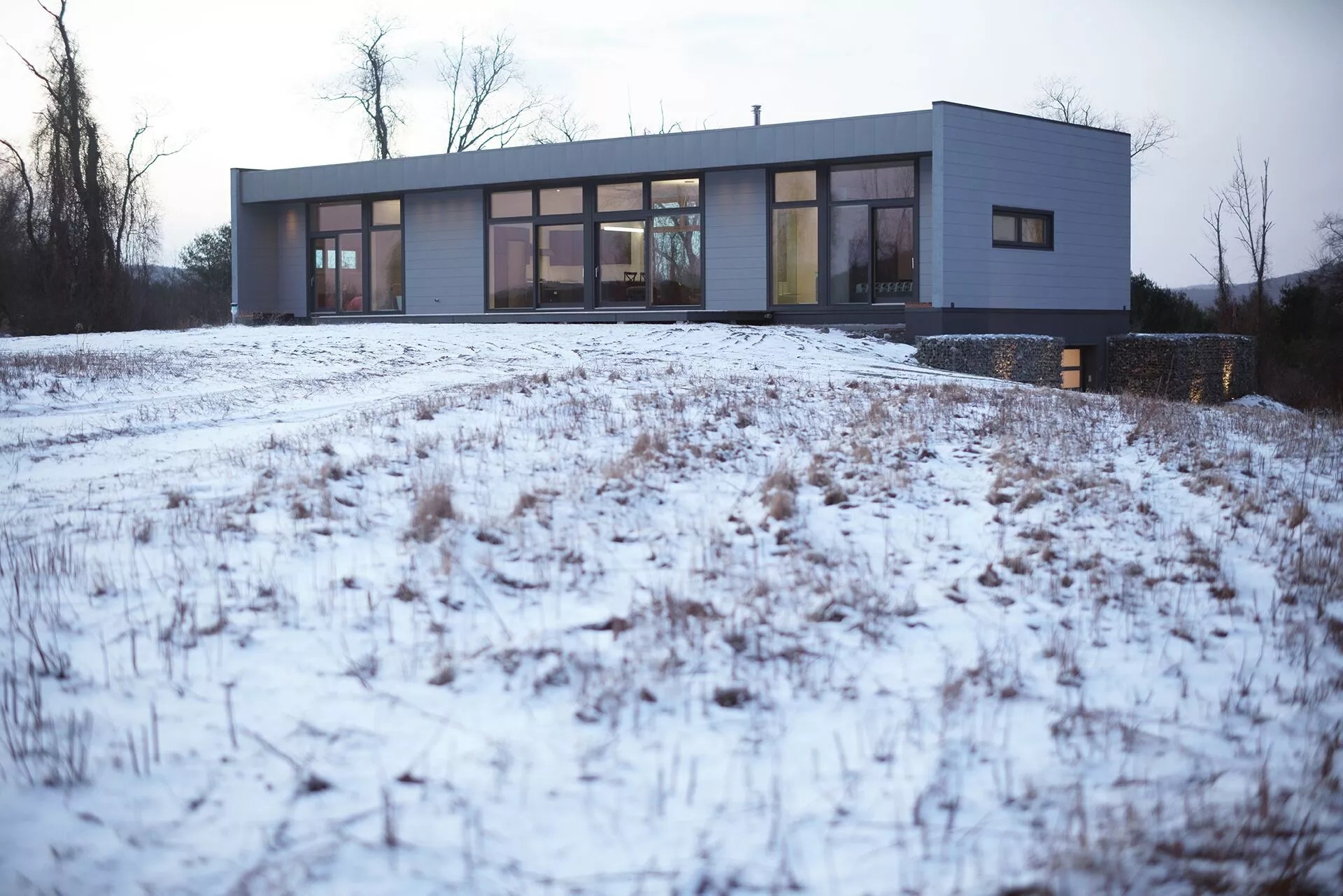
Thus an entryway to multi-unit housing becomes a giant, bright communal living room, where instead of hurrying through, residents stop to read mail or chat. He loves the tendency toward consolidated, multi-purpose spaces (“You don’t need space where you don’t spend time”) and environmentally smart practices like the Finnish prefab log cabin he helped put together. “Such a beautiful mix of ancient and new technology,” he says. “It’s cross-laminated timber, young pine, which is much more sustainable, laminated into blocks and tied together with metal rods. It’s very airtight, but it’s natural wood, so it breathes, just very slowly. People forget that wall systems need to breathe.”
Not Fateyev. It’s one of an encyclopedic list of factors he keeps top of mind while transforming a program into 3D space. And he’s having a blast realizing his vision around the Berkshires and the upper Hudson Valley. Like working with a sculptor from Moscow to transform an abandoned quarry into a showcase for sculpture (Turn Park). And restoring an old town hall into a theater. “The Berkshire Fringe Festival is coming back. Very exciting!” he exclaims. “And there’s going to be a really good coffee shop.”
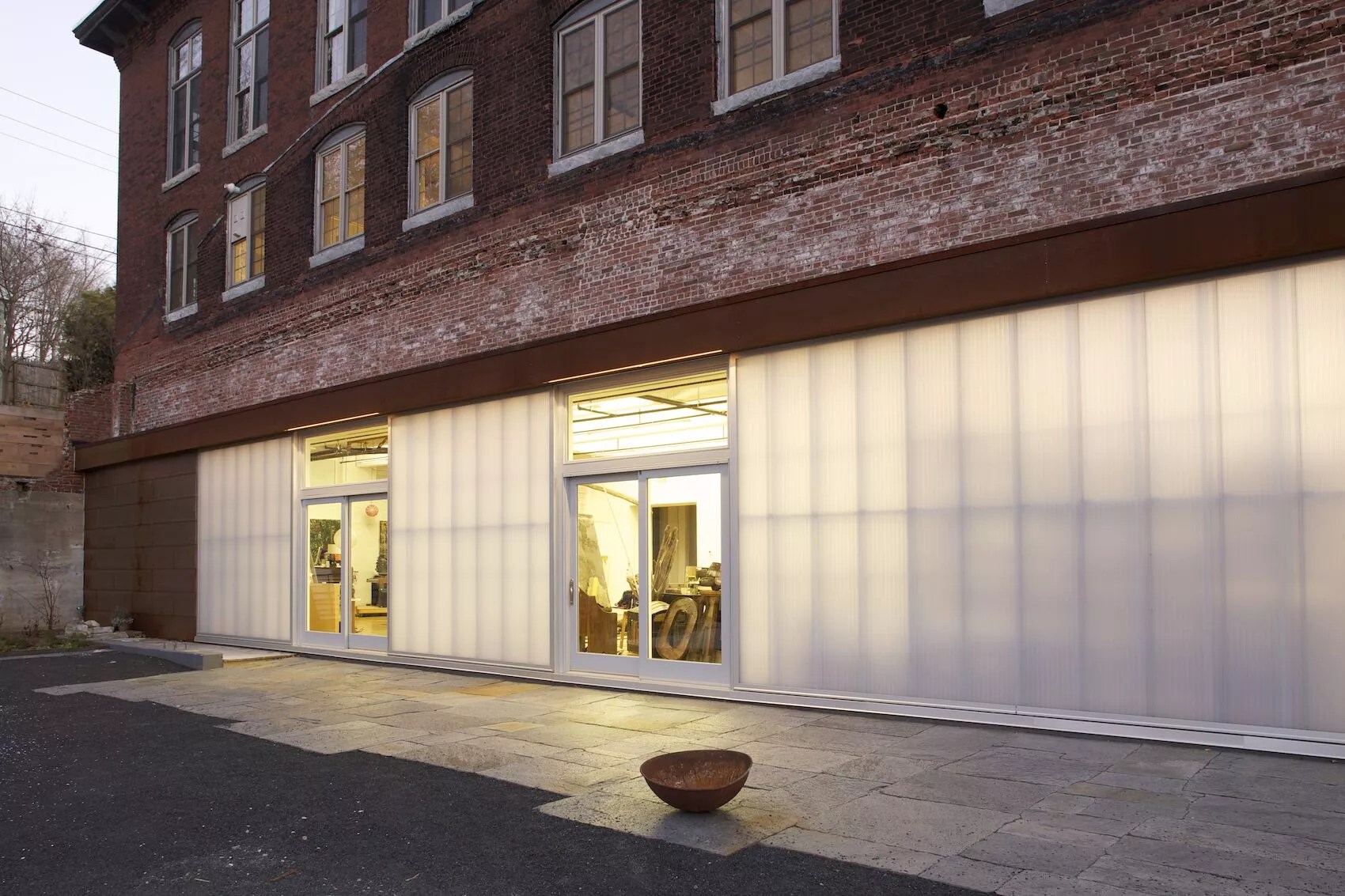
Fateyev is also the curator behind the exhibit “In-N-Out” by Anton Ginzburg, installed at the U-Mass Design Building Gallery in Amherst. And in May, he hopes, his latest barn-into-gallery transformation will be complete. “I’ve developed a specialty in art studios and gallery spaces,” he says.
“With any project, you have the site, the client, and the program. For example, part of the program of a house would be the various rooms you want,” he says. “But I’ve learned over the years that you can define that for yourself—it can be a lot more poetic. It can read like a small passage from a book, like a poem, like something in between.”


