









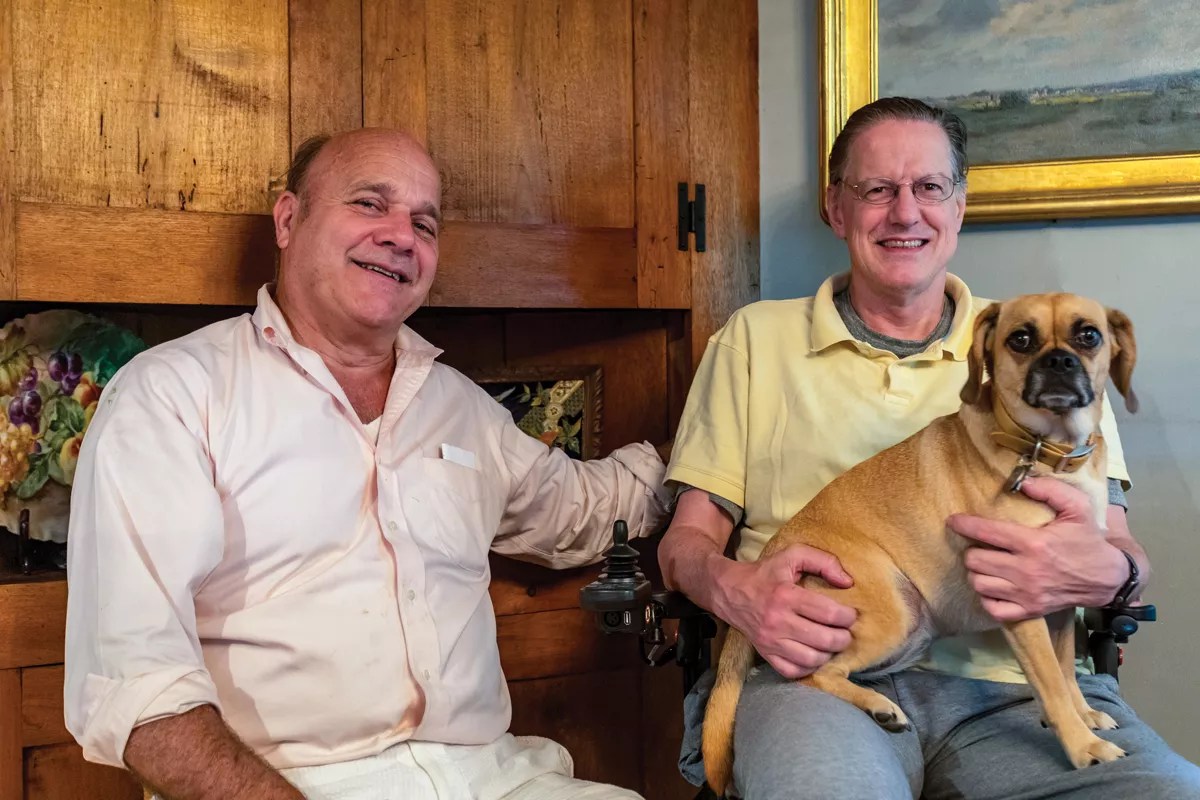
Every corner of Roger Ross’s three-acre Wawarsing property is rich with history, and Ross is devoted to unearthing as much of it as he can. “This house shows the good, the bad, and the truly ugly of America’s story,” explains Ross, who shares the home with his life partner, Eric Bongartz. The two have spent the last 15 years researching, honoring, and living in the 300-year-old Dutch Colonial farmhouse at the property’s center.
Once part of a larger Lenape settlement, the land was burned by militiamen in 1663 and a few years later became the center of one of the region’s first Colonial-era farms. Now known as the “Depuy-Dewitt House,” after the prominent families who built and enlarged the home over the centuries, the four-bedroom’s legacy is in the hands of Ross and Bongartz. “We have to tell the story in the best way we know how and not sugarcoat it,” says Ross. “Ultimately, I believe I’m a steward.”
Time in a Bottle
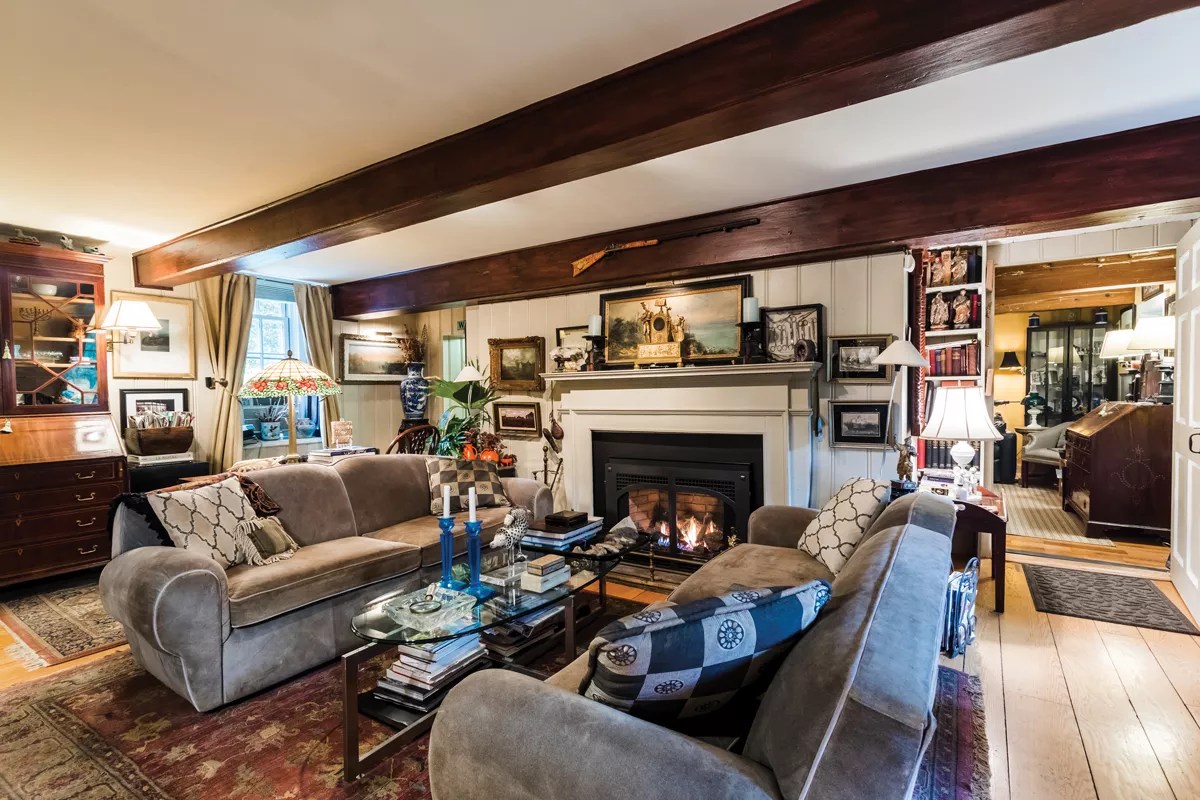
The first thing Ross noticed about the property that would one day be his home was that it sat slightly askew. “Most of the homes that I grew up with were perfectly squared and perfectly measured,” recalls Ross, who is a native of nearby Liberty. “But this home was set at an angle.” The 3,000-square-foot structure—part fir and chestnut farmhouse, part stone fortress made from local rock—was built by French Huguenot refugees, descendants of the king’s guards at Fontainebleau. They sought refuge from religious persecution in the fledgling British colony.
Punctuating the home’s stone walls were intermittent eyebrow and gabled windows with substantial shutters. “I could tell the shutters were built for protection. Not the rinky-dinky things they put on modern houses for show,” explains Ross. Mature tulip trees reached across the surrounding gardens 250 years into the past. “They had the largest canopy I’d ever seen in the region,” says Ross. “It was like a botanical garden. The home, all of it, just stopped me in my tracks.”
Ross was still a kid when he first encountered the property—passing by regularly on trips to visit his sister in Albany—but he had already begun collecting the antique bottles he found around his hometown. He was developing an eye as well as a deep appreciation for history; and maybe he sensed a kinship with the property’s history. Like the home’s original builders, Ross’s mother—a resistance fighter in World War II—also left France behind for the new world. Ross’s father came from Sullivan County and his paternal family has roots steeped in the region. On one of those trips he told his parents, “Someday I want a house like that,” he explains. “And they told me that if I worked hard, I could have anything I wanted.”
Ross did work hard: First parlaying his fascination with antique bottles into a small business, selling them to neighbors and local shop owners. Those local shop owners educated him on the pieces he found and nurtured his love for history and antiques. “I was just a kid but my community really allowed me to flourish,” he explains. “I’ll always be grateful to those shopkeepers and neighbors. They were my first teachers and they helped me find my path.”
After high school Ross eventually made his way to New York City, where he worked as an executive recruiter in a talent acquisition company for 30 years. He kept collecting antiques, as well as buying and selling historic furniture, documents, and art on the side. Over time he amassed a robust collection, and a detailed knowledge of the pieces he found. Ross met Bongartz, who worked for an interior design firm, in Manhattan, and together they decided to return to Ulster County.
Set in Stone
The couple initially began looking for a house where Ross could also accommodate his mother, who still lived in Liberty. “I’d lived in very modern houses up to that point and I wanted to go in a different direction,” says Ross. He began looking for stone homes in the area and eventually came across the Wawarsing property. “It looked very familiar,” he explains. “Then I realized it was the home I’d driven by all those years before.” Ross went to meet the owner, Rosemary McBride, whose family had cared for the house for the previous 50 years. The two hit it off instantly, and realized they were likeminded about preserving the legacy property. “We hit it off almost instantly,” he explains. “I felt something was almost surreal when I walked into the house. It really felt meant to be.”
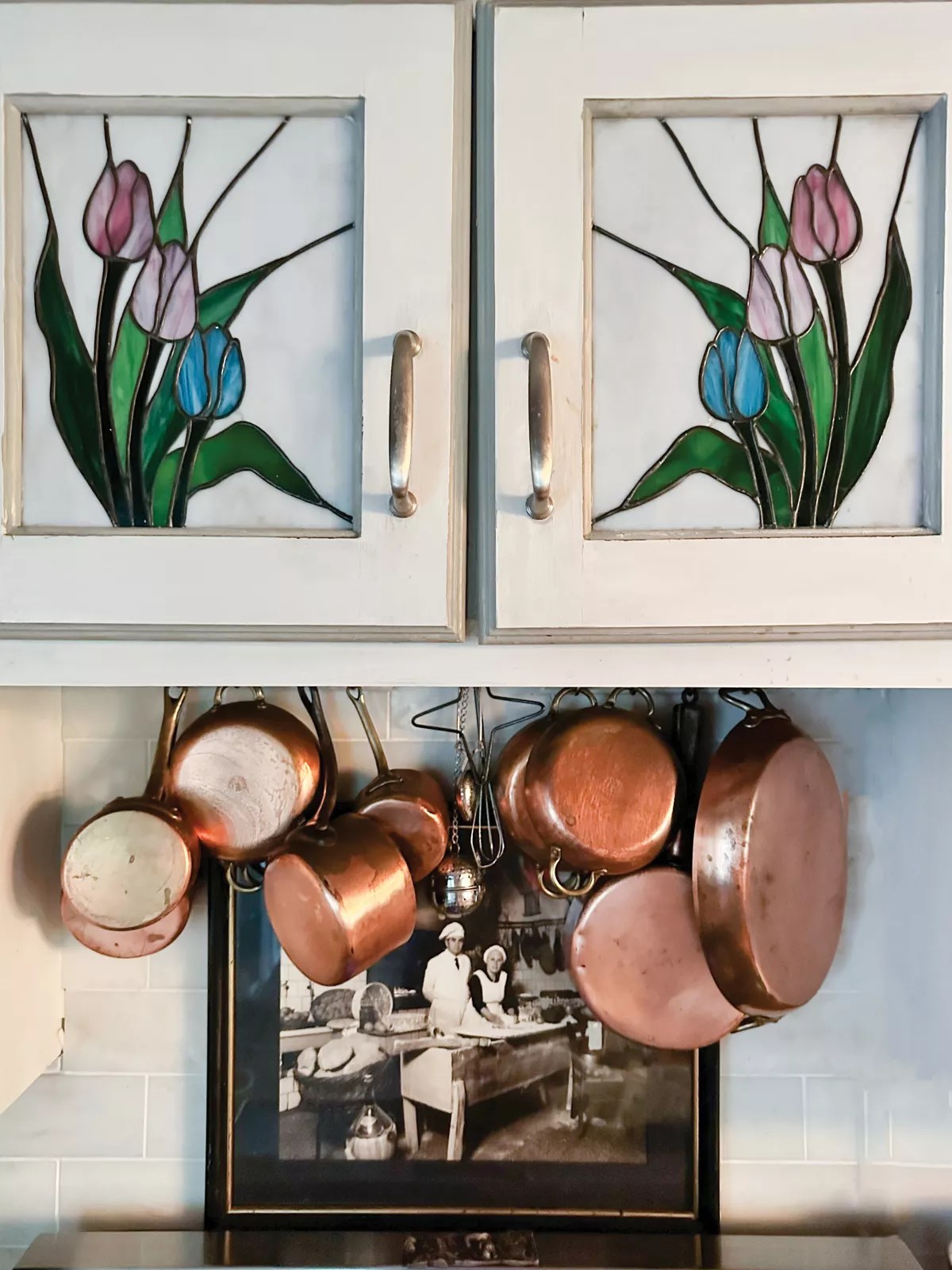
He bought the restored home soon after and the couple moved in while his mother visited on weekends. Ross began investigating the structure’s history and coming to terms with the past. Dating from the 1680s, the oldest part of the home was built by Nicholas Depuy and now contains the kitchen and dining room, all dominated by a giant stone hearth. The primary bedroom—which was originally a garret for storing food—is above. Built at an angle to maximize southeastern exposure, the few windows in the two-to-three-foot thick stone walls fill the space with sunlight. “The original builders really knew how to build and position a house,” explains Ross. “We’ve been through both Hurricane Irene and Superstorm Sandy. This house stayed dry when neighbors were flooded.”
In 1716 the Depuy grandchildren added additional living areas to the end of the structure with another large bedroom on the second floor. The original 22-inch wood floorboards and wood ceiling beams stretch throughout the first-floor living areas. An additional office space and third bedroom upstairs were added in 1783 when the property passed into the Dewitt family through marriage.
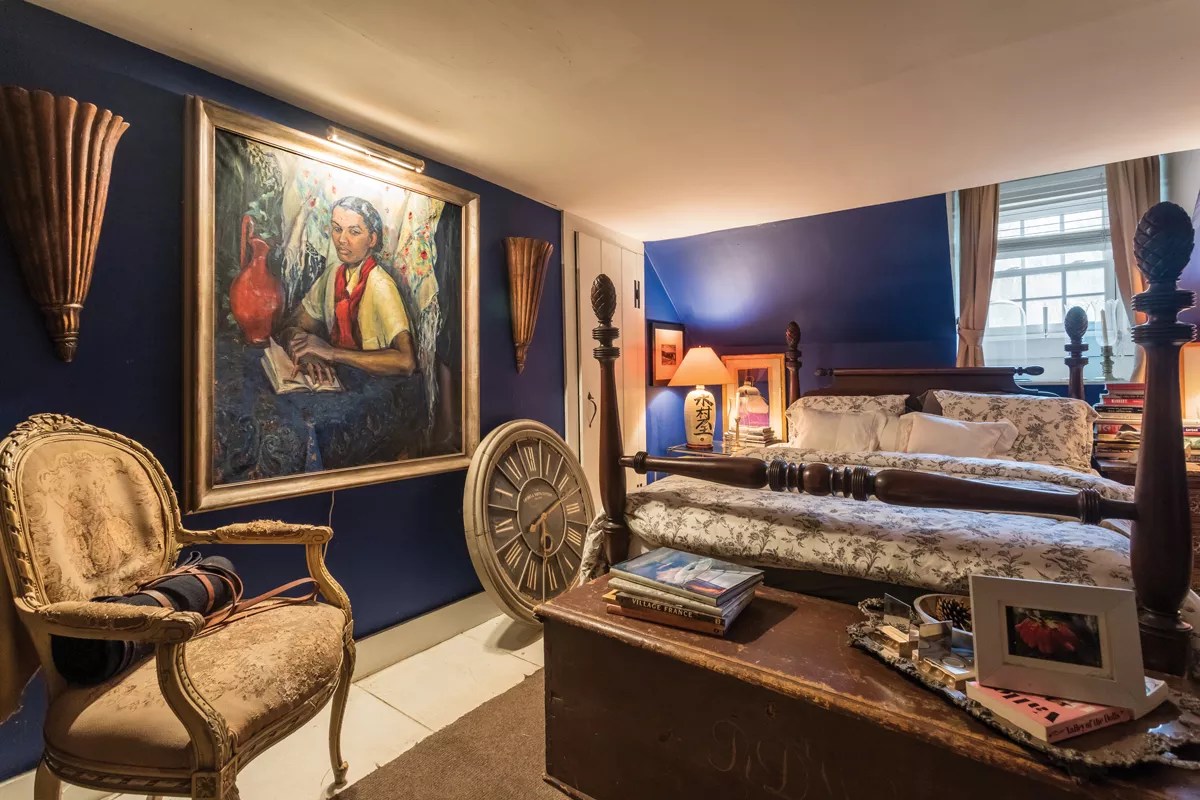
McBride left Ross with some of the home’s historic furniture and Ross has added some of his own antique furniture and art. He also framed and hung historical documents passed along by the McBrides. In one of the guest bedrooms, a carved chest was owned by Rachel Dewitt—the aunt of the New York governor DeWitt Clinton—a memento of the time when the Dewitt family lived in the house.
Closer to History
In front of the house a plaque marks the spot where a 1781 Revolutionary War battle ended. After a protracted local battle between the colonists and the British and Native American soldiers, colonist settlers fled the burning town of Wawarsing and gathered in the stone house, called “the old fort.” The plaque states that a 16-year-old settler shot the native chief from the second-floor window, ending the battle. The plaque, and the history it described, disturbed Ross from the beginning of his time in the house. In the course of his research, he’s uncovered other unsettling facts. “I found records that show there were five enslaved people living here in the 1700s,” says Ross. “It’s hard to wrap my mind around it.”

The facts of the home’s history upset him, but then he dedicated himself to telling the home’s true story as he learned it. “I asked my historian friends, what should I do with the plaque?” He explains, at first wanting to remove it. “But at least it’s the beginning of telling the story of the area. I hope people research the story from there. I won’t take down the plaque: I think I have to live with that history.”
This article appears in September 2023.


