








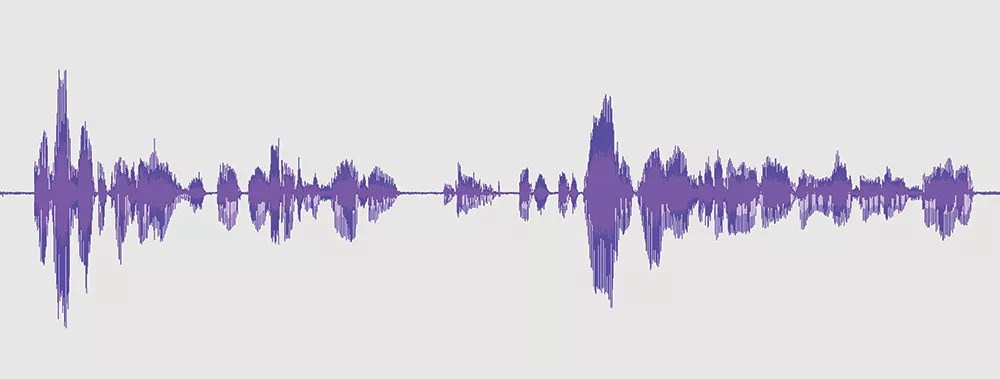
Within the past year or two, I received a comment from a listener to Planet Waves FM, who complained that I pause too much when I’m speaking. He said that he would be running my program through a “truncate silence” filter, in order to condense my language. He wanted to speed up the pacing of my thought process. Apparently I think too slowly for him; if he only knew.
This is the perfect example of how electric media affects people: we come to expect being overwhelmed. By electric media, I mean the whole story arc of an electrically powered environment, from telegraph to electric light to digital. They all have one thing in common, which is electricity. (Technically, the word electronic refers to the presence of transistors, which are little electric switches.)
The telegraph made it possible for information to reach from the White House to Buckingham Palace at the speed of light (it used to take a month), or for people to play chess in real time, between New York and Baltimore. It was equally good for both purposes.
The electric light blended night and day, which in turn messed with our natural rhythms and our relationship to the natural world, and to the cosmos.
Radio, television, and digital media overwhelm us with information, opinions, options, and images, to the point where it’s nearly impossible to breathe. They scramble sensory balance to the point where it’s difficult to perceive one’s relationship to one’s body.
There was one really strange week in mid-May, where everything seemed to have happened at once—and it deserves to be remembered. Within a few days, someone opened fire with a semi-automatic weapon on a group of US representatives and senators who were practicing for a charity baseball game, critically wounding one; the attorney general of the United States had to deny publicly that he was involved in espionage and treason, and on live television refused to answer many questions from senators; a 24-story affordable housing tower burned down in London, killing many people.
The president of the United States is under investigation by the special counsel (an independent federal prosecutor) for obstruction of justice; he is also considering firing the guy who is investigating him; the jurors in the Bill Cosby sexual assault trial were deadlocked, and the judge declared a mistrial; the president is trying to roll back normalization of relations with Cuba (apparently Russia is okay, when Cuba being friends with Russia was our original excuse for blockading Cuba). A woman in Maine drowned a rabid raccoon in a puddle. Donald Trump turned 71 years old.
We have not heard much from Mike Pence lately. I suspect he’s already president, doing the job quietly, while his boss takes the country for a ride on a train wreck. Does anyone really want things to go faster?
Where do we think we’re going? Lakota Shaman Lame Deer wrote many years ago that Americans are on “the road to nowhere—a paved highway which they themselves bulldoze and make smooth so that [humans] can get faster to the big empty hole which they’ll find at the end, waiting to swallow them up.” He may as well have been referring to the “information superhighway,” which is an early term for the Internet. It’s definitely starting to feel like a road to nowhere.
Mercury Square Neptune: Crisis of Reason
That crazy week was kind of typical, as we race along at the speed of light. What all those news events that ripped through consciousness that week have in common is that not only did we hear about them via Internet or digital cable news, they are all emerging from a society dominated by that environment. The hyperbolic speed of events, and their rapid delivery, are all properties of electric media.
When you get a week of events like this, it’s natural for both astrologers and astrology fans to wonder what the heck was going on in the sky. While there are always many little things going on, the main event of the week I described was Mercury square Neptune. Mercury is, on one level, about mind and communications. Let’s start there. Mercury square Neptune has some difficulty discerning the truth. It blurs the differences between “true” and “untrue” in a kind of irrational haze.
People who have this aspect in their natal chart must work for intellectual integrity. It does not come naturally or as a birthright. If they don’t do the work of cultivating that integrity, they will remain in that fog, and typically pay for it somehow. That’s where our whole society stands at the moment.
One thing about Mercury is that it can represent the mentality of young people, such as children and adolescents. And you might say that society is in the thrall of immature thinking and behavior. Neptune in this equation is the influence of fantasy, delusion and the media haze. Mercury is mind and mentality.
Kasia Urbaniak, who was recently my guest on PlanetWaves.FM, said to me the other night, “People seek enlightenment, but what they really want is to be adults.”
It’s fair to say that the child aspect of the psyche is running out of control right now. The child aspect of self will try to lure others into coming from parent mode. This is not productive. What we really need are people who can relate to one another from adult mode. Yet at the moment, there are very few people who can do that. We live in what Robert Bly described as a “sibling society.” I recently heard the word “kidult” for the first time, used by a “millennial” to describe herself and, presumably, her generation.
“I use the phrase ‘sibling society’ to suggest a culture fundamentally without fathers, mothers, grandfathers, grandmothers, or ancestors. The thinking is horizontal,” Bly writes in his 1996 book of that title.
He later comments, “The distance between the adolescent and the true adult is about five thousand miles, but the distance between the adult and the elder is almost as large,” adding later, “In the sibling society, both the adult and the elder get lost, and no one knows where they are.”
Note, this was first published 21 years ago, long before the Internet had even become a mainstream thing.
Of Reason and Rationality
Mercury square Neptune also describes a loss of reason and rationality, which you could describe as the inner kid losing its bearings and taking over the whole psyche. This is one of the roots of the integrity issue that surrounds this aspect. If there’s no reasoning process, or if reasoning is distorted, there’s no objective way to establish right and wrong.
Looking for some fresh ideas, I called up Andrew McLuhan, my media studies study-buddy and the grandson of my favorite philosopher, Marshall McLuhan.
I mentioned the guy who wanted me to talk faster, and who was filtering out the silence in my broadcasts. He recognized this as part of the overwhelm effect of electric media, which leaves you no time to think—the very time I’m taking in those interminable three-second pauses in my spoken-word presentations.
The electric media onslaught has supplanted the thoughtful reasoning process that was cultivated over long centuries by print media, especially by books. Particularly under digital conditions, everyone seems triggered, all the time. There’s no ‘safe space’ in the world that will protect anyone from this. The safe space is something that we as individuals cultivate in our minds, and much of how we do that is through reading books, and learning how to think and reason for ourselves.
Under current conditions, Andrew said, “There is too much to process. With print, you have the luxury of taking your time and weighing things. With electric media, there is less and less time to take.”
What we’re experiencing is a society that desperately needs objectivity and rationality. The problems we have are not going to be solved in the continuous state of being triggered. One irrational thought or action leads to the next, and we keep waiting for something to change.
Andrew continued, “Objectivity and rationality by their nature call for distance. If you’re letting emotions run the day, you’re not giving yourself room to think and consider.”
So where does that leave us? In a PS, Andrew suggested that we could recover the loss of interior space, and thus, of rationality, that’s been taken from us—if we want to, as a society. His father Eric McLuhan said in another conversation that this would take several generations of people who learn how to read.
The teachings of Lame Deer suggest that people need to remember “the secret knowledge of their bodies, their senses, or their dreams.” We need to use “the knowledge the spirit has put into every one of them.”
What we are experiencing is ultimately a spiritual problem, not one of rationality and reason. There is no going back. Even if we learn how to reason in a way taught by true literacy, we will still be doing so in this light-speed mash-up of digital conditions. We have experienced what I call an induced ascension.
We are on another level, though it’s not a particularly enlightened one, and it’s extremely unstable—most people did not work to get here, as we can see. They were pushed out of their bodies by electric technology.
Learning how to read, patiently, from a book, and how to write, patiently, in pencil or pen, are necessary as initial steps. Learning how to get back into our bodies is even more important. That will help guide us to some other form of awareness that supersedes what has been done to us by electric and digital conditions.
Different spiritual traditions have given this many names. Seen one way, the whole problem we face exists on the level of the ego. There’s a lot more to awareness, and to life, than that.
Clarification: McDonald’s French Fries and Gluten
In the Chronogram edition before last, I wrote a feature on gluten-free living, wherein I said that McDonald’s French fries were safe from a gluten standpoint. We got a letter from a reader asserting that was not true, so with the help of my ace fact-checking team on Facebook (which you can join), I dug into the matter.
It’s fun when you fact-check something and you get back the “yes and no” kind of answer. That’s what we got.
It seems true, as our correspondent suggested, that gluten is added to the fries via the beef flavoring. However, when tested, McDonald’s fries test under 20-parts-per-million gluten, which technically makes them gluten-free (from what I could tell, they come in at 3ppm). That’s a typical level of infiltration, for example, in a certified gluten-free product. Some very sensitive people might experience an effect.
However, McDonald’s fries also have 18 ingredients (19 by some counts). That’s disgusting. And per the suggestion in my article, if something has too many ingredients, forget it. I also read that some McDonald’s stores share deep fryers between various products, like apple pie and Chicken McNuggets. That is both bad food practice and a potential source of cross-contamination, and it contradicts my prior research, which says that McDonald’s uses segregated fryers.
McDonald’s has a gluten-free menu. That may hold the biggest clue, as its French fries are not listed. I’m not sure why that is—though my hunch is, the risk of cross-contamination from the various deep-fry units is too great, particularly in an age where mindfulness is stretched so thin.
The gluten issue is truly an environmental issue. It’s part of a much bigger story, which is the story of our lives.
This article appears in July 2017 Issue.



Another example: There’s a faux avid, (white, well-off), group in town, (Maine), who write, and shout about “community gardens,” “food insecurity,” et al. Meanwhile, a local plant nursery is offering beautiful six-packs of vegetables for half off – so around $1.50 per six pack. There they sit, probably a thousand plants of different varieties. I’ll give away any surplus if what I’ve planted grows, but it won’t be advertised. You speak of objectivity and rationality. I kind of want to smack ’em. If these people put their $1.50 where their mouths are, they could feed several communities. But it wouldn’t make these people “important” in the way they wish to be. It is their CONCERNS, you see, that are important.