








Twenty-six-year-old Arlington High School grad Victoria Isaacson likes games. She plays cards in her freetime with her family, Jengas her schedule with a career as a full-time occupational therapist, coaching, and volunteering at The Phoenix Center for fencing. She’s also figured out how to weave in her own competition, training, and recovery-“both mentally and physically-“in wheelchair fencing.
This week, Isaacson will add another piece to the puzzle when she proudly represents the United States as a member of the Team USA Wheelchair Fencing team in her first Paralympic Games alongside five other athletes (the largest team the United States has sent to a paralympics). For Isaacson, fencing is more than just a physical challenge; it is a mental game that she finds deeply engaging. “Fencing has an inherent puzzle challenge to it,” she explains. “I have to constantly be thinking about strategy. I can’t just brute force my way through it.” This strategic element of the sport is what makes it so enjoyable for Isaacson, who describes herself as being clinical in her approach. “It’s just a high-level, fun game,” she says.
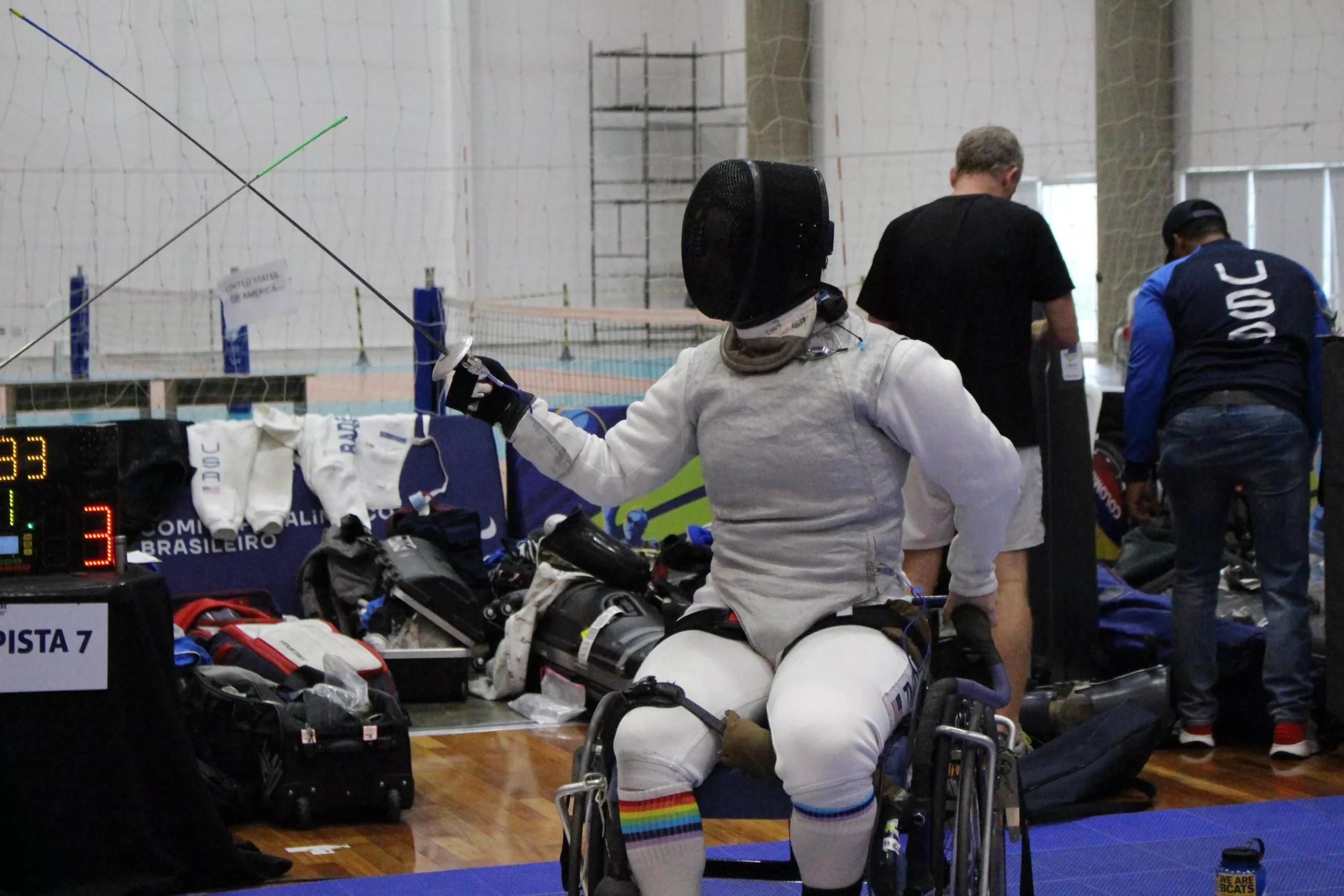
The sport itself is divided into three weapons: foil, épée, and sabre. Each weapon has its own set of rules, and Isaacson will be competing in both the foil and épée disciplines for Category A, individually and as part of the team events in Paris. In wheelchair fencing, athletes’ chairs are strapped to platforms, and the athletes rely solely on their arms and trunk to make actions happen, making it a highly specialized and demanding sport.
Isaacson’s introduction to fencing came in middle school as an able-bodied athlete when a friend invited her to try it out. “It was a spur-of-the-moment decision to join my friend, but I ended up liking it,” she recalls. Along with her love of riding horses, Isaacson juggled the two sports into high school until she faced significant challenges she had to work through before reaching this point in her athletic career.
Despite having health concerns most of her life (some from horse riding but others unexplained), in high school, she started developing frequent headaches and joint pain, and her coach started noticing her declining mobility as well. At the same time she was experiencing neurological challenges which ultimately led to her diagnosis of Ehlers-Danlos Syndrome (EDS), a genetic connective tissue disorder, at the age of 22. “I knew something wasn’t right but with each doctor visit, they kept pushing it off, telling me that everything was okay,” says Isaacson. “For a long time, I was sent away with nothing and so I was diagnosed late. I had to push back on doctors who kept telling me that everything was okay.”
Following the diagnosis of EDS, in 2018, Isaacson started wheelchair fencing with the encouragement of her longtime coach, owner of The Phoenix Center, and now the Interim head coach of Team USA Wheelchair fencing, Eric Soyka. But it wasn’t quite the smooth transition from standing fencing. “He is one of the reasons I didn’t stop fencing,” she says. “When I first started having issues with my disability, he knew that if I didn’t have the community and friends I built through fencing, I wouldn’t really have a lot.” Reflecting on her journey, Isaacson stresses the importance of this supportive community. “I didn’t grow up with anyone in my family who had disabilities, so it was important for me to find mentors and friends who understood what I was going through,” she says.
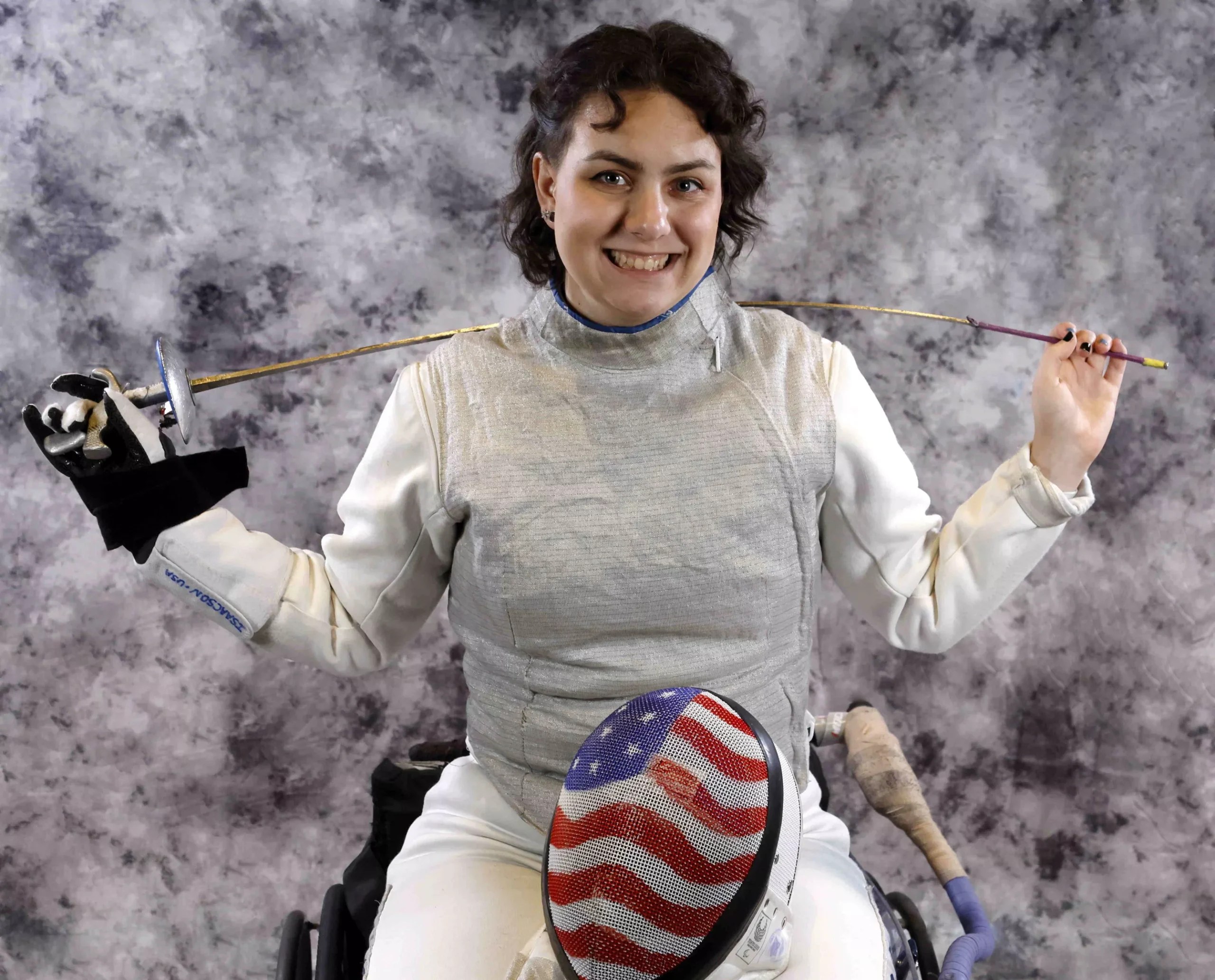
Beyond her own competitive pursuits, Isaacson coaches fencing four days a week and is an advocate for wheelchair fencing and other adaptive sports in the Hudson Valley. “There aren’t many opportunities for adaptive athletes in the Hudson Valley, so I am working to change that,” she says. She is also working on the program development to build more wheelchair fencing in Dutchess County and across the United States.
Despite her love of games and puzzles, Isaacson is less focused on her results in Paris than with each step she has taken to get here. “Life is not a sprint, it’s a marathon. I really try to trust the process and trust the skills I am working on and the rest will fall into place.”
The Paralympics begin on August 28 in Paris. The fencing competition starts on September 3. The Paralympics can be viewed on NBC Universal
This article appears in August 2024.


