









Renaissance. Transformation. Revival. Renewal. Change. Again and again, these are the words chosen by proponents of Poughkeepsie—the Queen City of the Hudson.
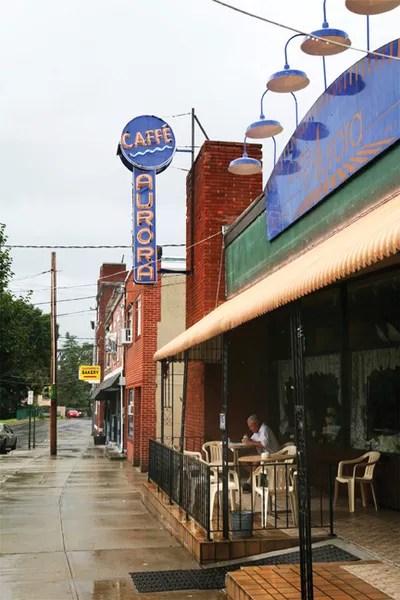
Tales of first lady Eleanor Roosevelt’s limousine making stops at the old Luckey Platt Department Store (now restored as retail space, artists’ lofts, and apartments) for sundries and Caffe Aurora (still there) for pastries, and of early 20th century New Yorkers making weekend pilgrimages up the Hudson, make this river city unique, as does its present-day reincarnation as a 21st-century destination paying homage to its past glory.
“You take a look at the Hudson River Valley, as far south as Rockland County, as far north as Columbia County, as far west as the mountains, and as far east as Pawling. We’re in the center; the center of the universe,” says Charles S. North, president and CEO of the Dutchess County Regional Chamber of Commerce. “Poughkeepsie is rich in history and rich in culture.”
The city’s first-term Republican mayor, John C. Tkazyik (pronounced tie-zik), agrees with North. “It’s at a great place to be. Poughkeepsie is at a point where it’s taking off,” he says. But it took a while to get here.
From Boomtown to Ghost Town
Settled by the Dutch in 1659 and incorporated as a city in 1854, Poughkeepsie is in Dutchess County, on the eastern shore of the Hudson River about 75 miles north of New York, and has a population of about 30,000, according to the 2000 Census. The city covers about 5.7 square miles, and is surrounded by a town bearing the same name, which is of Iroquois origin. U-puku-ipi-sing, means “the reed-covered lodge by the little-water place.”
After the American Revolution, Poughkeepsie was briefly the second capitol of New York. In 1788, Alexander Hamilton, John Jay, and George Clinton, among others, met at the courthouse on Market Street, in what is still the city’s downtown, to debate and ratify the US Constitution.
Poughkeepsie was an industrial hub, as represented by its city seal, which contains a beehive. It was a center for whale rendering, and during the 1800s shipping, hat factories, paper mills, and breweries flourished. (Matthew Vassar, founder of Vassar College, owned and operated a brewery in the city.) It is also home to the longest continually operational theater in the state, the 1869 Bardavon Opera House.
A recent book, Main Street to Mainframes (2009, State University of New York Press), written by Vassar College professors Harvey K. Flad and Clyde Griffen, chronicles Poughkeepsie’s development “from an agricultural market town, to a small city with a diversified economy centered on Main Street, to an urban region dependent on the success of [IBM].” It examines the city’s revitalization efforts following an exodus of business in the 1970s, with the emergence of mega-malls in the town of Poughkeepsie, urban renewal, and conversion of the city’s Main Street into a pedestrian mall. This left downtown all but a ghost town populated largely by drug dealers and gang members.
The little town that couldn’t
Although it is clearly on the upswing, there is no denying that Poughkeepsie, the last stop on MetroNorth’s westernmost route out of New York City, has been plagued with big city problems. Drug traffic, gun violence, and poverty are among Poughkeepsie’s woes. Charlie North won’t deny it.
“Safety’s an issue, a big issue,” he says. “Being the last train stop brings in not only people that are great, but [also] people that are not so great, to transact [illegal] business here,” North says. “There’s no question that Poughkeepsie is a drug stop—we all know that—so we need to find a way to change that. We’re trying to bring in people to move into neighborhoods to push the criminals out.”
But it’s not just new residents Poughkeepsie wants and needs, it’s developers, urban pioneers, and tourists.
Tom Aposporos, the city’s Democratic mayor in the 1980s and now a Floridian, was brought back last year by Tkazyik for a short stint as acting development director. He was charged with overseeing the final restoration of the Luckey Platt Building and also the conversion of a former piano factory into condominiums opposite the Mid-Hudson Children’s Museum.
Aposporos, who was born in 1952 and raised in an 1860s Colonial on Academy Street in one of Poughkeepsie’s historic districts, concurs that the city has long held a reputation as the little town that couldn’t. Like so many other small former industrial cities, Poughkeepsie had its heyday in the 1950s. It was plagued by urban sprawl and the development of shopping centers along Route 9 in the town, along with “a ridiculous governmental response to what was happening—well-intentioned, but poor.” Urban renewal, he says, resulted in the destruction of neighborhoods, instead of “simply saving the splendor of Poughkeepsie.”
“But [in the 1980s] people came to appreciate this community that so attracted my parents and grandparents and realized the value of not ripping down [the city’s architectural gems]. We began moving toward an era of preservation. It was not too little, too late—but it was late.”
Aposporos took office in 1980, when the economy was strong. Some remaining Carter-era urban development money allowed him to spearhead construction of the Windham Hotel (now the Poughkeepsie Grand Hotel), the Barney Office Building, Jefferson Plaza, and the historic restoration of the Maplewood Apartments. At the time, he says, considerable renovation of old homes was also underway. Then, the credit crunch of the mid 1980s stalled things for Poughkeepsie and the rest of the country.
According to the New York Times, “Dutchess [County] was probably the county hardest hit by IBM’s downsizing. In 1985, the company employed 31,042 people at its plants in Poughkeepsie, East Fishkill, and Kingston. By 1995, that number plummeted to 10,100.”
The city’s Main Mall was successfully reopened to traffic in 2001 under the leadership of then-mayor Colette Lafuente, who has become an almost mythical hero to some present-day leaders who point to that move as the beginning of Poughkeepsie’s rebirth.
“Poughkeepsie has been dealt a hard hand at times, but it’s also been dealt an incredibly strong hand of people who have been giants in its history,” Aposporos says.
Brave pioneers
For success, Aposporos says, a city needs its urban pioneers and Poughkeepsie has plenty of those. Among them is Chris Silva, executive director of the Bardavon 1869 Opera House. Silva has seen a transformation in the past 15 years. “The opera house has become everybody’s house. It goes back to 1869 when it was the city gathering place,” he says.
The Bardavon was built the same year the cornerstone was laid for another city treasure, the Poughkeepsie-Highland railroad bridge. The bridge, which burned in 1974, ending almost a century of continuous use, stood idle until a combination of private and state funding enabled yet another Poughkeepsie resurrection.
On the weekend of October 3, the bridge will reopen. Not for rail traffic, but as the Walkway Over the Hudson, a 1.25-mile “trailway,” for bicycle and pedestrian traffic high above the river. The walkway project was accomplished by a group of committed residents who began to envision a new use for the bridge as early as 1992. One of those visionaries is Joe Bonura, a member of the board of directors for the project.
Bonura and his family, which owns the Poughkeepsie Grand Hotel, also built and owns Shadows on the Hudson and The Grandview (a $42 million riverfront restaurant and catering hall project). The Bonuras are planning more development along the Hudson in the near future.
The Walkway Over the Hudson will connect two rail trails—one in Poughkeepsie, the other in the town of Lloyd. Its vision is to provide visitors with an array of scenic and cultural destinations that will promote recreational and business activity along shorelines and downtowns on both sides of the Hudson. Representatives from state and local government, Scenic Hudson, a rail trail nonprofit and local residents is behind a related project—called the Walkway Loop Trail.
In 2008, Scenic Hudson, which is based in Poughkeepsie, suggested the idea of the loop trail to Tkazyik and other city officials, who enthusiastically signed on. A group of interested parties began meeting monthly and included city and town of Lloyd officials; representatives of the New York State Office of Parks, Recreation and Historic Preservation; the New York State Bridge Authority; Walkway Over the Hudson; the Hudson Rail Trail Association; Scenic Hudson; and community leaders such as former Poughkeepsie mayor Nancy Cozean; Joe Bonura; and composer Joseph Bertolozzi, who wrote the symphonic piece Bridge Music, which he created with sounds made from “playing” the Mid-Hudson Bridge with mallets. (Bertolozzi was profiled in the March 2009 issue of Chronogram.)
And there are smaller, but no less significant, pioneers who have made an impact on the city.
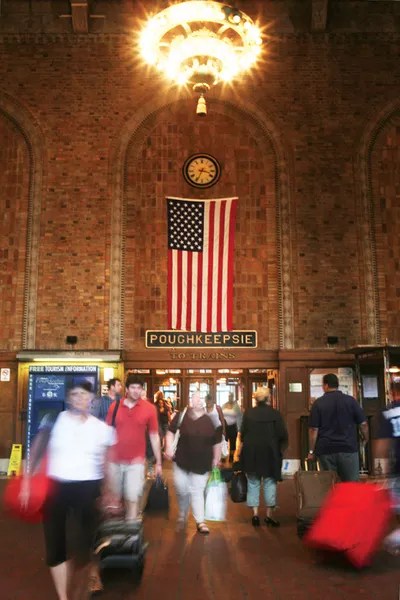
Jack White, a Segway dealer, brought his business to a storefront adjacent to the newly renovated
Poughkeepsie Train Station and has established Segway PT Tours, offering tours of the riverfront and the historic downtown.
Cozean, who has always had a strong interest in the city’s history, offers walking tours of Poughkeepsie churches, and Frank Palaia, owner of the G.A.S. Gallery, takes visitors on a walking tour of some of the city’s numerous wall murals.
And then there’s Lou Strippoli. He may not be a pioneer, but he’s the son of one. In 1941, four days after the bombing of Pearl Harbor, his father, Paolo Strippoli, opened Caffe Aurora on Main Street in downtown Poughkeepsie. Since then the family has moved the business to 145 Mill Street, in what has been called the city’s Little Italy. Even today, it’s not uncommon to hear customers gossiping in Italian like they did back when Eleanor Roosevelt’s limousine pulled up to the curb for a box of petit fours to take home to Hyde Park.
In 1980, Lou, one of the three Strippoli children, took over the business after his mother Filomena’s death and his father’s retirement. Born and raised in Poughkeepsie, Strippoli sees the city as a living, breathing and ever-changing entity. “You know what? Cities metamorphosize, cities change,” he says, expressing confidence in Poughkeepsie’s ability to change with the times.
Looking ahead
Asked what a visitor to Poughkeepsie should take a look at, North doesn’t skip a beat. “Walk down Main Street towards to riverfront. Take a look at Dooley Square,” he says, also mentioning a formerly deserted warehouse that is now a mixed-use, eco-friendly retail hub adjacent to the train station. “Take a look at the waterfront itself; the Children’s Museum. Look across the street at the old piano factory that’s now condominiums. Take a look up at the walkway. Listen to Bridge Music at the listening stations at Waryas Park. Take a walk to Kaal Rock [a rock outcrop jutting into the Hudson near the Mid Hudson Bridge at the base of Main Street]. Take a walk down to the Grandview. Walk up to the boathouse and then go on to the Marist property.Take a walk up Main Street. Go up to Catherine Street. Go up to the 400 block [of Main Street]. Take a look at the old architecture.”
North obviously loves what the city is and has a clear vision of what it can become. “There will come a time when the city of Poughkeepsie will have its Main Street hustling and bustling,” he says. “There’s the greatness of Poughkeepsie that people fail to recognize. The fact of the matter is that Vassar College is located in Poughkeepsie. Marist College is located in Poughkeepsie. Dutchess Community College is located in Poughkeepsie. And right up the road is the Culinary Institute of America. It’s all about Poughkeepsie. I know that people say, well, the Culinary Institute is located in Hyde Park. But let me tell you something, the train stops in Poughkeepsie. So when they want to take a train to Dutchess County, guess what? They saved the best for last, and the last stop is Poughkeepsie.”
RESOURCES
Bridge Music www.josephbertolozzi.com
Caffe Aurora www.caffeaurora.com
City of Poughkeepsie www.cityofpoughkeepsie.com
G.A.S. Gallery www.galleryandstudio.org
The Grandview www.grandviewevents.com
Mid-Hudson Children’s Museum www.mhcm.org
Poughkeepsie Grand Hotel www.pokgrand.com
Hudson River Quadricentennial www.exploreny400.com
Scenic Hudson www.scenichudson.org
Segway of the Hudson Valley www.segwayofthehudsonvalley.com
Shadows on the Hudson www.shadowsonthehudson.com
Walkway Over the Hudson www.walkway.org
This article appears in September 2009.


