









Tables brimming with produce, jars of honey, and artisan goods line the rows of vendors at a local farmers’ market as shoppers weave between the stalls. Some pause to sample freshly baked bread, while others chat with farmers about the week’s harvest. For budding small business owners, the market offers more than just sales—it’s a chance to test new ideas, build a customer base, and connect with the community.
For business owners like Aditi Goswami of Calcutta Kitchens, farmers’ markets have helped them gain the footing needed to eventually expand into brick-and-mortar stores or other higher-volume sales channels, such as catering, and build long-term success. Goswami says everything in her Kingston shop and restaurant, which opened in 2022, stems from the 15 years she spent participating in markets and listening to customer feedback.

“The farmers’ markets helped me understand customer needs because it was a direct face-to-face interaction. I, the maker of the product, was interacting with the consumer of the product,” Goswami says. “You can get a good idea of whether your product has a market, if the price is right, and how long it’ll be sustainable. I got a solid understanding of my business and products.”
Goswami started Calcutta Kitchens as an Indian prepared sauces brand, selling at farmers’ markets in New York City, Westchester County, and eventually the Mid-Hudson Valley and Catskills. Following the spirit of experimentation that defines Indian cuisine, Goswami’s original Makhani Tikka Simmer Sauce expanded to other sauces, chutneys, and spice blends. Today, her products are found in pantries and stores across the nation.
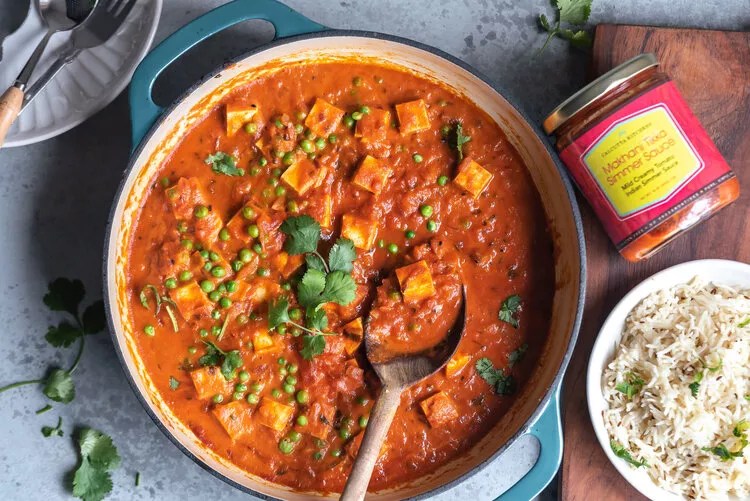
At her Kingston brick-and-mortar, she is now able to welcome customers into a fuller experience of Calcutta Kitchens. She offers a rotating selection of daily tiffins (a light afternoon meal), as well as chai, Indian limeade, samosas, frozen prepared foods, and international groceries. The store also offers family-style catering for up to 100 people.
“Calcutta Kitchens is a perfect example of the incubation at farmers’ markets,” says Sophie Grant, the co-founder and market manager of the Phoenicia Farmers’ Market and a board member of the Farmer’s Market Federation of New York. Prior to opening her store, Goswami was a regular vendor at the Phoenicia market, which is open year-round to provide “an access point for the community to support local businesses and eat fresh, delicious, seasonal food,” Grant says. With over 30 farmers’ markets located across the Hudson Valley and Catskills, residents and visitors have more access than ever to discover local products and share in the work of encouraging small business growth.
“I think farmers’ markets have this beautiful ability to create limitless futures for small businesses,” Grant says. “New businesses that come in have the opportunity to get their products to market, test with direct feedback from the consumer, and with a lower barrier to entry, be able to develop their brand. Markets present a forgiving, but also encouraging, stimulating, and challenging atmosphere to embark on any new business venture.”
Four Sisters, a new small-batch kimchi business founded by Sandy Hyun, is making its debut at farmers’ markets like that in Phoenicia. A jewelry designer who moved to the Catskills from Brooklyn, Hyun began crafting kimchi after struggling to find a fresh, crunchy, and spicy version that met her taste. “I made kimchi nonstop for a few years until I perfected my recipe,” she says. Hyun values the direct feedback from customers, which help shape her offerings.
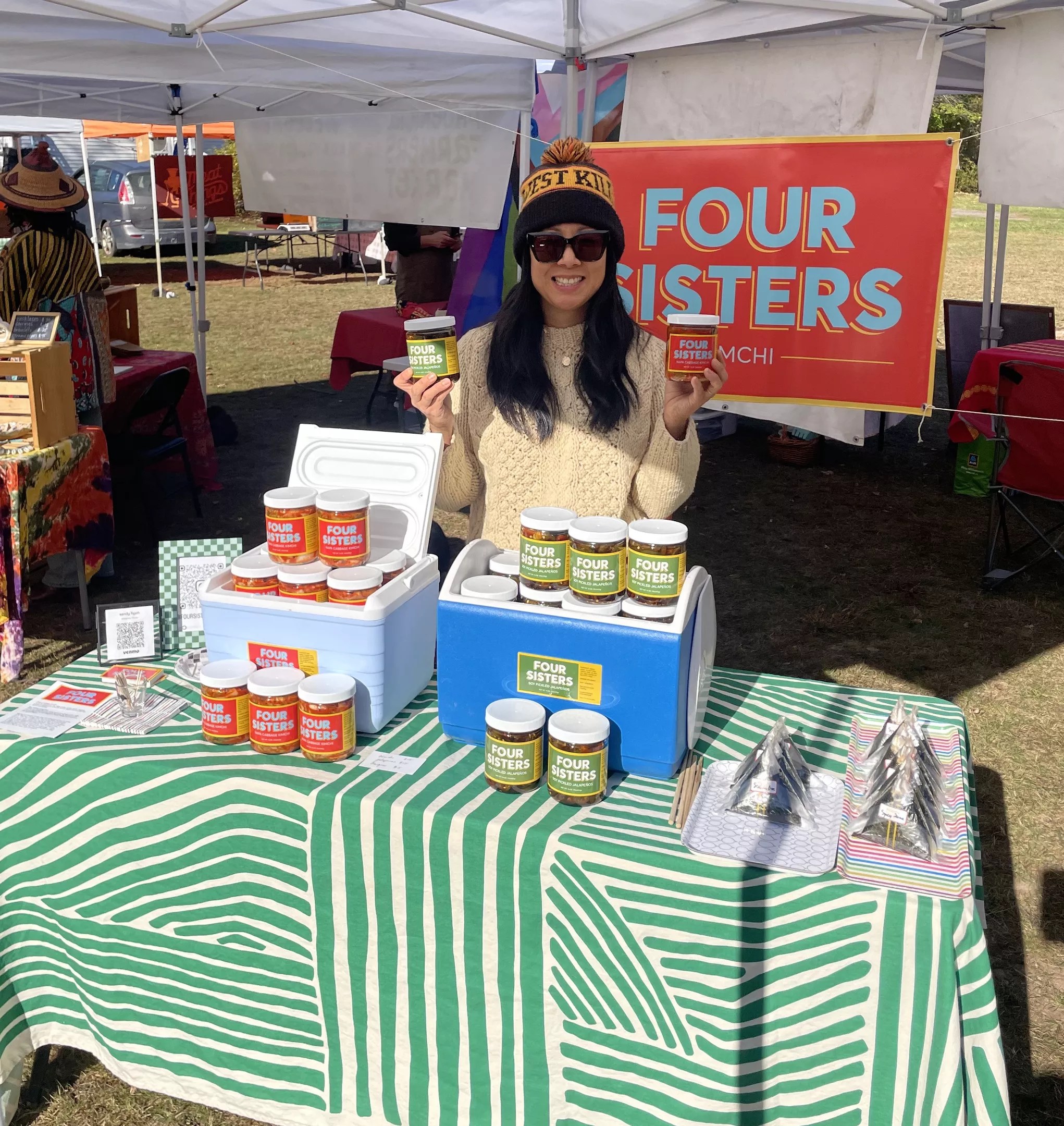
“Farmers’ markets are the perfect incubators for my business. They let me gauge spice levels, consumption habits, and customer preferences,” she says. Initially hesitant to create vegan kimchi, she responded to demand by experimenting with her own vegan “fish” sauce. This summer, in addition to appearances at farmers’ markets, she started selling at local shops, including Local Goods, ImmuneSchein Tea Haus, Rosie General, Migliorelli Farm Stands, and Calcutta Kitchens. Hyun says she would love to eventually open a brick-and-mortar and scale up her wholesale operation.
Grant has also seen businesses like Autonomous Coffee, Windfall Farms, and Weiss Ferments expand since starting at farmers’ markets. Autonomous Coffee began as a small roaster in a shipping container on a family farm and is now opening a drive-thru in Kingston using market feedback. Windfall Farms launched a community farm store in New Paltz and plans to start a cannabis micro-business in the same building, using their farm’s produce. Weiss Ferments opened a microbrewery in West Holmesville last year.

Seeing businesses like these succeed and graduate from markets to their own brick-and-mortar spaces “really validates everything I’m trying to do as a market manager,” Grant says. “Part of what we’re doing here is trying to bring new businesses into the public sphere and allow them to explore and experiment and hopefully achieve their goals, whatever they might be. It’s so fulfilling to play even a small role in their success.”
Looking ahead, Grant is hopeful there will be more markets to support emerging entrepreneurs. “I want to see those opportunities come alive because there are so many talented people that deserve to pay their bills by selling the products they love making,” she says. “If you have the ability to spend some of your hard-earned money at a farmer’s market, that goes such a long way to support these businesses.”



I am surprised that one of the best provisions shop I have ever been to, Fletcher & Lu (Kingston) is not on the Farmer’s Market. It would be a welcome addition. The owner, French chef Julien Shapiro was a finalist at the World Championship of pâté en croûte in Montreal a few weeks ago.