









It’s been three years since a small group of Pine Hill residents took up a mantle to save the Wellington. One of the last remaining large-scale, wood-frame resorts that flourished during the first wave of Catskills tourism in the late 18th and 19th centuries, the three-story Wellington now sits deteriorating at the heart of the tiny hamlet at the base of Bellayre Mountain. In their efforts to transform the former hotel into a much-needed food market, cafe, and 10 units of affordable housing, the project has now caught the attention of the National Trust for Historic Preservation, which just named the Wellington one of America’s 11 Most Endangered Historic Places.
Launched in 1988, the Trust’s list of endangered historic places has helped spur public support for more than 350 historic sites across the US. Since the inception of the initiative, only a handful have been lost, according to the Trust. In addition to the Wellington, other sites on this year’s list include fellow former hotels, such as the San Juan Hotel in Texas; climate-theatened natural disaster areas like the French Broad and Swannanoa River Corridors in western North Carolina; and community revitalization projects like The Turtle: Native American Center for the Living Arts in Niagara Falls.

“Small rural communities often face the biggest hurdles in preservation efforts, with limited national attention, funding, and resources,” said Carol Quillen, the Trust’s President and CEO. “The community-based effort to save the Wellington will not only help preserve the history of the Catskills region but will also provide tangible solutions to the issues of food and housing insecurity that face the community today.”
Jan Jaffe, President of the Wellington Blueberry, the multimember community LLC formed to purchase the building and spearhead its development, says that the group decided to throw its hat into the ring and apply for inclusion on the Trust’s list in hopes they could raise the project’s profile and close a $1.5 million gap in funding to complete the building’s estimated $7.5 million renovation.

The group’s grassroots fundraising effort collected over $600,000 to purchase the building and start work, and has since secured two major sources of funding, including a $1.6 million grant through Ulster County Economic Development from the state’s Restore New York Communities initiative and approximately $2 million in federal and state historic tax credits, which its development partner, Kingston-based affordable housing nonprofit RUPCO, is helping find a buyer for.
But Jaffe says that other larger sources of funding to fill the gap have been hard to come by for a community of just 360 people in a rural corner of Catskill Park. The group hopes the Wellington’s spot on the Trust’s list will help foundations and even individual donors realize the important role they can play in shaping the future of redevelopment in the Catskills.
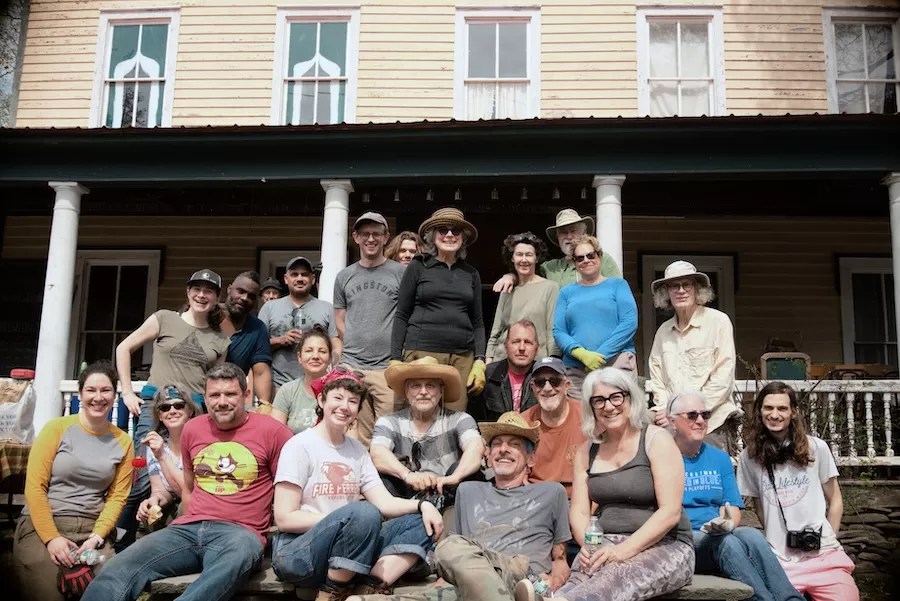
“We have a unique set of problems because we’re in the New York City watershed and we’re in Catskill Forest, but we also have some unique solutions,” says Jaffe. “Part of what the National Trust recognition is about is not just about this one property, but it’s about our town. This is a very delicate place and it needs attention to be taken care of in an appropriate way. That’s the model we’re trying to create: To show that this building could be used again and it could be used in a way that would benefit our town’s current needs and those of our future.”


