









Partners for Climate Action (PCA) has announced $450,000 in Ecological Restoration Grant awards for 2025, funding 23 projects across six Hudson Valley counties. The grants, ranging from $2,500 to $50,000, will support initiatives focused on native pollinator habitats and forest health, two areas identified as critical ecological priorities in the region.
“Since we first launched our Ecological Restoration Grant program in 2023, we’ve consistently heard from our community that forests and pollinators represent two of the most critical restoration priorities here in the Hudson Valley,” says Avalon Bunge, PCA’s Ecological Projects Manager. “We’re delighted to be able to provide funding in these two key areas, and we’re very proud of the resources we’ve developed at PCA to support our grantee partners in their work.”
Awarded projects span Columbia, Dutchess, Greene, Ulster, Putnam, and Orange counties, with 56 percent of funding directed to New York State-designated Disadvantaged Communities. Recipients include municipalities, land trusts, educational institutions, nonprofits, and libraries, each selected through a competitive review process by PCA staff and expert advisors. PCA is a nonprofit dedicated to catalyzing ecological and climate action in the Hudson Valley.
Restoring Forests and Protecting Pollinators
The grants are divided between two key focus areas: forest health and at-risk pollinator habitat.
PCA’s Forest Health Task Force, established in 2023, has identified the region’s forest regeneration crisis as a top priority. Several grant recipients, including Black Rock Forest and the Town of Rhinebeck Cemetery, will undertake projects like reforestation and ground restoration. At Hawthorne Valley in Ghent, an $8,295 grant will fund a deer exclosure to protect a rare population of Leatherwood (Dirca palustris), a native shrub historically used by Indigenous peoples for its strong, flexible fibers.
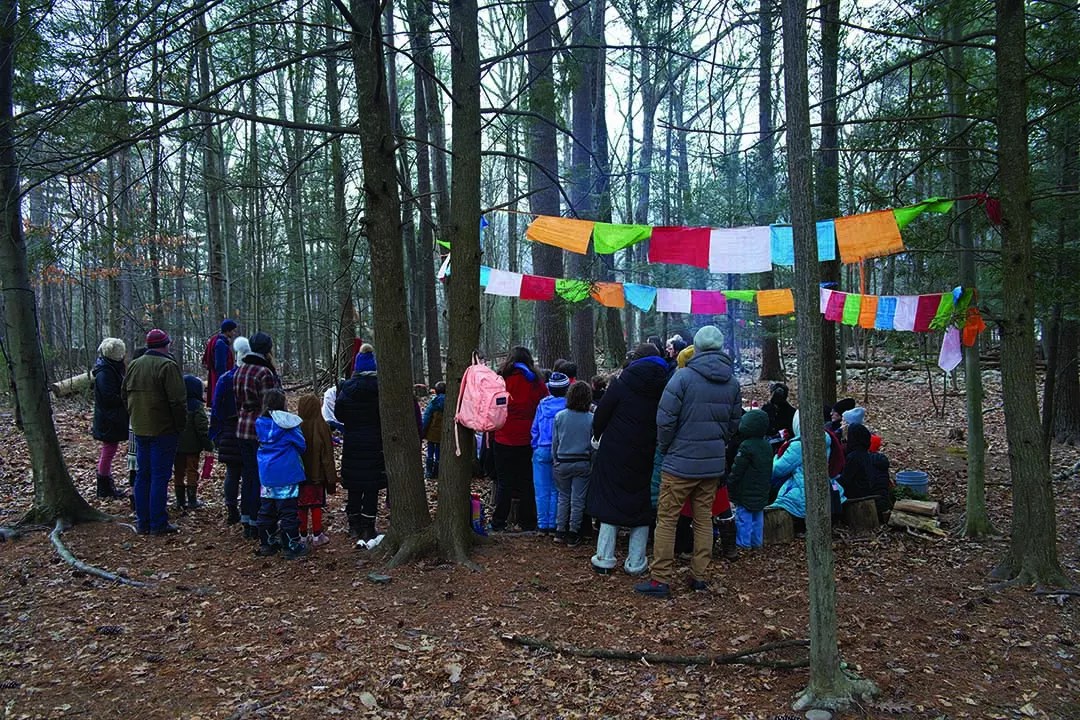
“It will be interesting to see what the potential is for the growth and reproduction of Leatherwood once it is released from deer pressure,” says Conrad Vispo, co-director of Hawthorne Valley’s Farmscape Ecology Program.
On the pollinator front, PCA has developed the Hudson Valley Pollinator Action Guide to provide land stewards with tools to support native pollinators at various scales. Funded projects will implement restoration techniques outlined in the guide, including native plant installations and meadow restorations.
Among the pollinator-focused recipients, Kite’s Nest in Hudson received the largest grant—$50,000—to establish a native plant buffer along the waterfront. Other projects include the Greater Newburgh Parks Conservancy’s Newburgh Blooms for Pollinators & People initiative and the Kingston YMCA Farm Project, which will create an urban ecological oasis.
Supporting Local Action
PCA co-founder Bob Dandrew emphasizes that funding remains one of the biggest barriers to ecological action.
“We’re always impressed by the action-readiness of our communities, and by the high levels of local expertise around the interconnected climate and biodiversity crises that we’re facing,” says Dandrew. “So often, the biggest barrier to taking action is a simple lack of funds. Our grant programs are intended to remove that barrier and help people get their hands dirty taking tangible, meaningful ecological action.”

All projects will be implemented in 2025, with grantees documenting their progress and sharing lessons learned to inspire further restoration efforts across the region.
PCA continues to fundraise to meet the growing demand for ecological restoration grants. “As with our first round of Ecological Restoration Grant funding in 2023, we received an overwhelming number of solid proposals, and we couldn’t meet the full need,” Dandrew says. “We’re looking for donations large and small to help us continue to support ecological restoration efforts across the Hudson Valley.”
This article appears in February 2025.

The River is an independent news outlet that produces in-depth, quality journalism and analysis about the Hudson Valley and Catskills regions. Learn more about our mission and ethics.


