









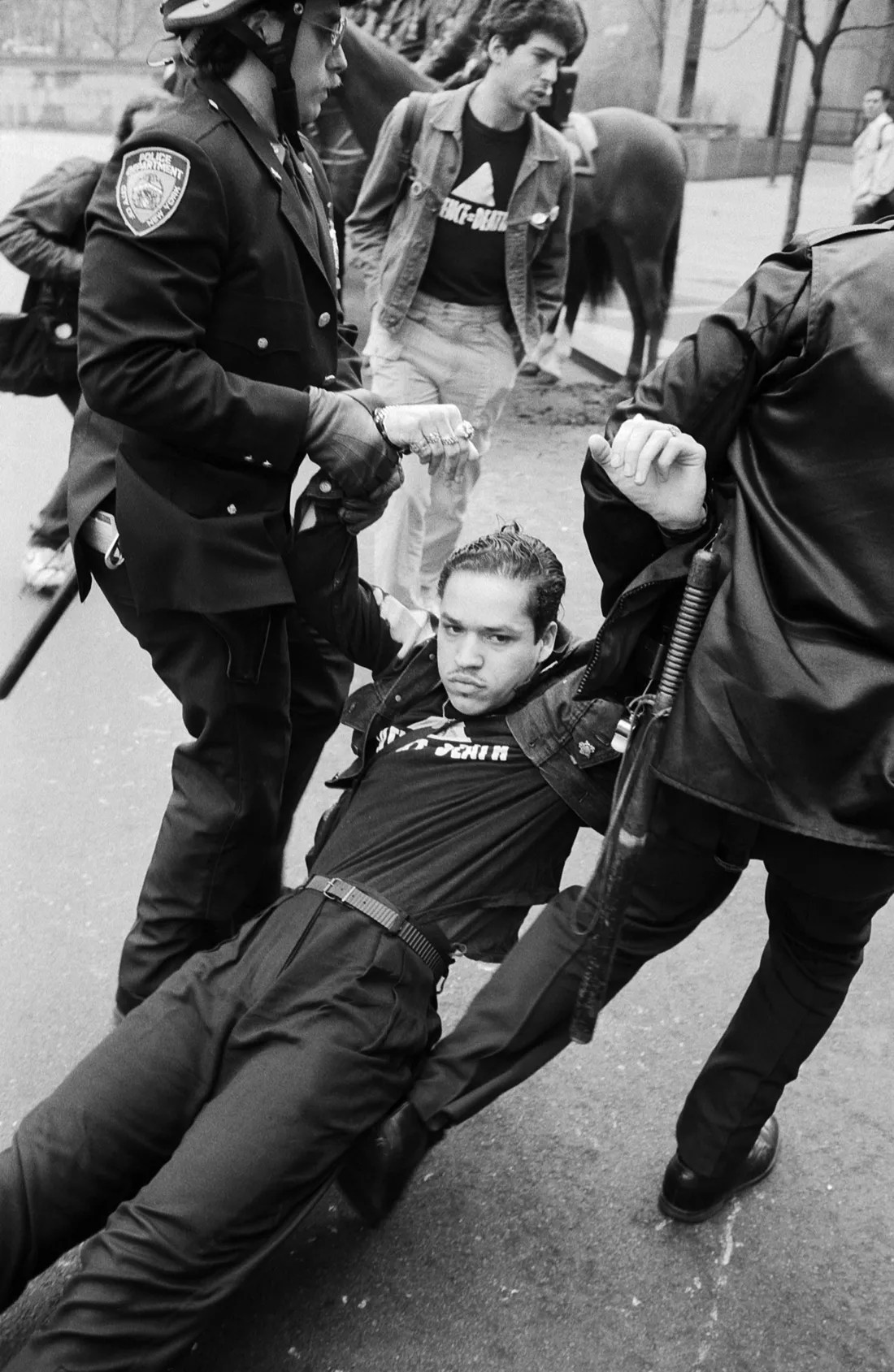
One of the great cultural legacies of New York’s early queer liberation movement is the photographs that captured its evolution: from jarring nighttime snapshots of police brutality to stirring daytime vistas of activists parading through the streets.
Yet as these images proliferate in history books, advertisements, and social media posts, it can be easy to lose sight of the courageous souls who captured them in the first place.
It’s an oversight that is beautifully amended in “Pride and Protest,” a new exhibition at the Center for Photography at Woodstock that documents LGBTQ+ visibility and activism in New York City during the second half of the 20th century. (The show is up through September 1.) Curated by Vince Aletti, the show features 61 photographs by Fred W. McDarrah (1926-2007)—a Greenwich Village personality and the first photo editor and staff photographer of the Village Voice.
Aletti, who’s been writing about photography for more than 30 years, and who joined the Village Voice as an editor in the ‘80s, remembers McDarrah as the “backbone” of the paper—both as an archivist and as an authority on the publication’s history.
“He was the emeritus guy,” says Aletti. “He was often at the office, and we relied on him for historic material. He was someone you could always turn to.”
When Aletti was asked to curate this exhibition, which was originally shown in Paris last fall, he jumped at the chance. “I was familiar with Fred’s work. I took the opportunity because I was hoping to discover something I hadn’t seen before,” Aletti says.
Though McDarrah photographed a wide range of subjects in his career, Aletti felt, going through the archives, that it made sense to focus on his LBGTQ+ material. Half of the photos in “Pride and Protest” are results of McDarrah’s personal efforts as a street photographer—documenting marches and demonstrations around the Manhattan neighborhood he knew so well—while the other half, Aletti says, would’ve been taken on assignment.
“Many of the portraits are of people he would’ve come into contact with because of the Voice.”

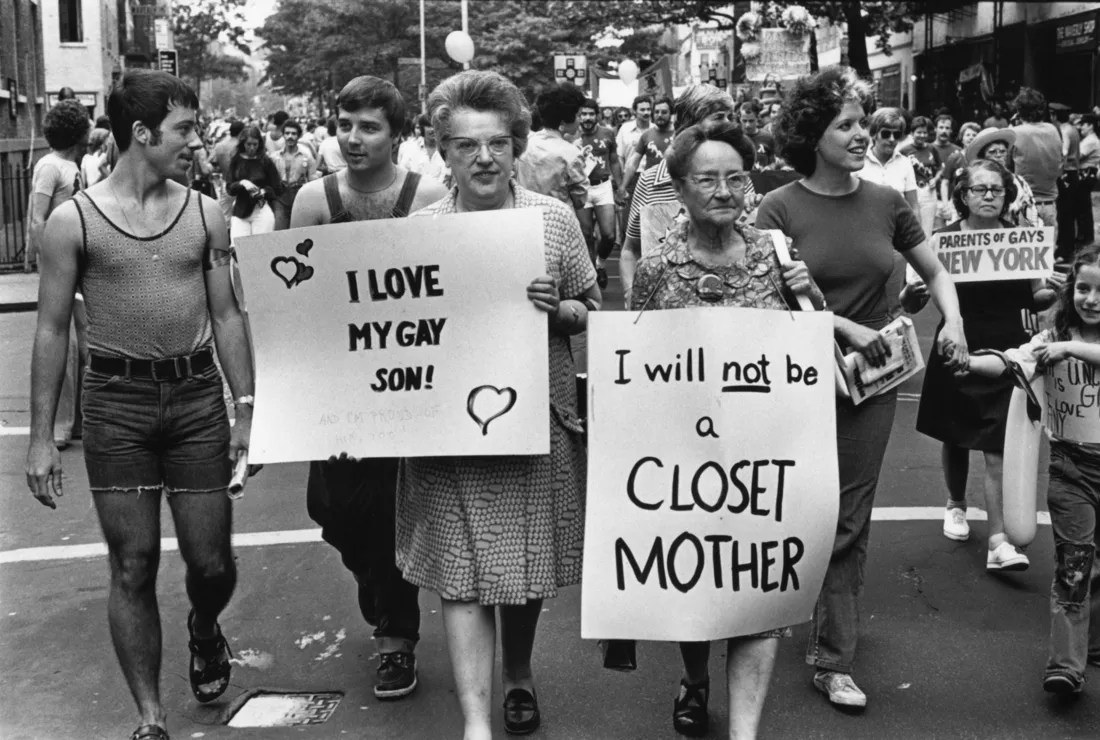
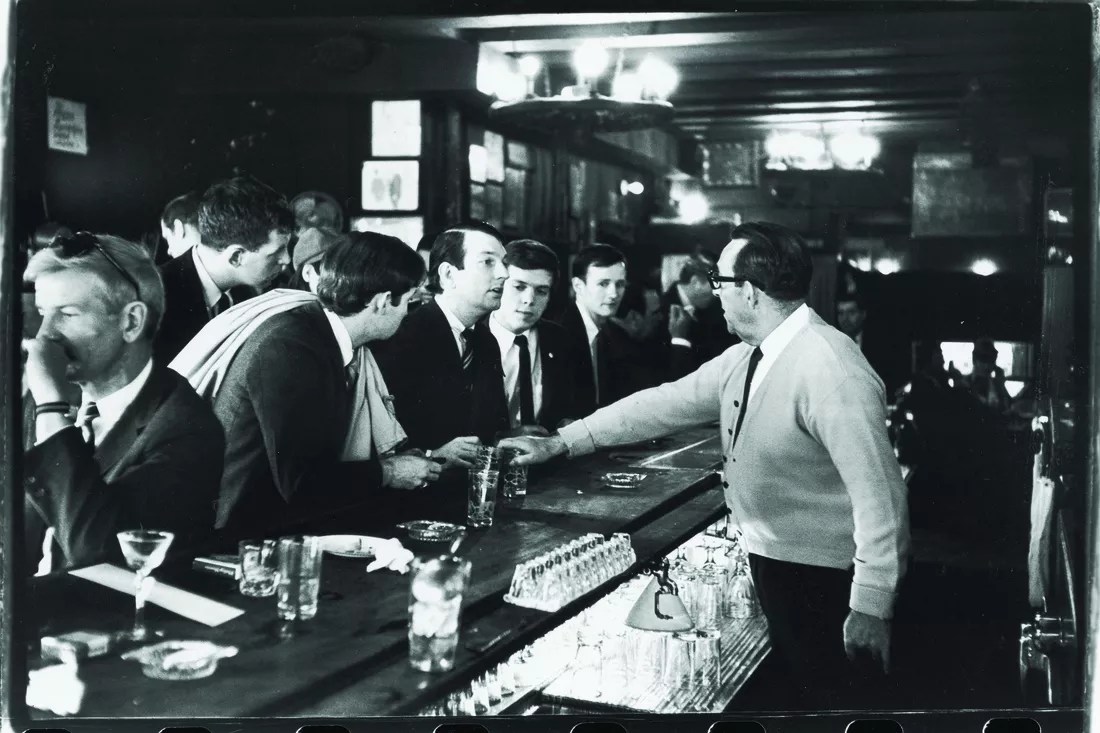
These include portraits of queer cultural luminaries like Andy Warhol, Tennessee Williams, Susan Sontag, and W. H. Auden. But the general focus of the show is on the protest photos: a trio of trans women hamming it up for McDarrah’s lens during a pride march, members of the Mattachine Society participating at a “Sip-In” at Julius’ Bar in the mid-’60s, or a pair of mothers marching with their sons while holding signs that read, “I love my gay son,” and “I will not be a closet mother.”
Aletti hopes these images will highlight the importance of those early demonstrations. “These were people putting their reputations on the line,” he says. “It was a risky thing to do.”
Such a risk extended to the man behind the lens, too. What makes McDarrah’s output all the more striking is the revelation that he was not, strictly speaking, a member of the cause. “Fred isn’t the likeliest person to have done this,” Aletti remarks. “He was married with three children. But he was very open—very interested in what was going on.”
It’s an allyship that Aletti attributes, in part, to McDarrah’s roots as a beatnik. “I think he always saw himself as being part of the counterculture,” he says. “He recognized that what was happening with gay rights was an extension of that counterculture.”
For his part, Aletti is grateful to help his predecessor’s work find a contemporary audience. “I’m glad to have the opportunity to do this, and to do this now. As people’s rights are being challenged, it’s important to think about protest. I think we need to be prepared to go into the streets again.”


