








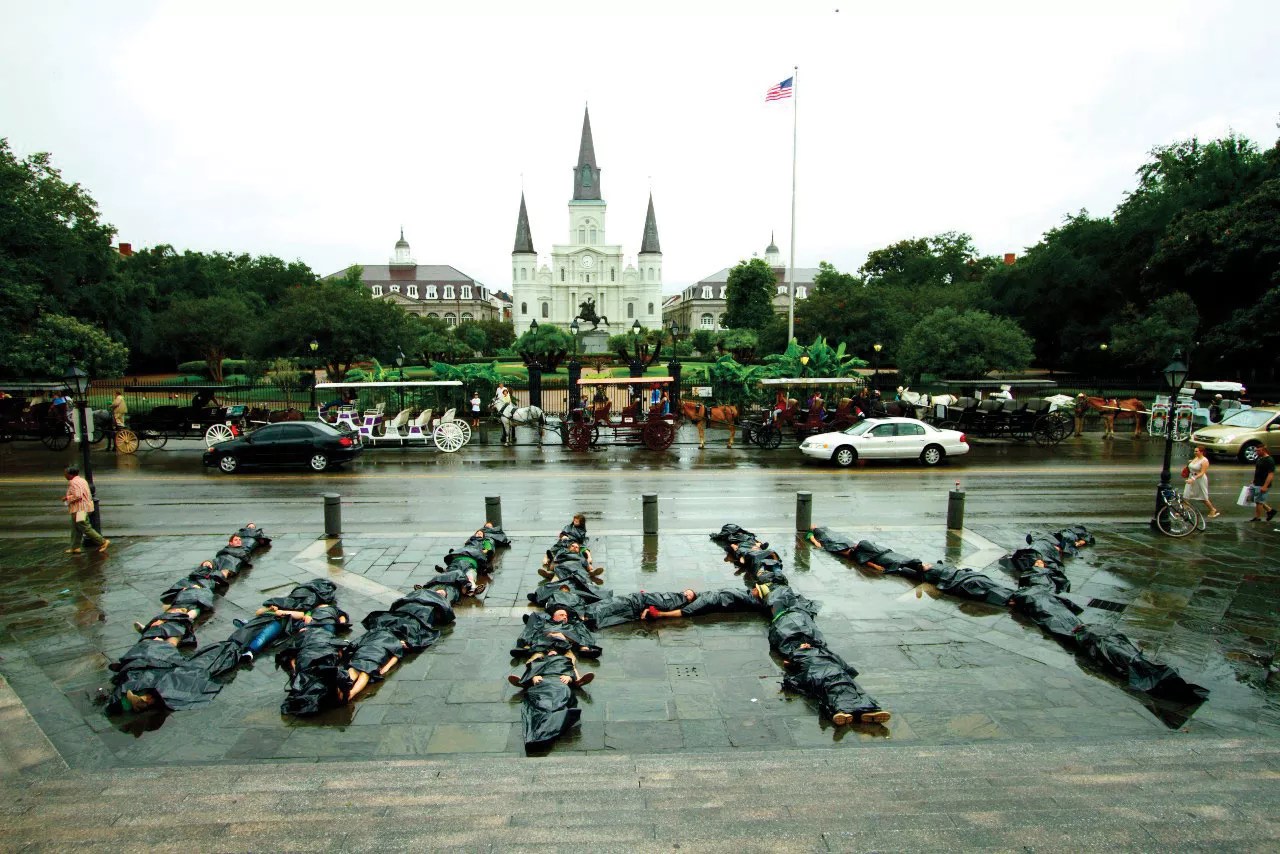
The Big Fix, a new film by Josh and Rebecca Tickell about the 2010 Deepwater Horizon BP oil spill, documents the widespread cover-up of environmental destruction and corruption that continues to this day. The Big Fix sounds the warning of the scale of environmental cover up that will likely be repeated with deepwater drilling, fracking, and oil from tar sands—unless we act now.
The filmmakers didn’t plan on making The Big Fix. However, while working on Freedom, a film about renewable energy, the massive BP Gulf oil spill occurred. They traveled immediately to Josh’s home town of New Orleans to see what was going on.
Josh and Rebecca are the independent forces behind the 2008 Sundance-award-winning documentary Fuel, which captures Josh’s mission to break America’s oil addiction while driving cross-country in an old Winnebago van powered by waste grease from restaurants. Fuel recounts the history of US energy use and features interviews with notable policymakers, environmentalists, scientists, and renewable-energy experts.
The following interview is excerpted from conversations with the Tickells during filming in 2010. The Big Fix will be screened on May 23 at 7:15pm at the Rosendale Theater. Rosendaletheatre.org; Thebigfixmovie.com.
You just got back from Louisiana?
Rebecca Tickell: We’ve spent the last four months down in the Gulf. We were really just going down there to see what was happening and to do a march. We organized a big protest, a rally for clean energy. The musician Jason Mraz came with his guitar and led the parade. Peter Fonda came. The actress Amy Smart came. We organized this giant think tank and big political social action and we went to the front lines of the oil spill. When we got there, what we witnessed was so different from what we saw on the news and it was so much more devastating than we imagined that we literally dropped everything we were doing and started filming. From that moment until now, we’ve donated 100 percent of our energy to creating a documentary about the oil spill. You would not believe what we’ve seen. It’s just so shocking! What we’re living is a metaphor for the movie The Matrix. And, we’re all in this kind of matrix.
Josh Tickell: Our life is caught in some weird matrix. Unfortunately, we have a broken government, a broken economy. And, an environment that’s going rapidly into collapse. You know, the oil spill is horrific, but it’s an example of where we are. Look, if you’re really honest, where we are as a society and as a government, the oil spill is not a shock. It should be expected. It shouldn’t be a surprise for anybody. The fact that it’s a surprise means we are disconnected from reality. We tend to live in a Pollyanna-esque, white-picket-fence, “Leave It to Beaver” version of America. And, that never really existed.
Can you explain the chemical dispersant Corexit used to “clean up” the spill?
Rebecca: What they are doing is adding an even more toxic substance into the water. It doesn’t make the oil disappear. It just makes it so we can’t see or smell it. It hides evidence of how much oil is spilling. The dispersant and oil combined is more toxic than the oil. People are getting chemically dosed just by being near the water and breathing the air. I got really sick from being there just a short period of time.
Despite your anger about the oil spill, you’re still hopeful and inspiring. Do you have a secret source of hope? Where can we all get some?
Josh: Where is a source of hope? It’s less a source of hope than pragmatism. What do we want to build? That’s a very different question than just reacting to the truth, which is always there, but just waking up and realizing it. OK, have a reaction, but then get your feet on the ground and become part of the army for building a better tomorrow. Look, it’s all doable. The US can turn every single major environmental problem we have around. We can be completely energy independent, we can be completely solar dependent. There’s no technological barrier. It’s just a psychological barrier. Hope starts with looking beyond the initial knee-jerk reaction into a deeper philosophy: How do we design today for tomorrow?
That’s a good one, designing today for tomorrow.
Rebecca: What’s required is for everyone not to say, oh, the greenies are going to save us, or Al Gore and his PowerPoint are going to save us, but each person in each community to start looking at solutions that have been available for a long time to be implemented right now, because there’s no better time. Fuel had a really powerful message in it. It certainly changed my life. When I saw the footage of Fuel Josh originally showed me, it made me drop everything in my life. Quit my job, sell my house, sell my car, and just jump completely on board with spreading the message of clean energy. Despite the seriousness, Fuel is light compared to The Big Fix. Unfortunately, we did not want to have to tell the story of The Big Fix. But now, more than ever, the truth is so important. We can’t let this oil spill be in vain.
This article appears in May 2012.


