









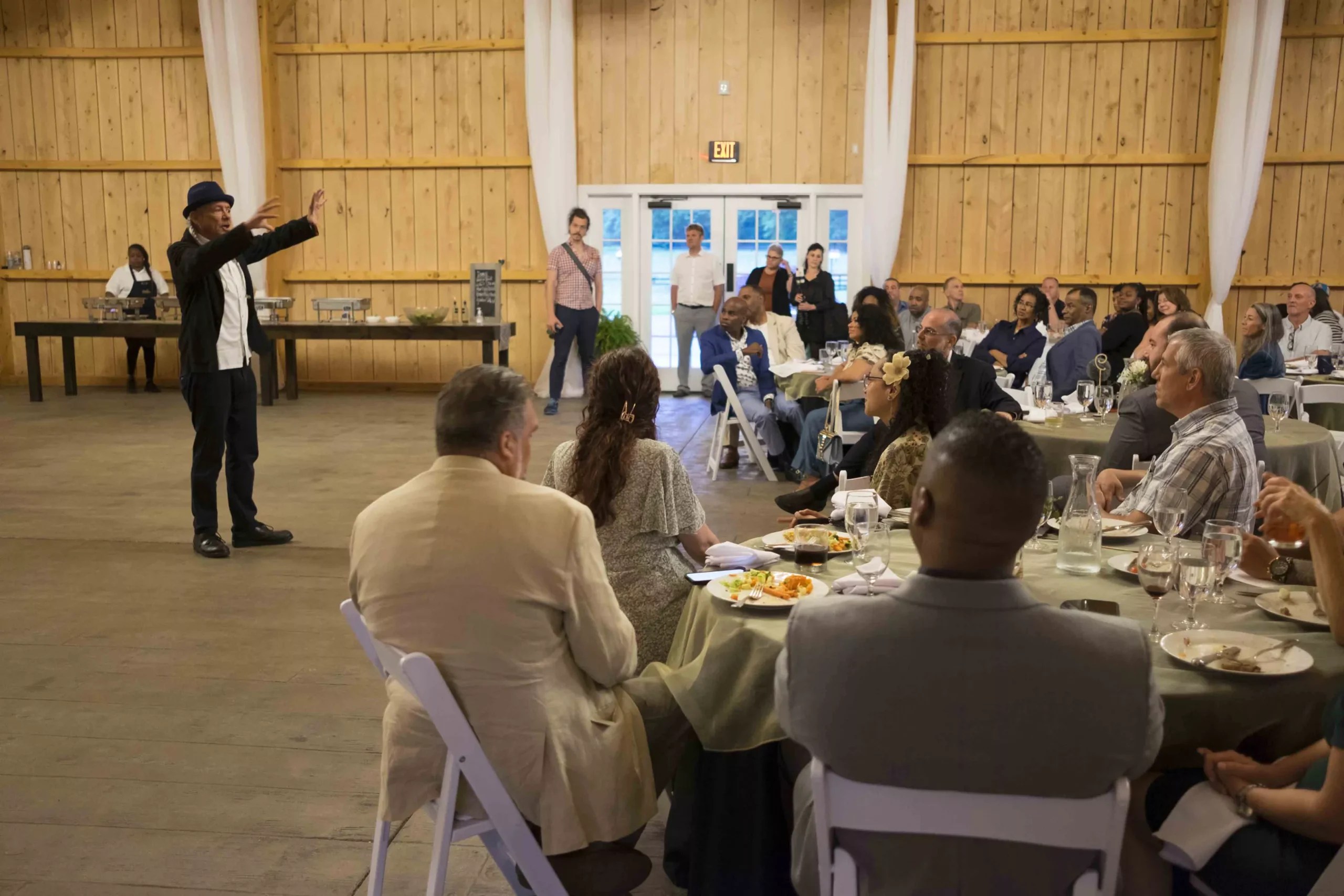
The sun is just starting to
sink over the aggressively manicured grounds of Fortune Valley Manor in
Saugerties. Outside an elegant mortise-and-tenon barn set in a bowl at the
bottom of a steep, winding drive, couples are checking in, posing briefly for
photographs on a patch of red carpet in front of a banner bearing the names of
corporate sponsors. The smell of meat—Wagyu beef actually—charring on an unseen
grill carries across the grounds on a light almost-summer breeze. It is an Event.
It’s an event that a few
decades or even a few months ago might have featured federal agents stalking
the grounds, jotting down license plates or covering the red carpet with a
telephoto lens from a hunting blind in the fields of tall grass and wildflowers
abutting the venue. It is, after all, a gathering of folks in the business of
growing, selling, financing, insuring, and otherwise making a buck off of
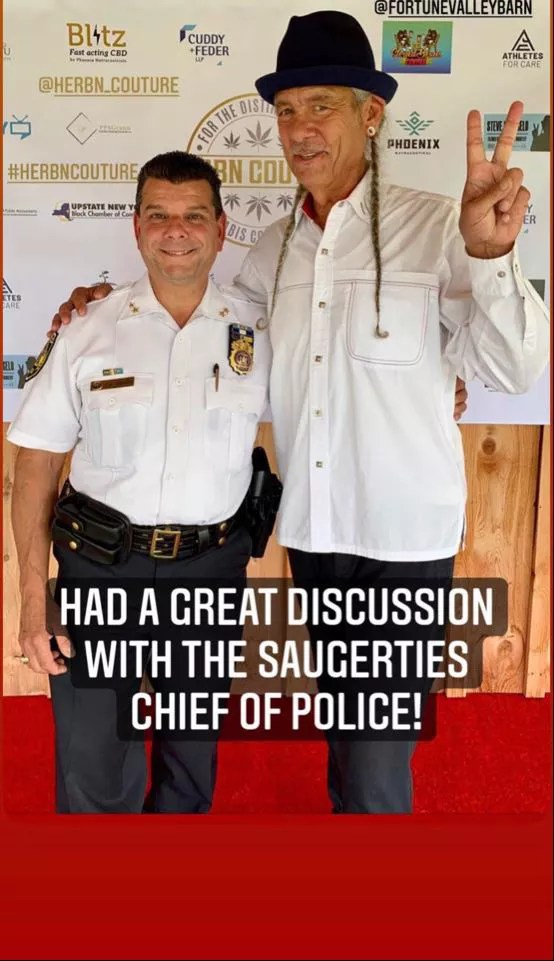
marijuana. But these are different times and the only cop in attendance is
Saugerties Police Chief Joe Sinagra, who makes a brief appearance to check out
what’s been billed as the Hudson Valley’s first ever “A-list corporate cannabis
networking event” and pose on that red carpet with Steve De Angelo, a former marijuana
trafficker and legalization advocate turned “father of the legal cannabis
industry.”
The gathering is the
brainchild of Saugertesian Ruben Lindo. A former pro football player and
corporate cannabis booster, Lindo’s marijuana lifestyle brand Herbn Couture put
on the event as a coming-out party for New York’s adult-use marijuana market.
Lindo, who is Black, chose to piggyback the soiree with the first federally
recognized Juneteenth holiday as an acknowledgment of a sort of freedom that is
at once different and, given the demographic realities of the War on Drugs, the
same.
“This is not just about money
or building a new industry,” says Lindo. “This is about justice, it’s about
equity.”
Green Gold Rush
It’s also about making money
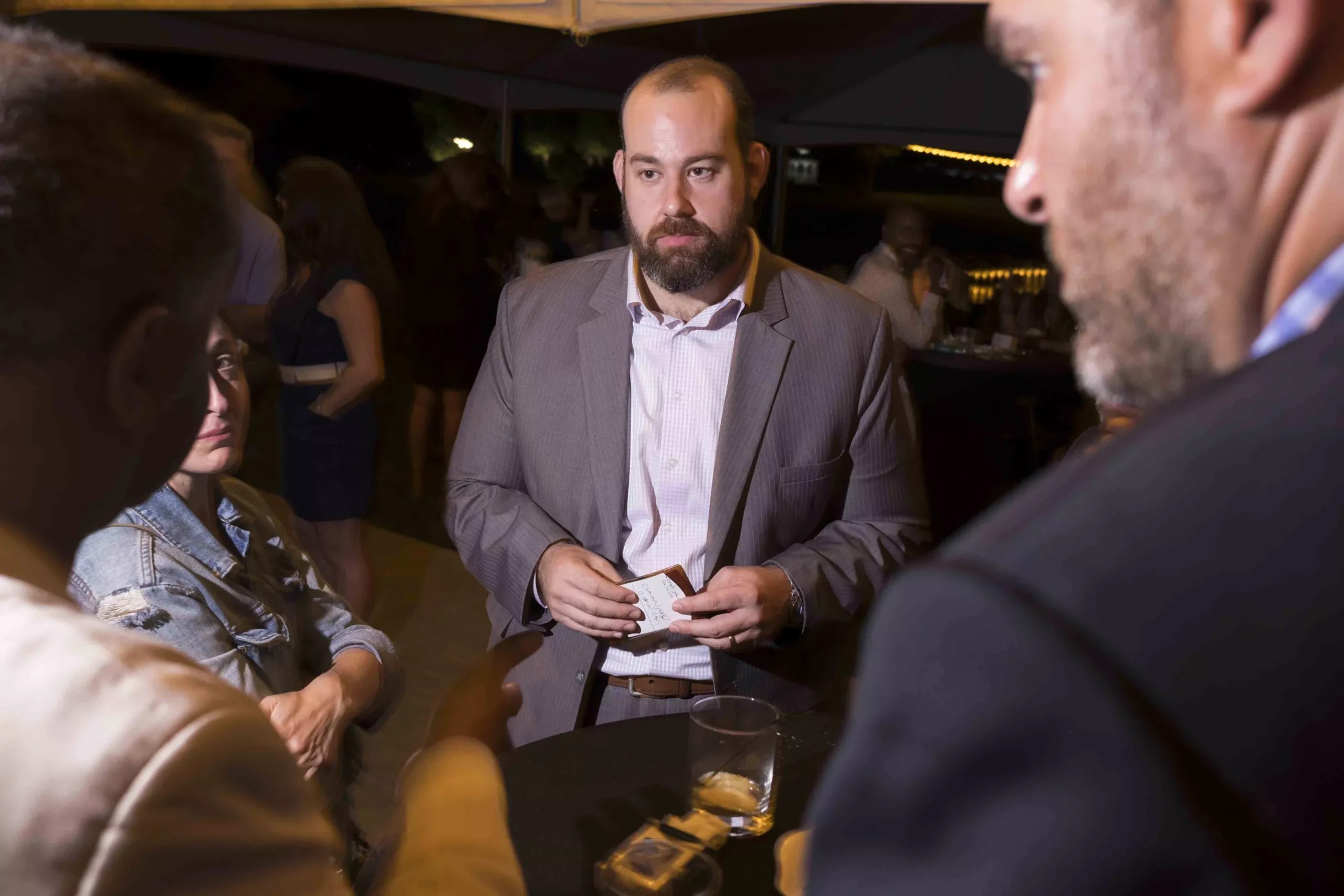
and building a new industry. The tented patio behind the barn is as good a
place as any to take in the breadth of that industry. The scene could be any
trade association networking confab. Business cards are traded, names exchanged,
and elevator pitches delivered with an air of laser-focused affability. Lindo
likens the development of New York’s cannabis industry to the California Gold
Rush. A few lucky prospectors hit it big breaking rocks along a muddy stream. But
the real money was made by the guys selling pickaxes and the bankers extending
the credit they needed to buy in bulk. The pre-dinner mingle is an object
lesson in just how many ways there are to make money in cannabis without
getting your hands sticky. One attendee, a medical marijuana
education advocate, laments the sorry state of
medical knowledge among staff at a California dispensary she visited recently (gripes
about the Golden State’s adult-use market are a common theme with words like
“failure” and “tragedy” featuring prominently). “I told them I needed something
for joint pain, just to see what they would say,” she says, still acutely
rankled by the experience. “They just looked at each other and said, ‘Let me
get the manager.’”
Daryl Miles runs PPSGCann, a payment processing company based in South
Florida that facilitates credit card transactions in the cannabis
industry. The trick, Miles explains, is to process the sales as cash advances,
thus avoiding entanglement with federal laws which still treat interstate financing
of marijuana sales as a crime. There are business cards from insurance
salesmen, land surveyors, and a security firm which specializes in threat
assessments of disgruntled employees. There’s former Atlanta Falcons player
Clint Johnson on behalf of Athletes for Care, a nonprofit that promotes
cannabis as an alternative to opioids for sports-related chronic pain. There’s
a guy who owns a fish farm in Greene County.
The room also includes people
who will be instrumental in determining what New York’s adult use market will
look like. The law passed by state lawmakers and signed by Governor Cuomo back
in April is a framework. The minute details of how, where, and under what
restrictions cannabis will be grown and sold in the state will fall to a 13-member
Cannabis Control Board appointed by the governor and state lawmakers. That
regulatory structure will be built piece by piece over the next 18 months and
everyone present believes the market will rise or fall based on their
decisions. Several candidates for the job are present in Fortune Valley Manor
and much gossip is passed about their suitability for the task of designing
what’s expected to be a $4.2 billion adult use market.
“He’s going to be on the board
and he’s anti-THC!” hisses one attendee about the purported stodginess of one
potential cannabis czar.
Tip Your Budtender
In a nod to the end-product of
all of this entrepreneurial energy, there are in fact cannabis products there
for the sampling. On a mezzanine above the main hall, James and Gabe, a couple
of 20-something locals, have just had a crash course in budtending and have been
drafted into service a table laden with strains of flower, gummi worms,
chocolate bars, vape cartridges, and other goodies. Guests can exchange tokens
handed out at the door for a product and exchange money to buy more tokens. But
for most, the sales table is an afterthought. More than a year after
Massachusetts legalized adult use drawing many thousands of New Yorkers and
many millions of their tax dollars over the border, the simple of thrill of legally
purchasing professionally packaged weed seems to have faded.
And then there’s the salad
dressing. Alongside the piles of butter-soft Japanese beef, grilled shrimp, and
a desultory mix of grilled carrots and broccoli is a cannabis-infused lemon
vinaigrette. For Lindo, the infused salad dressing is a potentially unstable
element in an otherwise artfully crafted networking event. If there’s an
overarching theme to his message, it’s that cannabis is an utterly respectable
industry based on a plant with demonstrated physical, emotional, and spiritual
benefits. One hyper-faded guest thrust into a panic state by overindulgence in
lemon balsamic vinaigrette could kill the vibe. After extolling the virtues of Wagyu
beef, he adds a note of caution and a plea for moderation. “The world of
edibles is not for everyone,” Lindo tells his guests. “We don’t want anyone
getting wasted.”
But the evening passes with no
untoward displays of wastedness. On the patio after dinner, the laughs are a
bit louder, the smiles a little warmer, and the intricate joints and arches of
a barn built without a single nail a lot more fascinating. Joints are rolled on
Herbn Couture ceramic trays and passed to an ‘80s pop hits soundtrack.
DeAngelo, whose keynote speech includes a pitch on behalf of the Last Prisoner
Project, which seeks to free those still doing time for marijuana crimes in
states where the plant is legal, holds court while digging into a (non-infused)
cupcake with a fork.
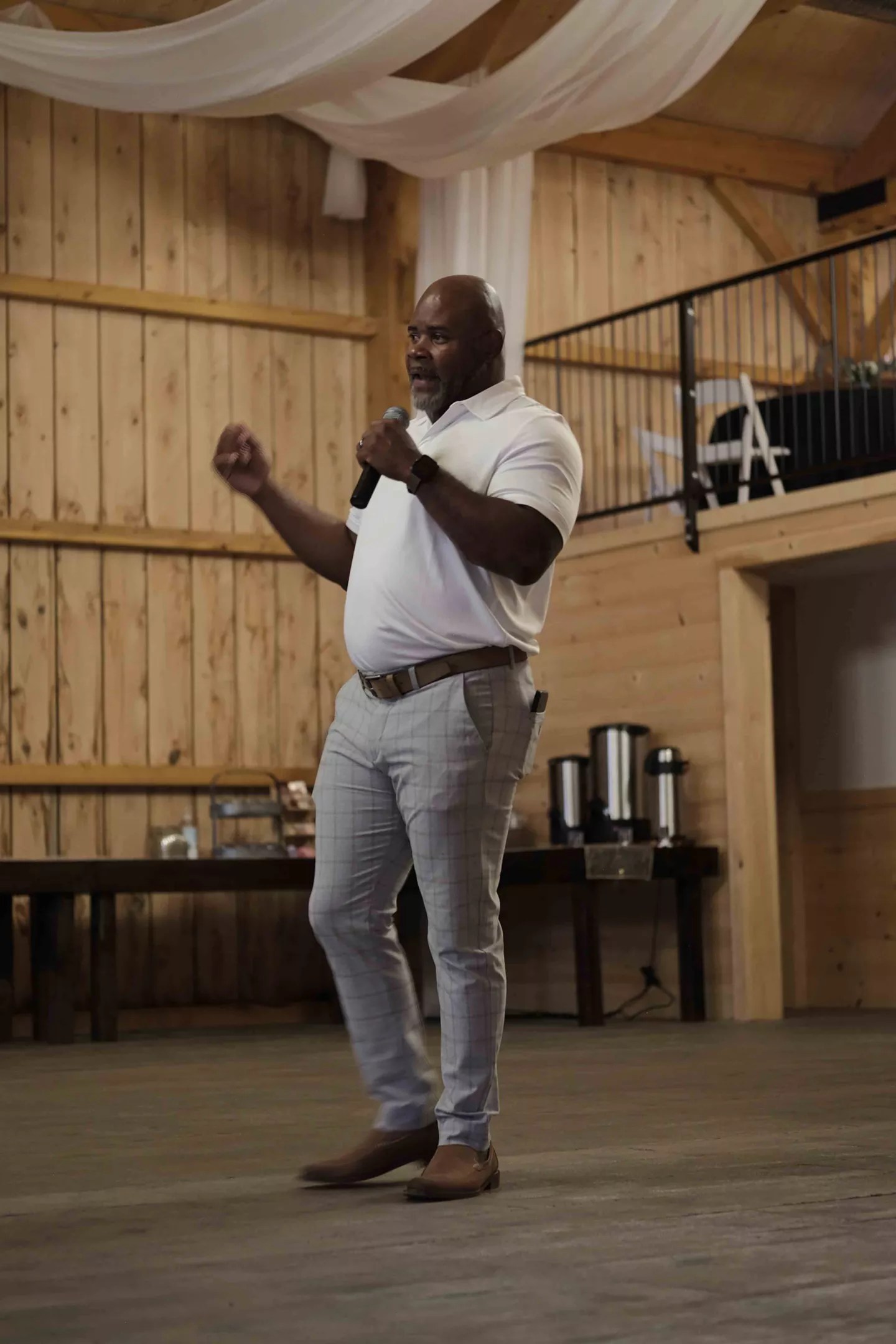
Lindo, meanwhile is taking in
the crowd with a satisfied air. One hundred and fifty would-be and actual industry
players have gathered a mile from his home to celebrate, network, and plan. And
it’s a diverse crowd—white faces predominate but do not overwhelm. As a member
of the Hudson Valley and New York City Cannabis Industry Association board of
directors, Lindo lobbied state lawmakers hard for social equity provisions in
the new law intended to ensure that New York’s legal marijuana market looks a lot
like the crowd on that smoke-tinged patio on Juneteenth. “This gathering is a
snapshot of what this industry should look like in totality,” says Lindo.
“Black, white, Asian, Hispanic, gay, lesbian, straight business owners coming
together to form a new industry with inclusion.”
This article appears in July 2021.


