









Natalie Merchant
I remember when the first editions of Chronogram mysteriously began appearing in the doorways of Upstate businesses 20 years ago. Its size then was closer to a TV Guide, nothing slick or hip about it: uncoated paper, small advertiser section, horoscopes, and local listings of music, film, dance, and yoga classes. But slowly it began to grow into an indispensable guide to what was happening in the area. Over time, we saw the listings include children’s events, lectures, workshops, and gallery openings. Month by month our “community” of towns clustered around the river, tucked into the mountains, and spread across our valleys began to feel more connected. Eventually, Chronogram made the giant format leap forward to a big, beautiful, full-color magazine with wonderful features on our local entrepreneurs, farmers, artists, environmentalists and community leaders and their work. Over the past 20 years, Chronogram has helped us to forge a regional identity. We live in a unique area full of vibrant and creative people. I’m amazed (at times overwhelmed) by the variety and abundance of activity. I look to Chronogram for who, what, where and when throughout my year:
Which composer will the Bard Summerscape feature this year? What’s debuting at the Powerhouse Theater? How can I donate food to The Queen’s Galley? What’s on at the Frances Lehman Loeb Gallery, Woodstock Center for Photography, Dia, or Unison Arts Center? How can I volunteer at the Mill Street Loft or Family of Woodstock? What good fight is Scenic Hudson fighting now? Where’s the closest farmers’ market? What’s the lecture series at The Cary or Beacon Institutes? What’s on display at The FDR Library? Where can we pick apples? When’s the Sheep & Wool Festival this year? What’s playing at Upstate Films, Time Space Limited, or the Rosendale Theater? Where’s the next BRAWL? Who’s headlining the O+ Festival or Mountain Jam? Who’s teaching at Omega this weekend?
I can’t calculate the size of the loss the region would suffer if bundles of Chronogram suddenly failed to appear next month.
Natalie Merchant is a local musician.

Stephen Larsen
When it was brought to my attention that I had been represented in the very first Chronogram, in 1993, I began to feel really ancient. I had known Jason since he was a talented young Gunks climber, of the generation of my son Merlin. Merlin guided for ten years or so with Jim Munson’s Mountain Skills, and then went on to found his own theater company, Airealistic, based in the Los Angeles area. Jason went on to found Chronogram.
In the beginning, as an aging, pragmatic, WASP male, I may have been skeptical that either enterprise would succeed; but I am glad to report they have both been wildly successful. Airealistic has put on shows on several continents, participated in the 2008 Olympics, and flown aging celebrities aloft on “Dances with the Stars.” And Chronogram, well, Chronogram has become an enduring fixture of the Hudson Valley landscape.
Chronogram somehow hit the right note of aesthetic, cultural sophistication, and practical usefulness to guarantee its success—a tribute to Jason Stern’s instinct and vision—and the talented people he has managed to collect around him. I love the covers, the literary and political content, and the glimpse of what goes on in our culturally fertile neighborhood.
Many poets, writers, and artists of local and more than local renown have been represented in Chronograms over the years; and I am told that I shared the first issue with that scurrilous, demented reprobate, Mikhail Horowitz, who has gone on to horrify audiences all over the Valley, and who I am proud to call, as I do Jason Stern, a longtime friend!
Stephen Larsen is SUNY Ulster Psychology Professor Emeritus, the author of a number of books in print, including, with his wife, Robin, Jospeh Campbell: A Fire in the Mind. He directs the Stone Mountain Center, and with Robin, The Center for Symbolic Studies, near New Paltz.
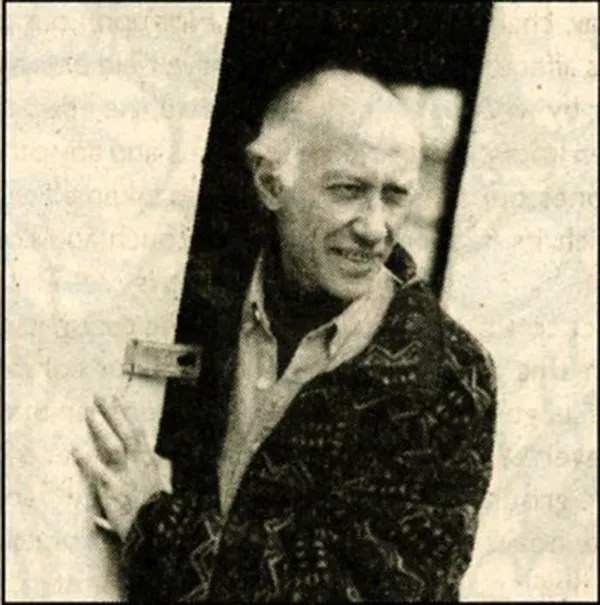
Frank Crocitto
I was there at the beginning, when the magazine, then nameless, was a mere glimmer in the minds of Jason and Amara. They were young, talented, and looking toward the future. They knew they had a future. And as a duo their future possibilities seemed unlimited. Perhaps they knew that. Everybody else did. Of course they had their doubts.
Back in those days—20 years ago?—which might as well be 200 at the rate things are skidding downhill—Henry Hudson’s Valley and its level of possible consciousness was a great unknown. Ah, thought they, there may be a place for a little magazine that is open to matters above the trivial, a little magazine that could, and would, challenge, inspire, even shock.
But where do you start? Why not print a calendar of interesting events in the area? Yes, and then steadily, stealthily, content began to creep onto its pages. A little here, a little there. And then one fateful day the duo asked me to write a column for their little magazine—Chronogram! How could I refuse them?
I think the column was called “Another Way to Look at Things”—or some such. To my surprise there were some people who liked it, and some people claimed they got something from it. I certainly did. It got me clacking away at the typewriter. And I must confess I am still at it. So, as they have done for many others, Jason and Amara gave me a very sweet opportunity.
Twenty years, huh? Well, well. Hooray and more power to you all.
Frank Crocitto is a playwright, poet, and author of many books, including Insight Is Better Than Ice Cream (Candlepower, 2000). His column, “Frankly Speaking” appeared in the magazine from its inception until 2005.

Stuart Bigley
When Brian asked me to write something about Chronogram‘s 20th anniversary, I was taken back more than 20 years. Jason often mentions that the idea for Chronogram came out of something I said during a conversation we were having about the possibility of he and Amara taking over the designing of the Unison program guide. As someone who is rarely reluctant to take responsibility for a good idea, I usually just smile and nod. In all honesty, I don’t remember saying anything too profound that day, but on the outside chance that anything I said actually did help to birth what has evolved into one of the Hudson Valley’s most important arts and cultural assets, then I am grateful to have been part of that process.
That being said, ideas are cheap. What is of real importance is the doing—taking an idea and through hard work and perseverance realizing its potential. Chronogram has become such an integral part of the Hudson Valley arts scene that it is difficult to picture our community without it. Jason and Amara have taken a seed of an idea and put together a highly professional production team headed by Brian Mahoney that has continually put out a monthly magazine whose main focus is our community, but whose scope is global. I always look forward to an extraordinary mix of what is new and upcoming in music, art, poetry, politics, and the environment. The cover art is always thought provoking and visually unique. Chronogram‘s monthly appearance around town has become much anticipated by all the arts loving community in the Hudson Valley. It is one of the many things that make our area such an amazing place to live and to visit. I thank everyone at Chronogram for all their continuing hard work to bring this gem to us. I wish Chronogram many, many more years of success. We all love you.
Stuart Bigley is and artist and cofounder of Unison Arts Center in New Paltz, where he served as executive director from 1980 to 2012.

Meira Blaustein
I remember Chronogram when it was still a small size magazine, brochure-like almost. Even then I always picked it up looking for the best things to do in the Hudson Valley.
It was right around the time when the magazine changed from small (and I mean very small) size to the large format that it is now that I began working on the creation of the Woodstock Film Festival. I remember heading to their old office in New Paltz, going up the steep set of stairs, climbing over the piles of sneakers as I passed the yoga studio, to arrive at their small, crowded office and sit down with the young and friendly editor, Brian Mahoney, telling him about this exciting new film festival that we were about to launch in the Hudson Valley. I knew one of their reporters, Lorna Tychostup, and so I felt that I had an in. I asked Brian to support the infant festival. “Give us coverage, give us ads, you’ll see, it will be great,” I said. Alas, Brian approached it a bit cautiously, suggesting he would wait and see how the first year unfolded.
As it turned out, Lorna ended up being our official photographer that first year, back in 2000, and by the time the next festival came around, Chronogram was our friend. Hard to believe that so many years have already gone by. Look at Chronogram now. Happy 20th anniversary! Here is to at least 20 more.
Meira Blaustein is the co-founder and executive director of the Woodstock Film Festival.

Carrie Haddad
When I first opened Warren Street Gallery in the spring of 1991, there wasn’t a publication in the area that would print any information about the existence of the gallery or any of the exhibits. The Woodstock Times had calendar listings for the arts, but it took about a year to convince the Independent and the Register-Star that their readers would actually like to have this information, and that I couldn’t afford to pay the price per column inch for the mention. Well, they finally agreed to print my press releases, and we were off and running.
Magnificently, Chronogram appeared soon after and touted the arts—in color, I might add. Chronogram did more than just announce exhibits, they incorporated work by local artists on their covers and included the arts in many of their articles. They even left you thinking about art with their “Parting Shots.” Thank you so much, Chronogram, for contributing so much to the Hudson Valley. Here is to another 20 years.
When Carrie Haddad opened her first art gallery, it was the only one in Hudson. More than a dozen artists represented by Carrie Haddad Gallery have appeared on the cover of Chronogram.

Sara Pasti
When I first arrived in Beacon during the summer of 2002, the city was abuzz with excitement about a new arts facility called Dia:Beacon, set to open in May 2003. In November 2002, a newly formed Beacon Arts Community Association (BACA) launched its monthly Second Saturday arts celebration to help position Beacon as an arts destination in advance of Dia:Beacon’s opening. From BACA’s inception, Chronogram was there to promote and support Beacon’s development, publishing articles about Beacon’s artists, galleries, and other businesses that were slowly beginning to populate Beacon. The magazine took the words “art” and “community” as seriously as did Beacon’s artists. They recognized that what was taking place in Beacon and other Hudson Valley communities was not just a series of art events but a transformation of the greater Hudson Valley into an arts and cultural destination. When I joined the staff of the Samuel Dorsky Museum of Art at SUNY New Paltz, I chose to advertise the Dorsky’s exhibitions and programs in Chronogram not only because we shared a Hudson Valley focus but because Chronogram exemplifies the aesthetic excellence that has long been associated with our region. May Chronogram continue to bear witness to Hudson Valley arts, culture, and spirit for another 20 years to come!
Sara J. Pasti is the Neil C. Trager Director of the Samuel Dorsky Museum of Art at the State University of New York at New Paltz.
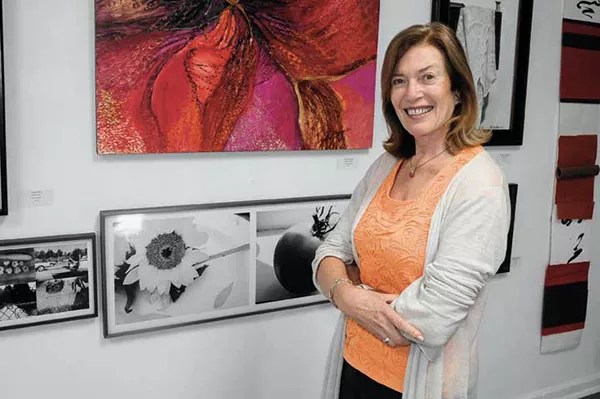
Carole Wolf
Chronogram has been my go-to publication for arts and culture, food and wellness, local politics and personal growth, gardens, history, photography, animals and just about everything about Hudson Valley life since 1993, and all of us at the Mill Street Loft family salute your 20th anniversary. We are so fortunate that we can count on Chronogram for cutting-edge creativity and visually stunning design, as well as fascinating and provocative articles on what’s going on in our towns and cities. Imagination is certainly unleashed, encouraged, and valued at Chronogram.
As an arts organization, Mill Street Loft is thrilled to be associated with a publication so passionately dedicated to culture. Your articles and calendars keep us inspired while ensuring that the arts stay at the forefront of our community.
Mill Street Loft was one of your original advertisers and readers; I even remember your early half-size issues and marvel at the growth and complexity of Chronogram as you’ve moved into the digital age. Each issue is a treasure, and I look forward to celebrating many future anniversaries. Happy Birthday, Chronogram!
Carole J. Wolf is executive director of Mill Street Loft, a Poughkeepsie-based arts organization she founded in 1981.

David Rothenberg
Chronogram is not always what it seems. Though it looks like a giveaway guide to the pleasures and possibilities of life up and down the Hudson Valley, it has increasingly offered something more. It is a celebration of what our unique part of the world has to offer the body, mind, and soul.
I am always amazed when I peruse its pages that even in the countryside, there is far too much to do, so many festivals, concerts, events, gatherings. These only seem to increase in number as people seem to value more and more the idea that culture can be created locally, nearby, that the big city is not the only hub of human activity. We are re-building culture at the human and natural scale all over America, and Chronogram is the most reliable chronicle of how this is proceeding in the Hudson Valley. No wonder the magazine has evolved from a black and white newspaper to a big-format color magazine. Everything in the Valley is getting more colorful all the time. And the bigger it is, the less it is likely to be replaced by a web page or any other screen, where the diversity of our experience tends to be processed into looking all the same. Just as there will always be large-format film cameras even as we can snap everything with their phones, the Chronogram will not be smartphonized. [Editor’s Note: There is actually a Chronogram smartphone application.] The big page always offers more.
I was honored to have a photograph I took of a 17-year cicada on the cover of last June’s issue. When biologist John Cooley studied the cover while we made a podcast, he pointed out, “look, you can see that insect is sucking from that blade of grass,” proving that they do eat while above ground, doing more than singing, flying, and mating. You need the big picture to get that information. Chronogram never lets us down.
David Rothenberg is a musician and writer living in Cold Spring. His latest book and CD, Bug Music, was excerpted in our June issue.

Special thanks to our sponsors
This article appears in November 2013.


