









There’s no shortage of press about the Hudson Valley’s vibrant food scene. In the last couple of years, dozens of new restaurants have opened throughout the region. In Hudson alone six new eateries launched in the last 12 months, from throwback steakhouse Saint Florian to farm-to-table mecca Manor Rock.
And over the same period nearly as many have closed. But how about the food businesses that have survived decades, successfully weathering recessions, Covid, rising inflation, and the general unavoidable chaos of the industry? What accounts for their longevity in turbulent times?
Keep It Consistent
It may seem basic, but for Josh Kroner, chef/owner at Terrapin in Rhinebeck, reliability is paramount. “It’s really providing an experience for the diner that they want to come back to,” he says.
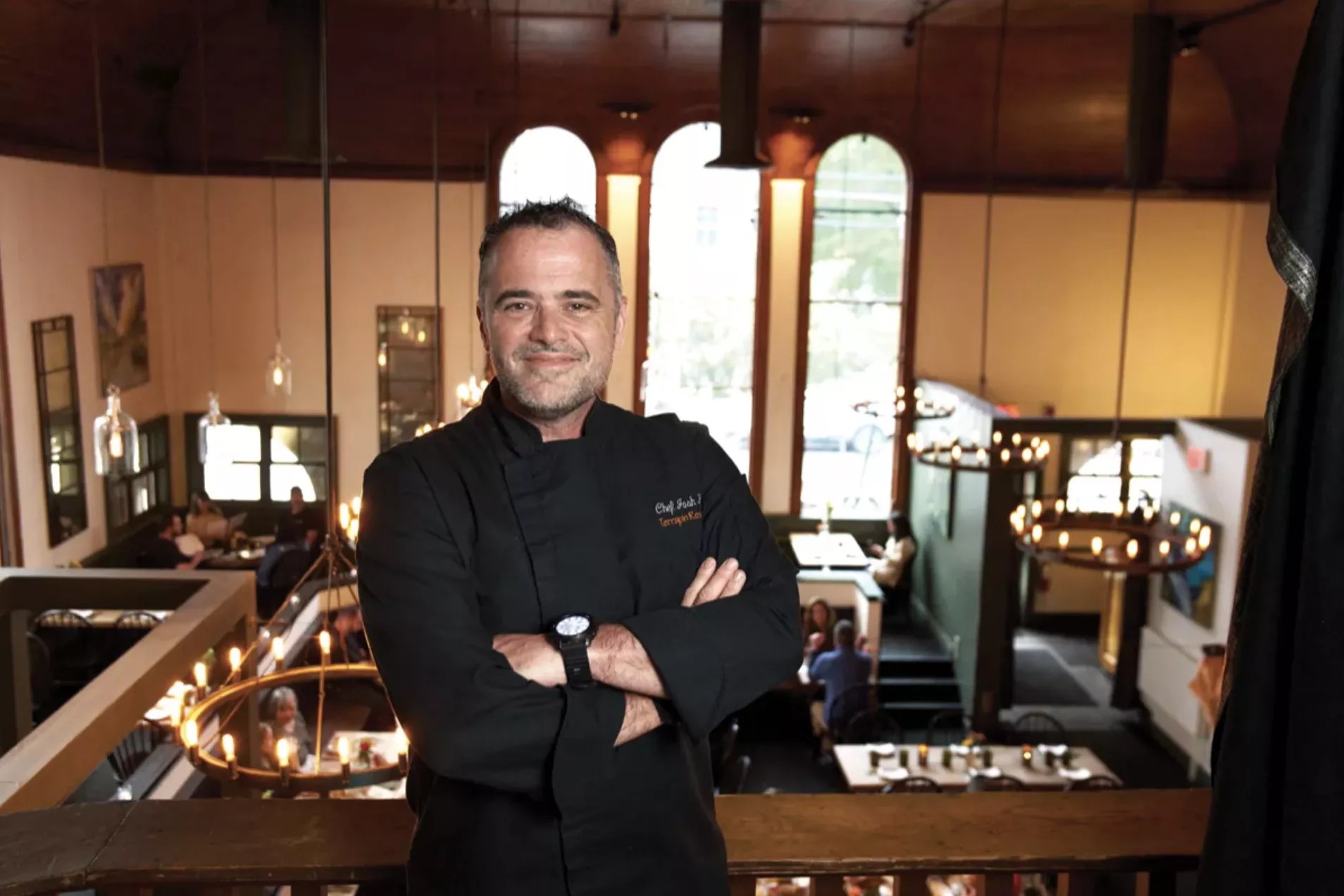
Earlier in his career Kroner worked with celebrity chefs including Emeril Lagasse, Bobby Flay, and Jacques Pepin, ultimately opening Terrapin, initially in West Hurley, in 1998. The restaurant has been at its current location in downtown Rhinebeck for 22 years. “It’s not about attracting new people,” Kroner says. “It’s about making the people who already came in want to come back.”
Samir Hrichi, chef/owner at Ship to Shore in Kingston’s Rondout neighborhood since 1998, points to the same thing. “Number one: consistency,” he says, asked about reasons for his business’s success over the years. “Consistency is the hardest thing to do in the hospitality industry.”
Hrichi doesn’t just mean maintaining top-notch quality in the kitchen. Literally staying open is a big part of it. “Seven days a week, lunch and dinner, we never close,” he says. “If you’re there seven days a week, your customers know that.”
Connect with the Community
Hrichi also emphasizes the importance of staying rooted in the community. He’s seen the regional boom in tourism in recent years, particularly in the summer, and reminds business owners to keep their roots in mind. “Don’t forget to take care of the locals,” he says. He tries to do that at Ship to Shore with promotions like Monday burger night, and by generally working to keep tables available for longer-term and working-class community members.

Mary Anne and Richard Erickson, long-time owners of Blue Mountain Bistro-to-Go on Route 28 in West Hurley (they sold the business last fall), also point to deep integration with the community as essential to their success in the Hudson Valley. “I developed a relationship with our customer base,” says Richard, who has several decades of experience as a chef. He and Mary Anne moved up to the Hudson Valley full-time in 1991, opening up the first incarnation of Blue Mountain Bistro at the Woodstock Gulf Club in 1993. They opened the current business in 2007.
This close relationship with customers was intentional, Richard says. “It wasn’t an open kitchen but there was a window to the front, and I spent most of my time in the kitchen, but a fair amount of my time saying hello to people out front,” he says. He listened to what people wanted.
“Being there for the community” was a big part of their philosophy in other ways, adds Mary Anne. Donating to food banks and soup kitchens, getting involved with baseball teams and boy scouts, and getting to know the locals through regular involvement with events from bar mitzvahs to weddings to anniversary parties all contributed to establishing them as a community staple.
Find Your Niche
Blue Mountain Bistro-to-Go has also benefitted from its particular niche: high-quality takeout food. This was by design, Mary Anne says, an idea that stemmed from their time living in New York City. “When you live in the city, there are just so many nice takeout places where you can get good food to go,” she says. “At the time, we just could see that there was a hole in the market [in the Hudson Valley].”

Though he’s developed a distinct model, a similar goal of separating his business from the pack was also critical for Bruce Kazan, chef/owner of New Paltz’s Main Course Catering and Marketplace. Kazan has over three decades of success in the Hudson Valley, which he attributes in part to a supremely high level of quality—with an emphasis on local produce—that has made Main Course Catering stand out in more ways than one.
“The most complicated event I did was down in Battery Park, for like 700 people. Doing a sit-down dinner where you’re bringing Hudson Valley products [and doing] it in an extremely professional manner—that gets you to rise above your competitors,” says Kazan.
In the catering world, this means not only restaurant-level meals but superlative service. “Put someone else’s needs above your own for five hours,” he adds. “That’s our key thing.”
Staff Well
Anyone who’s worked in restaurants knows that the industry has a tremendous amount of turnover. But all of the business owners interviewed for this story emphasized the immeasurable value of high-quality, long-term staff.
New Paltz is a college town, so Kazan knows there’s bound to be an inevitable amount of staff changeover. But “if you have a good staff that’s your core, everybody is trainable,” he says. Put a premium on that core, he says, “otherwise you’re going to constantly be looking for people, and that’s a drag.”
Mary Anne and Richard Erickson second this philosophy. “We always wanted to create a warm, inviting, friendly place that felt like home,” says Mary Anne, working to put together a group of staffers who treated each other and customers well, also striving to avoid the divisions between front- and back-of-house that often develop in restaurants.
Though they no longer own the restaurant, Mary Anne says, the “nice sense of camaraderie with the team” that they cultivated continues, and she notes that Bistro-To-Go’s new owners have retained the entire staff. “Some of them have been there for over 10 years,” she says.

Hrichi, too, emphasizes these long relationships. “I have chefs who have been with me for 25 years now,” he says, an impressively long time in the restaurant business. “Take care of your team and they’ll take care of you.”
Make Good Food
The food business has always been challenging, and with recent supply chain disruptions, rising prices, and the promise of future domestic and international economic and climate instability, that’s very likely to continue.
Accordingly, there is no guaranteed template for success. As Kroner freely admits, “It’s always been a bad business. How I became successful was a combination of timing, skill, and luck.”
But you can’t go wrong sticking to a few basics.
For Hrichi, it’s really about keeping it simple: “Great food, great wine, great service.” Then, when you’re in trouble—like he was, during the 2008 recession and again during Covid—you can adapt, transforming as necessary. That’s what he did when the pandemic hit, learning about online ordering and building a strong web presence, figuring out how to run a full-service takeout restaurant seven days a week.
Kazan agrees that adaptability, plus passion for what you’re doing, keeps you sharp. “You have to keep reinventing yourself,” he says. “I think how you survive 35 years is not being stuck in one concept and staying with it, but having the flexibility to recognize what’s a trend, what’s a fad. Know when to bail out of the fad, and when things should stay on. Keep playing the game.”
And of course, the key thing they all agree on: Make great food. As Hrichi puts it: “If you have a good product, they’re going to come.”
“We’re not reinventing the wheel,” he says.
This article appears in February 2025.


