








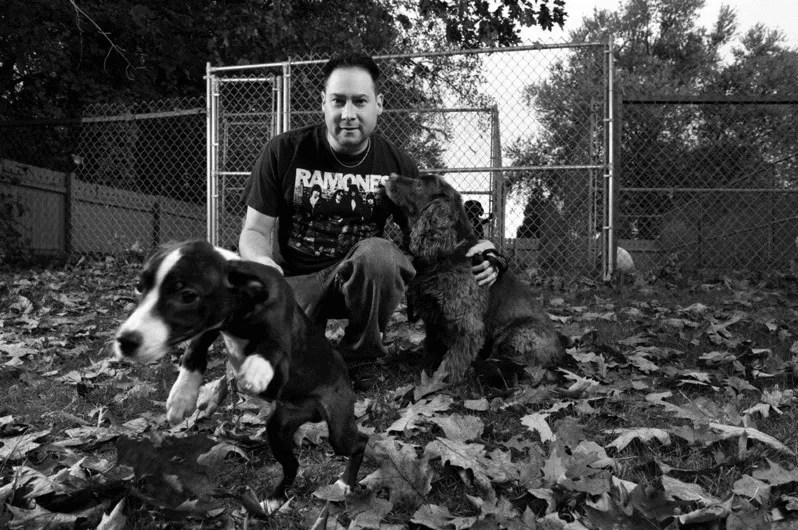
Brian Shapiro is the New York State Director of the Humane Society of the United States. The HSUS focuses on five main issues: factory farming, animal fighting, the fur trade, puppy mills, and wildlife abuse. Shapiro leads the HSUS’s animal welfare efforts throughout the Empire State and is responsible for assisting animal shelters, working alongside local law enforcement agencies, and building statewide support for animal protection.
[audio-1]
The Humane Society is celebrating a big win this week with Gov. Coumo signing into law a bill allowing local governments in New York the authority to regulate large-scale commercial puppy mills and provide oversight of pet dealers. Sponsored by Assemblymember Linda B. Rosenthal (D-Manhattan), and Sen. Mark Grisanti (R-Buffalo), the law grants counties and municipalities the ability to enact regulations to protect dogs raised in puppy mills. Shapiro, issued the following statement:
“New York’s lax laws have attracted some of the worst puppy millers, and dogs suffer in cruel conditions every day. Now, local governments and New York residents will have the ability to stop the abuse in these puppy mills. We thank Governor Cuomo, Assemblymember Rosenthal, Senator Grisanti and the legislature for enacting a law that will help prevent the cruelty we so often see at large-scale dog breeding facilities. We also thank the large numbers of New Yorkers, including Glee star Lea Michele, and local and national organizations for encouraging lawmakers to protect breeding dogs in the Empire State.”
Shapiro, an Ulster County resident has been a punk rock musician, hosted a cable access show, and he served for more than a decade in the Ulster County Legislature. He also served as the executive director of the Ulster County SPCA, where he bolstered a highly successful humane law division, helped increase adoptions, and expanded the shelter’s spay/neuter program.
Click here to subscribe to the Chronogram Conversations Podcast on iTunes.
As promised, here’s a photo of my dog Shazam, who Brian Shapiro helped Lee Anne and I adopt at the Ulster County SPCA in 2008.

Related Stories

This article appears in January 2014.



The HSUS is not your local animal shelter. It is a multimillion dollar corporation that spends almost every dime it gets on obscene salaries for its hierarchy and filing lawsuits. It raises money by showing ads of cute dogs and cats, but it spends less then 1 cent on the dollar to feed and shelter cats and dogs. More and more members of congress are questioning the tax free status of the HSUS because of its political activities. The HSUS is against rodeo and western traditions. The HSUS pro vegetarian and anti meat. The HSUS is part of the vegan revolution that wants to change our eating habits and standard of living by outlawing factory farming. Be afraid of the HSUS and don’t applaud its lackeys.
9Things You Didn’t Know About HSUS
1. The Humane Society of the United States scams Americans out of millions of dollars through manipulative and deceptive advertising. An analysis of HSUS’s TV fundraising appeals that ran between January 2009 and September 2011 determined that more than 85 percent of the animals shown were cats and dogs. However, HSUS doesn’t run a single pet shelter and only gives 1 percent of the money it raises to pet shelters, and it has spent millions on anti-farming and anti-hunting political campaigns.
2. HSUS receives poor charity-evaluation marks. CharityWatch (formerly the American Institute of Philanthropy) reissued HSUS’s “D” rating in December 2011, finding that HSUS spends as little as 49 percent of its budget on its programs. Additionally, the 2011 Animal People News Watchdog Report discovered that HSUS spends about 43 percent of its budget on overhead costs.
3. Six Members of Congress have called for a federal investigation of HSUS. In April 2011, six Congressmen wrote the IRS Inspector General showing concerns over HSUS’s attempts to influence public policy, which they believe has “brought into question [HSUS’s] tax-exempt 501(c)(3) status.”
4. HSUS regularly contributes more to its own pension plan than it does to pet shelters. An analysis of HSUS’s tax returns determined that HSUS funneled $16.3 million to its executive pension plan between 1998 and 2009—over $1 million more than HSUS gave to pet shelters during that period.
5. The pet sheltering community believes HSUS misleads Americans. According to a nationally representative poll of 400 animal shelters, rescues, and animal control agencies, 71 percent agree that “HSUS misleads people into thinking it is associated with local animal shelters.” Additionally, 79 percent agree that HSUS is “a good source of confusion for a lot of our donors.”
6. While it raises money with pictures of cats and dogs, HSUS has an anti-meat vegan agenda. Speaking to an animal rights conference in 2006, HSUS’s then vice president for farm animal issues stated that HSUS’s goal is to “get rid of the entire [animal agriculture] industry” and that “we don’t want any of these animals to be raised and killed.”
7. Given the massive size of its budget, HSUS does relatively little hands-on care for animals. While HSUS claims it provides direct care to more animals than any other animal protection group in the US, most of the “care” HSUS provides is in the form of spay-neuter assistance. In fact, local groups that operate on considerably slimmer budgets, such as the Houston SPCA, provide direct care to just as many or more animals than HSUS does.
8. HSUS’s CEO has said that convicted dogfighting kingpin Michael Vick “would do a good job as a pet owner.” Following Vick’s release from prison, HSUS has helped “rehabilitate” Michael Vick’s public image. Of course, a $50,000 “grant” from the Philadelphia Eagles didn’t hurt.
9. HSUS’s senior management includes a former spokesman for the Animal Liberation Front (ALF), a criminal group designated as “terrorists” by the FBI. HSUS president Wayne Pacelle hired John “J.P.” Goodwin in 1997, the same year Goodwin described himself as “spokesperson for the ALF” while he fielded media calls in the wake of an ALF arson attack at a California meat processing plant. In 1997, when asked by reporters for a reaction to an ALF arson fire at a farmer’s feed co-op in Utah (which nearly killed a family sleeping on the premises), Goodwin replied, “We’re ecstatic.”
Want evidence? Vist: http://www.ConsumerFreedom.com * http://www.HumaneWatch.org * http://www.ActivistCash.com
Revised February 2012. Complete sources and documentation available upon request.__._,
Relying upon Center For Consumer freedom for your “facts” indicates a lack of proper research abilities. The preceding comments almost solely rely upon this front group headed by Richard Berman. His record of lobbying against common sense causes, distorting the truth in sometimes unrecognizable fashion, is legendary. Please do not fall victim to this misinformation campaign that has made Mr Berman very, very wealthy. HSUS discloses all of their financial information for all to see. CCF does not. That alone should tell you something.
AMAZING NEWS for NY State! This change in the law is a testament to all the good work that Brian and his team do as part of the HSUS. The value of ALL organizations that fight for animal rights and the roles they all play should never be underestimated. True change happens when it is fought for and implemented at a number of levels. It’s about direct care for animals AND legislation, disaster relief AND providing shelter… Every role is crucial. It should be noted that Brian himself came from a county SPCA so he understands many of the roles that are at play. Any negative comments simply take away from what the change in NY’s laws truly means, and shame on those who over shadow it with ignorance.
Contrary to the copy-and-paste misinformation from animal abuse apologists, the HSUS is the nation’s most effective advocate for animal welfare. Its finances are transparent and receive top marks from independent charity evaluators like Charity Navigator. It was voted a Top Ten Fiscally Responsible Charity by Worth Magazine. It was voted the #1 nonprofit in the field of animal welfare by Philanthropedia.
Naturally, those who support animal cruelty for profit leap at the chance to attack the nation’s strongest advocate for animals. That’s just evidence of (a) the effectiveness of the HSUS, and (b) the need for animal protection groups like the HSUS to keep the abusers in check.
Getting back to the subject of the podcast, Brian Shapiro gets right to the heart of the problem with the commercial breeding of pets and the puppy mill epidemic. A great interview!
There is no “epidemic” of “puppy mills’. The sky is NOT falling. Numbers of dogs and cats in shelters have been dropping like stones year after year but Shiff and is cronies at HSUS have to have a crisis or they would not have a reason to beg for money. It is a classic called “factory fundraising” Create a crisis, say it over and over again and even if it is a lie people will start to believe it then beg for money to support the big lie. The HSUS cannot deny the fact that fewer and fewer animals come into shelters every year.. fewer are killed and more find homes. The USA treats its pets very well spending BILLIONS of dollars each year on their care, but the HSUS uses the exception rather than the rule to get unsuspecting people to send them money. Give LOCALLY because even if your local shelter is called the Humane Society there is a 99.9% chance they get ZERO dollars from the HSUS Think Globally Give Locally .
they’re also conspiring with PETA who puts 99 percent of their animals to sleep in their Virginia shelters and also says that the animals are better off dead then to be owned by a human ask your dog how he would feel about that.
A hearty thanks to Governor Cuomo for enacting this important legislation to allow local communities throughout New York State to enact more stringent regulations of pet stores and puppy mills to bolster the very basic animal welfare and consumer protection standards that NY state law affords.
The heartbreaking recent incident in Sprakers, New York where nearly 100 dogs were left in deplorable conditions at a breeding operation during the recent frigid weather (all in accordance with the minimum state law standards of care for dogs) was a sad reminder of why this type of home-rule legislation is so important to local communities.
Hats off to NYS Assemblywoman Rosenthal and Senator Grisanti who sponsored and pushed this bill through as well as to HSUS and the ASPCA who continue to work to create a more humane world for animals by championing such important legislation as this. For the animal lovers out there, it’s important to give both to local shelters (who take in and care for abused and homeless animals) but also to animal protection organizations such as these which are doing such wonderful work to improve laws for animals in order to prevent or reduce such cruel treatment to begin with.
-Christine Mott
Kingston, NY
I love all these comments! Now: How many of you have listened to the podcast?